Identifying Animals Normal Worksheets
3 filtered results
-
From - To
Welcome to our "Identifying Animals Normal Worksheets" page! Here, you will find a variety of engaging worksheets designed to help early learners develop their skills in identifying animals. These printable resources feature vibrant illustrations and interactive activities that make learning fun and effective. Perfect for classroom or home use, our worksheets cater to different learning styles, encouraging students to recognize various animals and understand their characteristics. Ideal for preschool and kindergarten students, these worksheets not only foster cognitive growth but also spark curiosity about the natural world. Explore our collection and enhance your child's learning experience today!
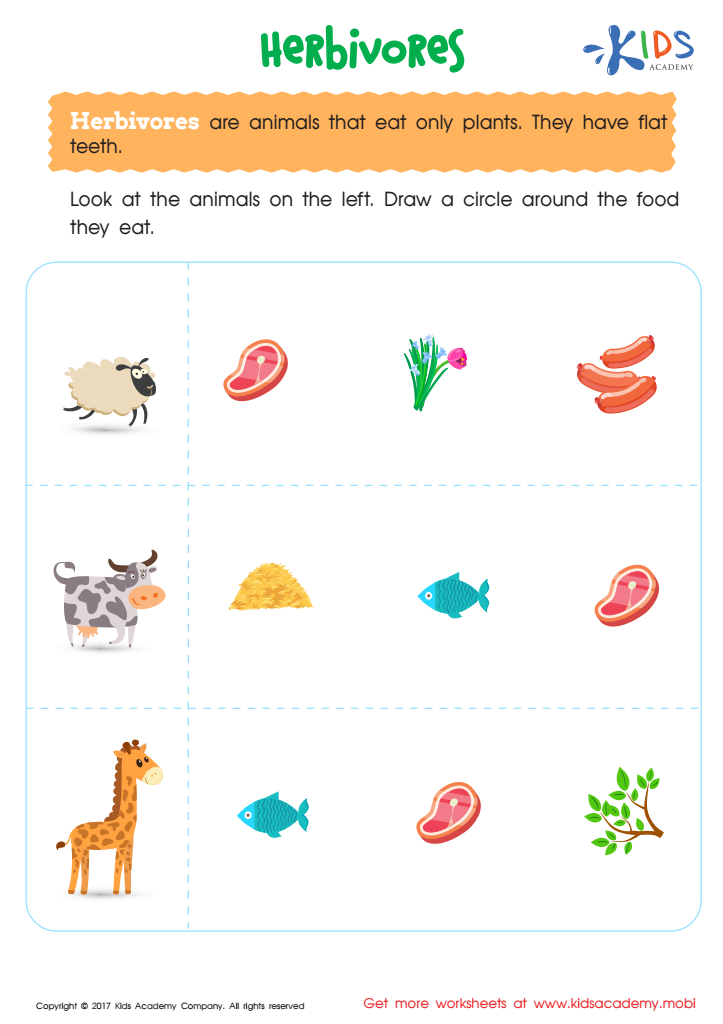
Herbivores Printable
 Assign to My Students
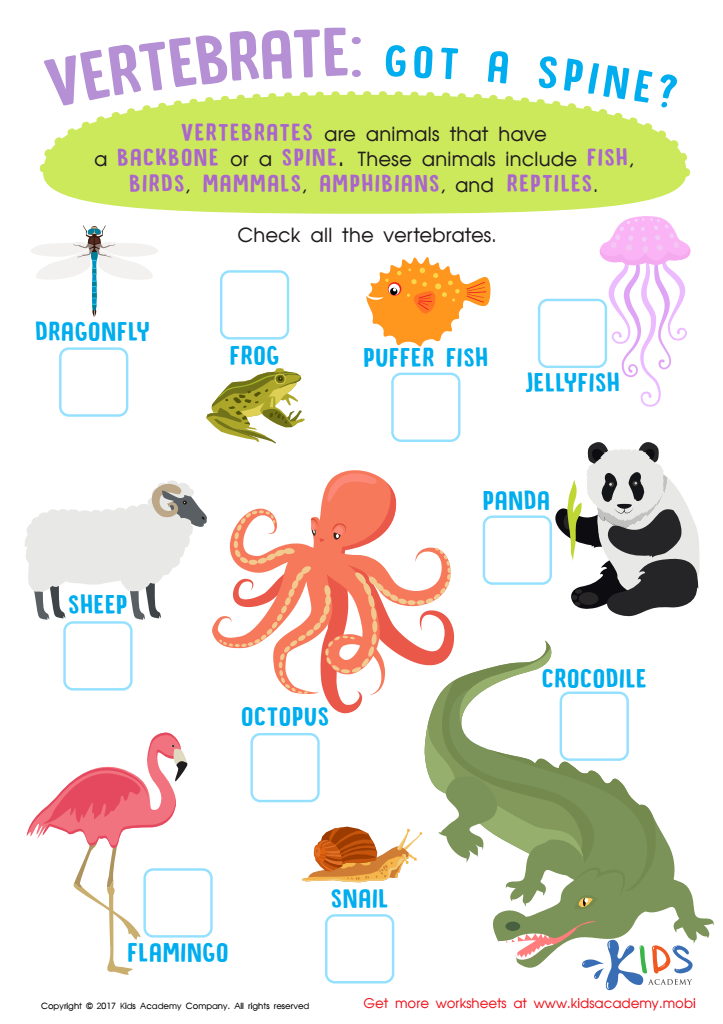
Vertebrates Animals Worksheet for 3rd Grade
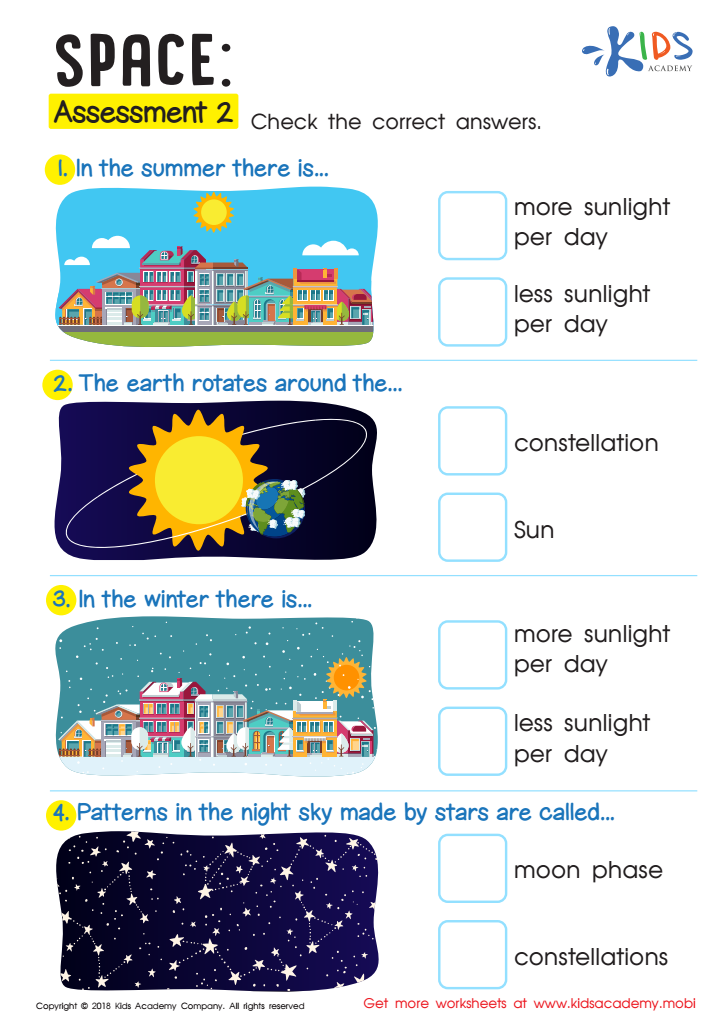
Space: Assessment 2 Worksheet







Identifying animals is a crucial aspect of early education, fostering a child's curiosity and understanding of the natural world. For parents and teachers, this skill is important because it not only enhances children's knowledge about biodiversity but also supports their cognitive development. Recognizing different animals helps improve critical thinking and observational skills, encouraging students to categorize, compare, and contrast various species.
Moreover, understanding animals aids in building a foundation for environmental awareness and stewardship. When children recognize the roles animals play in ecosystems, they are more likely to develop empathy and respect for wildlife and their habitats. This early education promotes responsible behaviors, such as conservation and wildlife protection, ensuring that future generations are conscientious caretakers of the planet.
Furthermore, animal identification activities can enhance language development, as children learn new vocabulary related to different species and their characteristics. Besides, integrating animal knowledge into the curriculum can make lessons more engaging and fun, capturing children's imaginations through storytelling, art, and exploration.
In sum, parents and teachers should prioritize identifying animals as it enriches various aspects of a child’s development, fostering a sense of curiosity, responsibility, and love for the natural world.








