Number comparison Normal Worksheets
5 filtered results
-
From - To
Discover our engaging Number Comparison Normal Worksheets designed to enhance young learners’ math skills! These worksheets provide a fun and interactive way for children to practice comparing numbers through a variety of exercises. With visually appealing illustrations and age-appropriate challenges, students will develop their understanding of greater than, less than, and equal to concepts. Ideal for preschool and early elementary classrooms, these resources promote critical thinking and number sense. Encourage your child’s mathematical journey with our thoughtfully crafted worksheets, ensuring they build a strong foundation in number comparison while enjoying the learning process! Start your free printable worksheet adventure today!
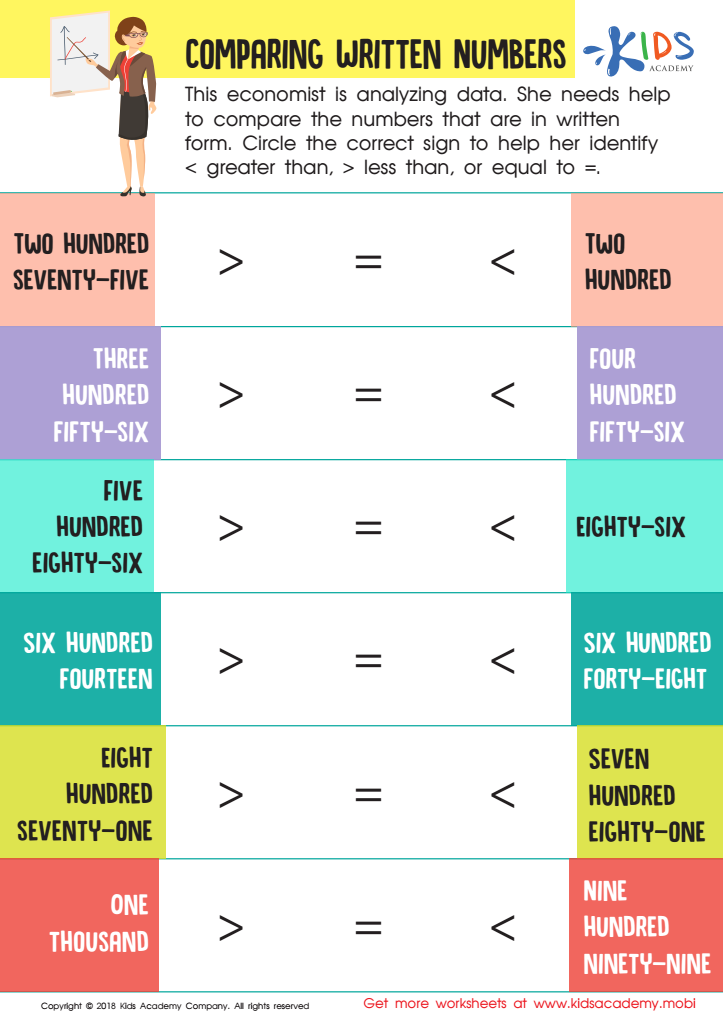
Comparing Written Numbers Worksheet
 Assign to My Students
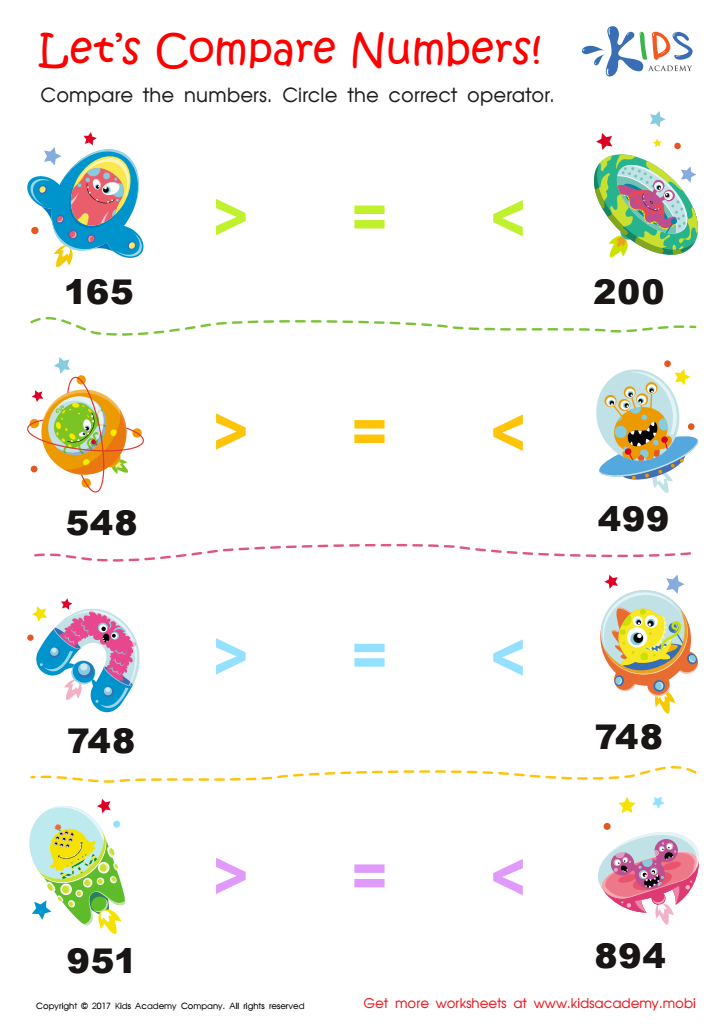
Comparing Numbers Worksheet for 2nd Grade
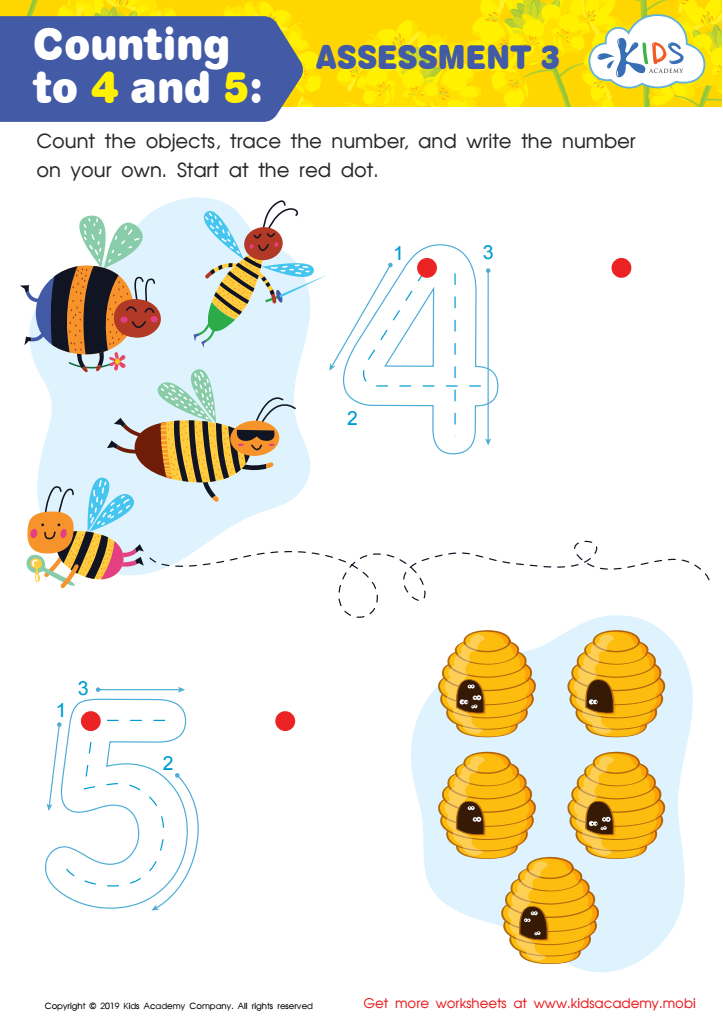
Counting to 4 and 5: Assessment 3 Worksheet
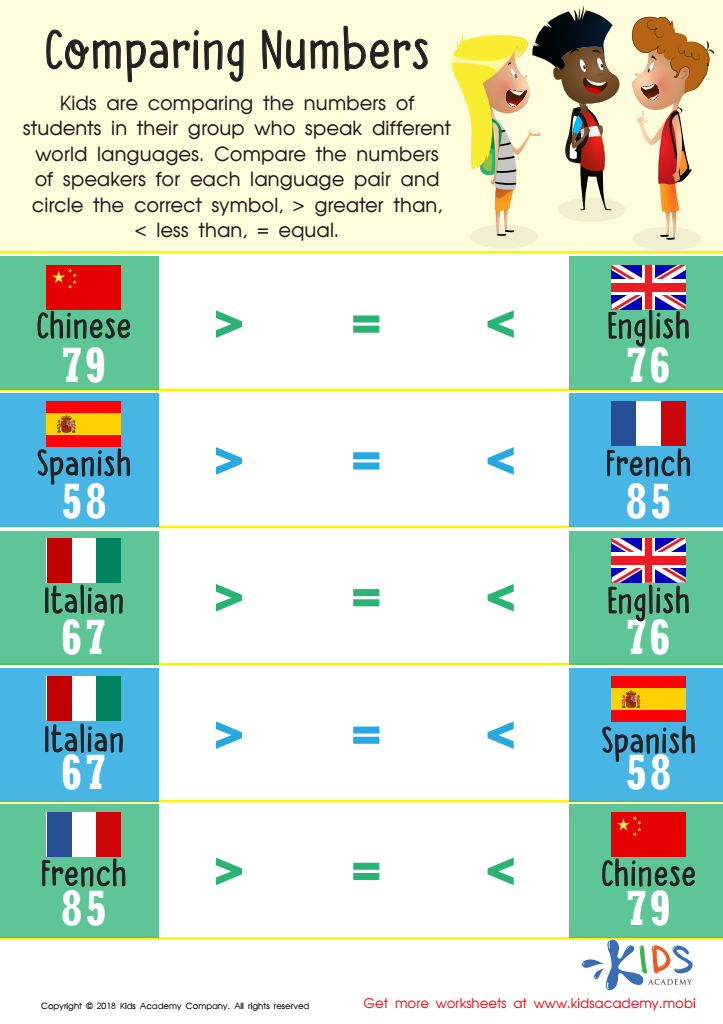
Comparing Numbers Worksheet for 1st Grade
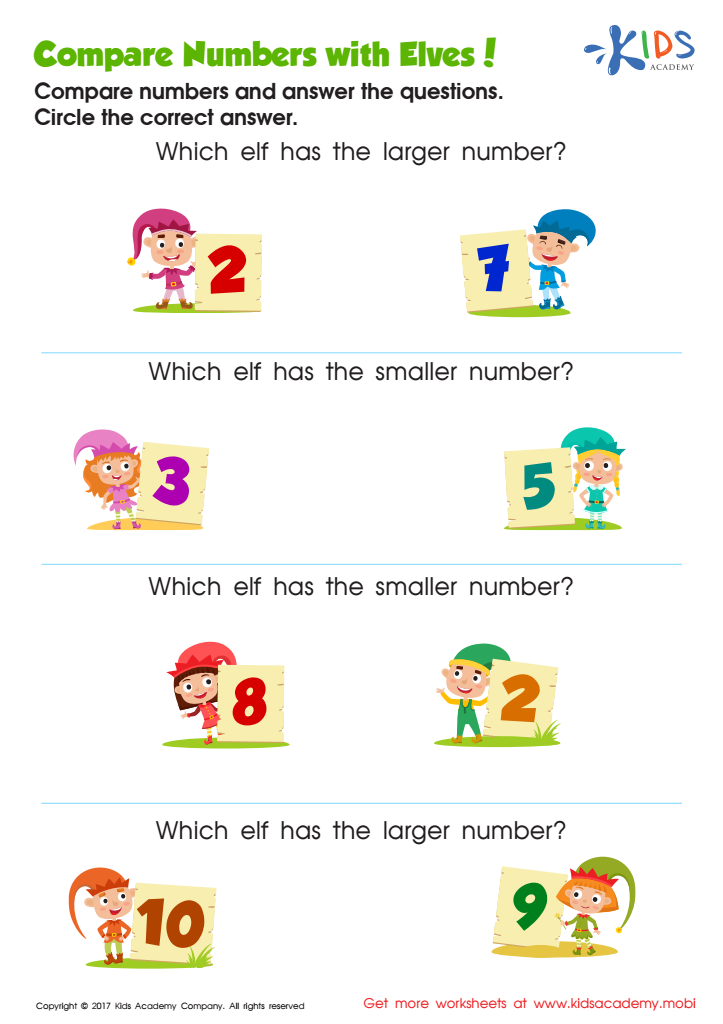
Comparing Numbers Worksheet for Kindergarten







Number comparison is a foundational skill in early mathematics development, making it essential for both parents and teachers to prioritize it. Understanding number comparison involves recognizing which numbers are greater or smaller and is crucial for building arithmetic skills. Mastery in this area lays the groundwork for more complex mathematical concepts such as addition, subtraction, and even early algebra.
Parents play a critical role in reinforcing this skill at home. Engaging in simple activities, such as comparing quantities in daily life (e.g., number of fruits, toys), fosters interactive learning and helps children relate numbers to tangible objects. Teachers, on the other hand, can create structured, playful learning environments where students practice number comparison through games and activities. Lessons that include visual aids, such as number lines or counters, can deepen understanding and retention.
By emphasizing number comparison, both parents and teachers help children develop critical thinking and problem-solving skills crucial for academic success and daily life. Furthermore, early mastery in this area enhances confidence in mathematics, helping to combat math anxiety as students progress through their education. This skill is not merely an academic task; it builds essential cognitive and numerical thinking that influences a child’s lifelong relationship with math.








