
Rhyme recognition Normal Worksheets
3 filtered results
Difficulty Level
Grade
Age
-
From - To
Subject
Activity
Standards
Discover our engaging Rhyme Recognition Normal Worksheets at Kids Academy, designed to enhance your child's phonemic awareness and literacy skills. Ideal for early learners, these worksheets make recognizing and producing rhyming words fun and educational. Through a variety of exercises, children will identify rhyming pairs, complete rhyme families, and even craft their own rhymes. Our beautifully illustrated worksheets not only support language development but also keep young minds invested and entertained. Equip your child with essential reading skills by incorporating these valuable resources into their daily learning activities. Start your rhythmic journey towards reading success today!
Favorites
With answer key
Interactive
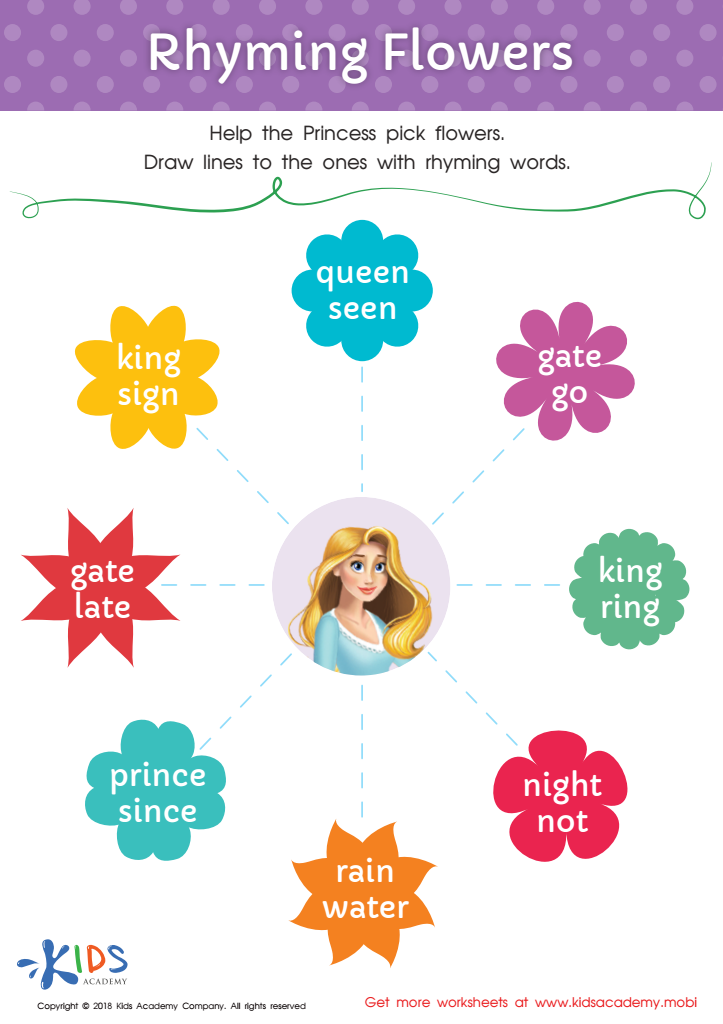
Rhyming Flowers Worksheet
Recognizing rhyming words boosts phonological awareness. With this skill, students can identify similar sounds in words and predict new words more accurately. This worksheet provides practice and is ideal for the reading classroom. Download and find the rhyming words! (80 words)
 Assign to My Students
Rhyming Flowers Worksheet
Worksheet
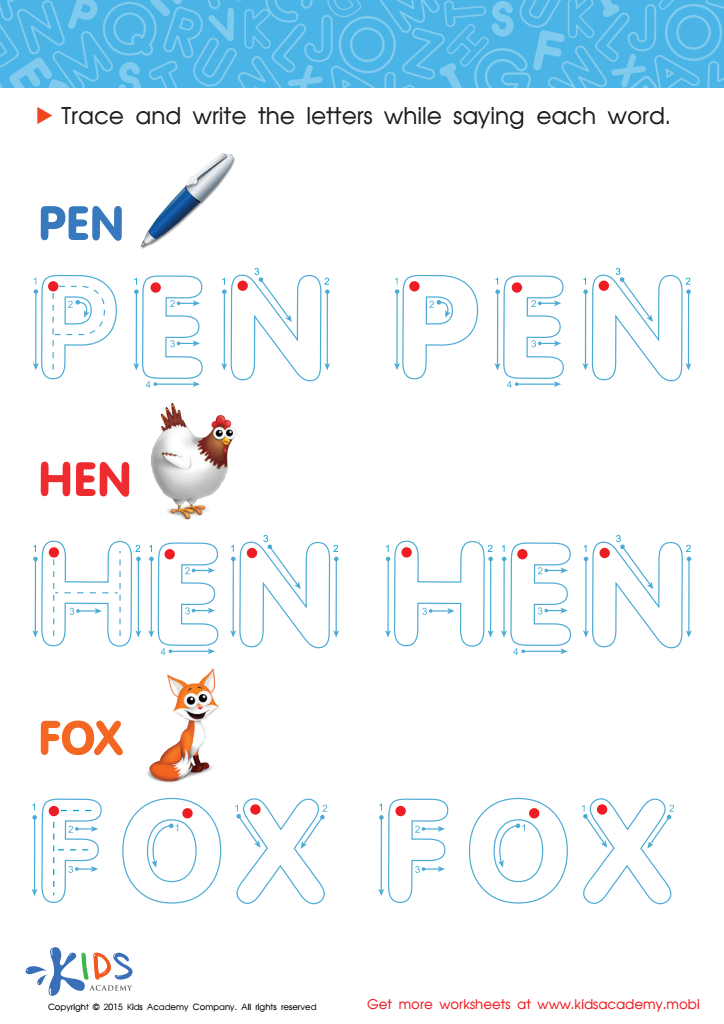
A Pen, a Hen and a Fox Spelling Worksheet
Practice spelling with this free worksheet: three lines, three new words. Say them, trace them, write them correctly. Keep learning with Kids Academy for more printable worksheets and more fun! (80 words)
A Pen, a Hen and a Fox Spelling Worksheet
Worksheet
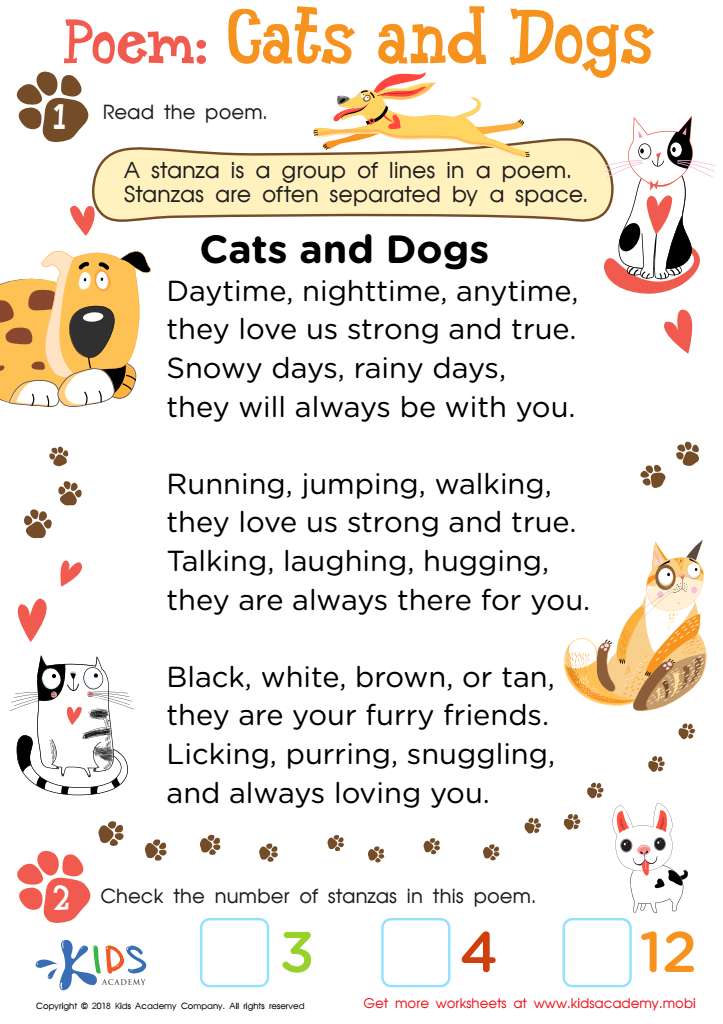
Poem: Cats and Dogs Worksheet
Read the poem to your child and point out where each stanza ends. Ask if they know what a stanza is (if not, explain it's a group of lines in a poem). Help them answer the question at the bottom of the printout. This simple, sweet poem about cats is easy for your child to relate to.
Poem: Cats and Dogs Worksheet
Worksheet
Join Kids Academy for Free
Who is primarily going to use this learning content?








Rhyme recognition is a critical foundational skill in early literacy development. Parents and teachers should prioritize it because it supports various aspects of a child’s growing language and reading abilities. First, recognizing rhymes helps children detect the phonetic patterns and structures in words, which is essential for phonemic awareness – the understanding that words are made up of smaller sounds. This skill is a strong predictor of future reading success.
Additionally, rhyme recognition enhances memory and helps with vocabulary acquisition. When children notice that "cat" rhymes with "hat," they can more easily remember these words because they create mental connections. This process helps expand their vocabulary more rapidly.
Moreover, engaging in rhyming activities fosters a love for language. Rhymes are often fun, engaging, and culturally rich. Nursery rhymes, songs, and poems can make learning enjoyable, helping children to develop a positive attitude toward reading from a young age.
Finally, rhyme recognition also boosts listening and auditory discrimination skills. To identify rhymes, children must listen carefully, practicing focusing their attention on specific sounds. All these benefits combined make rhyme recognition a critical component teachers and parents should emphasize to build a strong foundation for literacy and language development.








