
Subtraction skills Normal Worksheets
8 filtered results
Difficulty Level
Grade
Age
-
From - To
Subject
Activity
Standards
Our Subtraction Skills Normal Worksheets offer a fun and engaging way for young learners to master the basics of subtraction. These expertly designed worksheets provide a variety of exercises that make subtraction practice enjoyable and effective, helping kids develop critical math skills. Ideal for early grade students, each worksheet is colorful, easy to understand, and progressively challenging to ensure continual improvement. Start your child's mathematical journey with our comprehensive subtraction worksheets, where learning and fun go hand-in-hand! Perfect for classroom use or at-home practice, these printable worksheets ensure your child gains confidence in their subtraction abilities.
Favorites
With answer key
Interactive
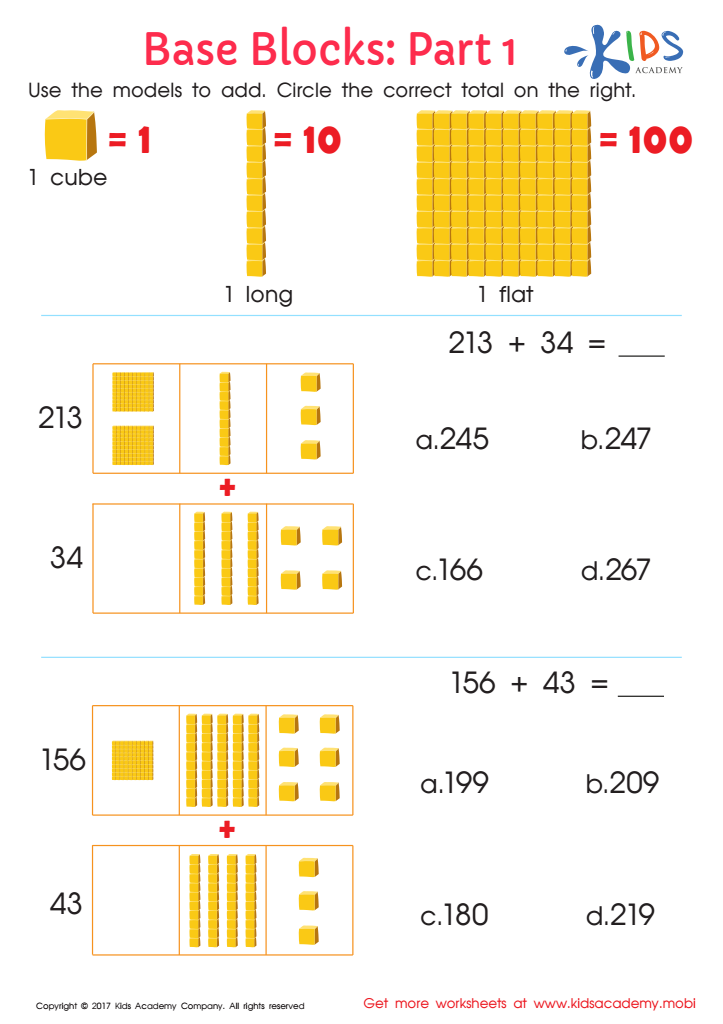
Base Ten Blocks Worksheet: Part 1
They promote numeracy and are a great substitute when kids don't have access to physical blocks.
 Assign to My Students
Base Ten Blocks Worksheet: Part 1
Worksheet
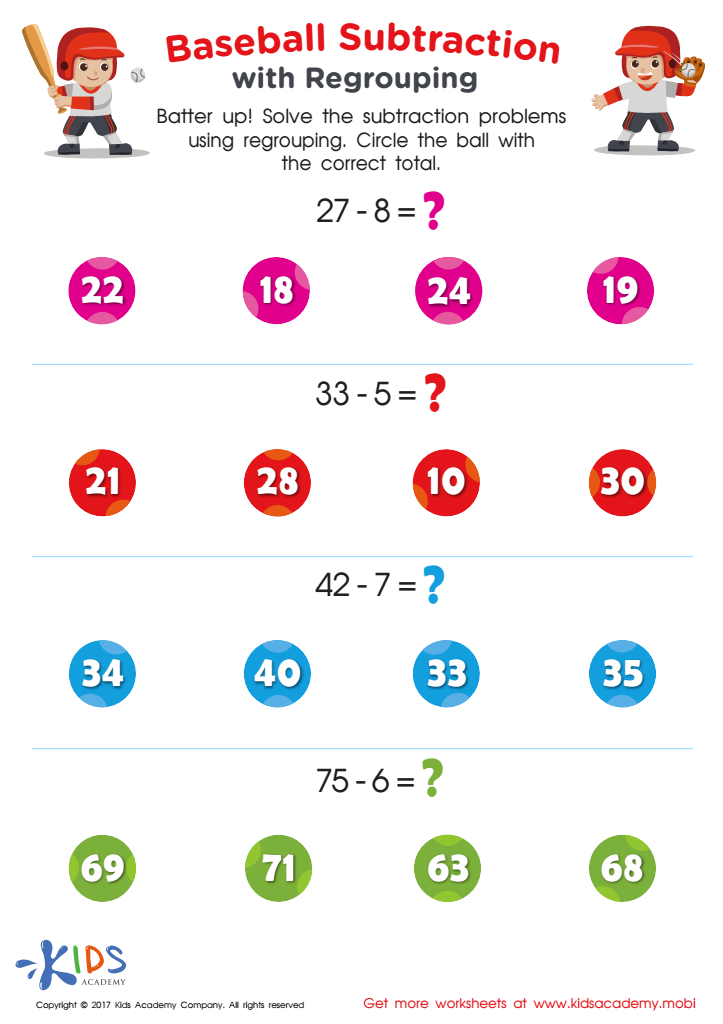
Subtraction With Regrouping for 2nd Grade Worksheet
Kids solve two-digit subtraction problems using regrouping and color in the baseballs.
2nd graders may find regrouping for subtraction tricky, so give them a helping hand with this fun worksheet! They practice two-digit subtraction and regrouping by coloring in baseballs as they solve the problems. Let them practice the skill and enjoy the game at the same time.
Subtraction With Regrouping for 2nd Grade Worksheet
Worksheet
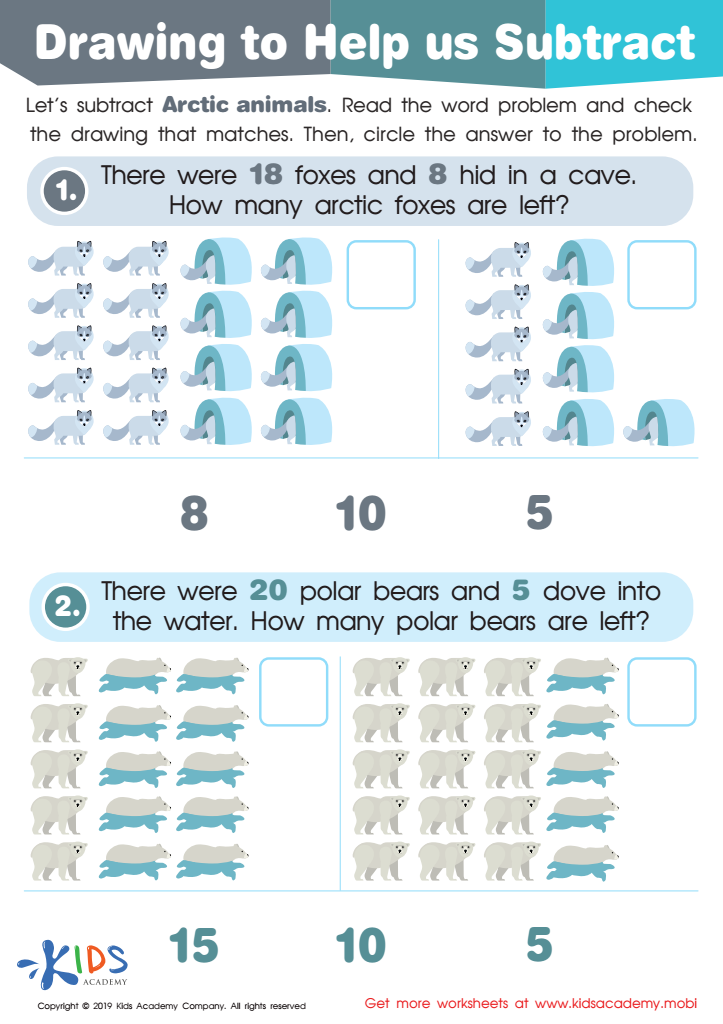
Drawing to Help Us Subtract Worksheet
Math is made fun with this free worksheet featuring Arctic animal pictures to solve basic subtraction word problems. Kids read the problem and choose the correct drawing of the animals to represent the solution. They'll have a blast with their cool animal friends while learning math!
Drawing to Help Us Subtract Worksheet
Worksheet
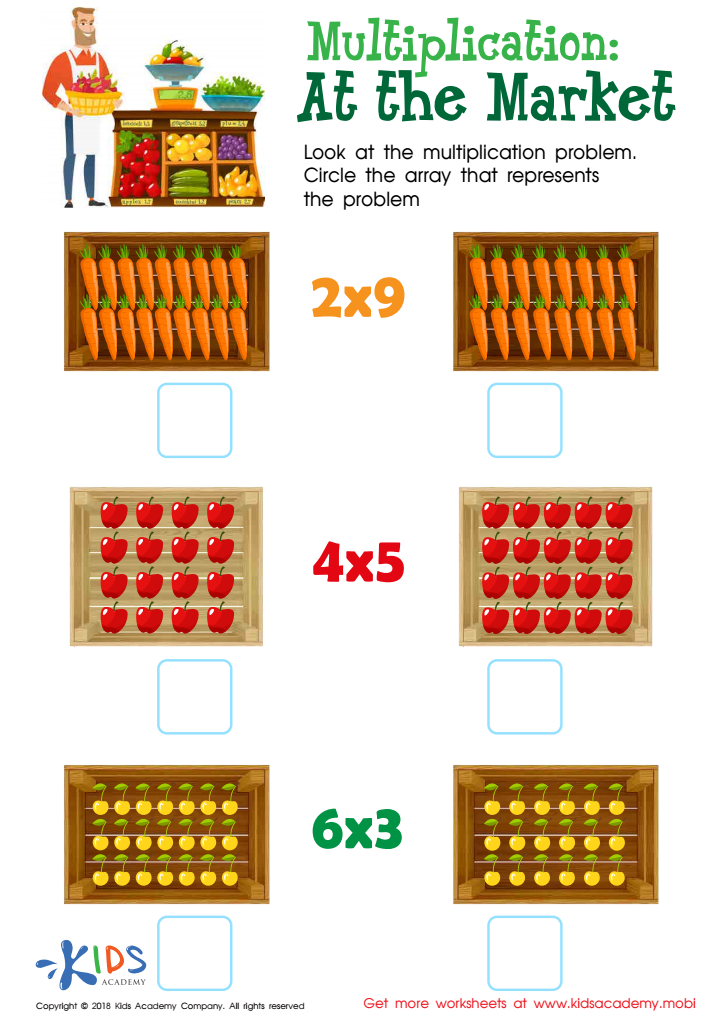
At the Market Worksheet
Head to At the Market! This attractive worksheet features arrays of delicious fruits and veggies that'll have 3rd graders working on their multiplication. Solve the problems, choose the correct answer, and learn while having fun!
At the Market Worksheet
Worksheet
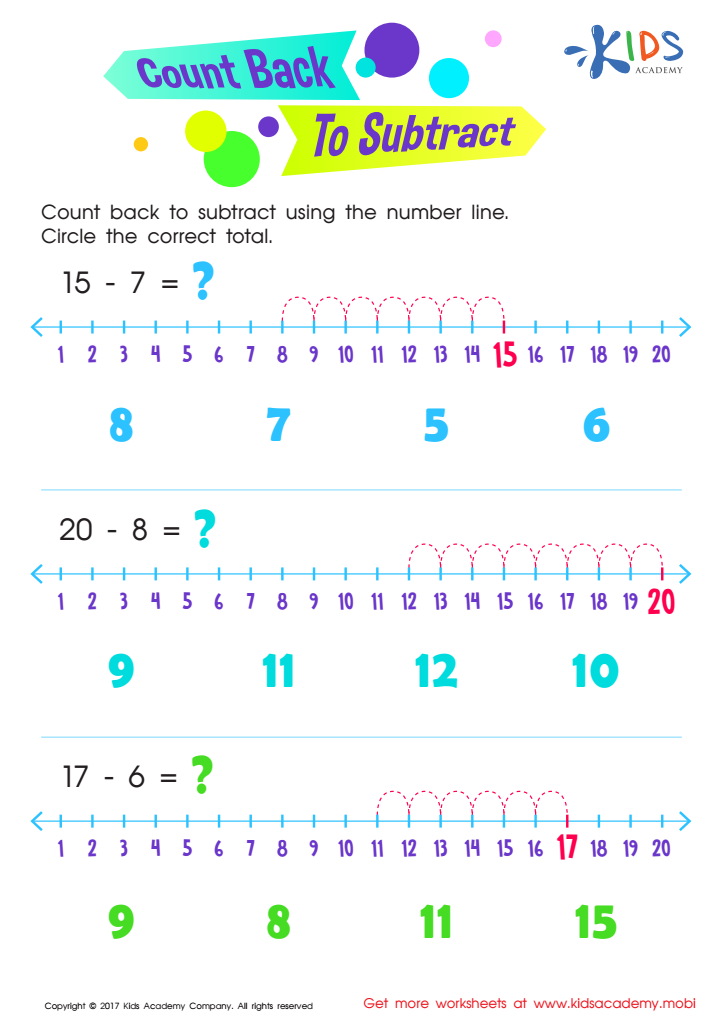
Count Back to Subtract Substraction Worksheet
With this worksheet, your child can visually see and count each number they’re subtracting.
This worksheet provides a number line to help your child master subtraction visually. Counting back on the line will give them a deeper understanding of the concept. It's a great way to teach subtraction and help children gain confidence with the subject.
Count Back to Subtract Substraction Worksheet
Worksheet
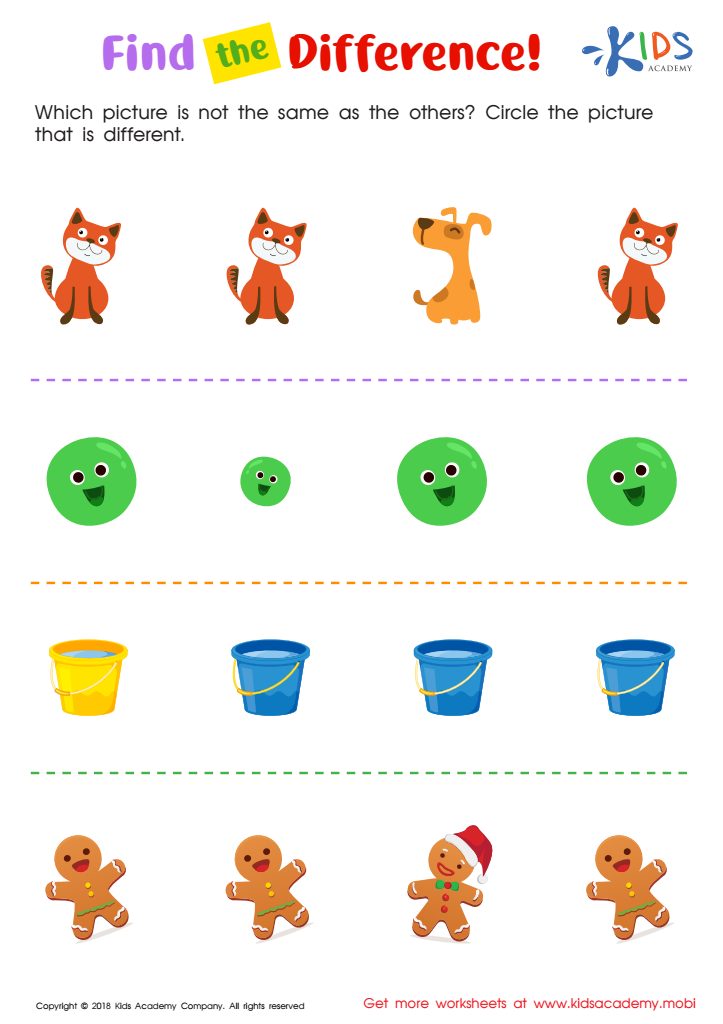
Find the Difference Worksheet
Test your kids' skills with this worksheet! Ask them to look at the pictures in each row and tell you what the objects are. Help them identify the odd item in each row by circling it. See if they can spot the difference!
Find the Difference Worksheet
Worksheet
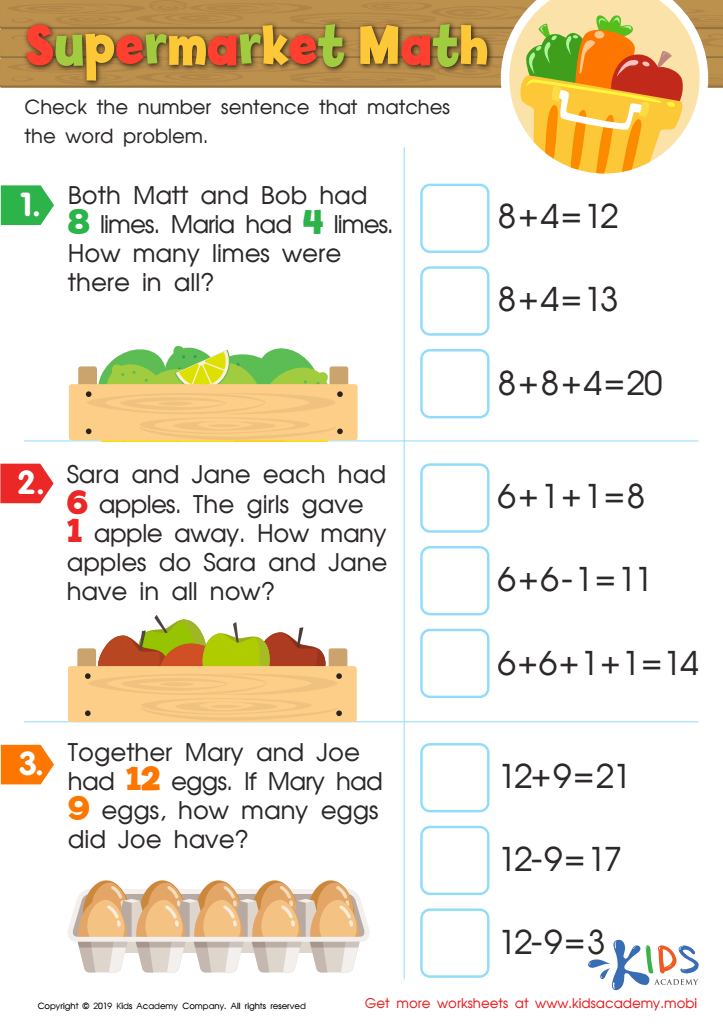
Supermarket Math Worksheet
Take your kids to the supermarket and ask what they're looking forward to buying. Help them solve the three questions in the worksheet by interpreting each one into an equation, then choose the right answer.
Supermarket Math Worksheet
Worksheet
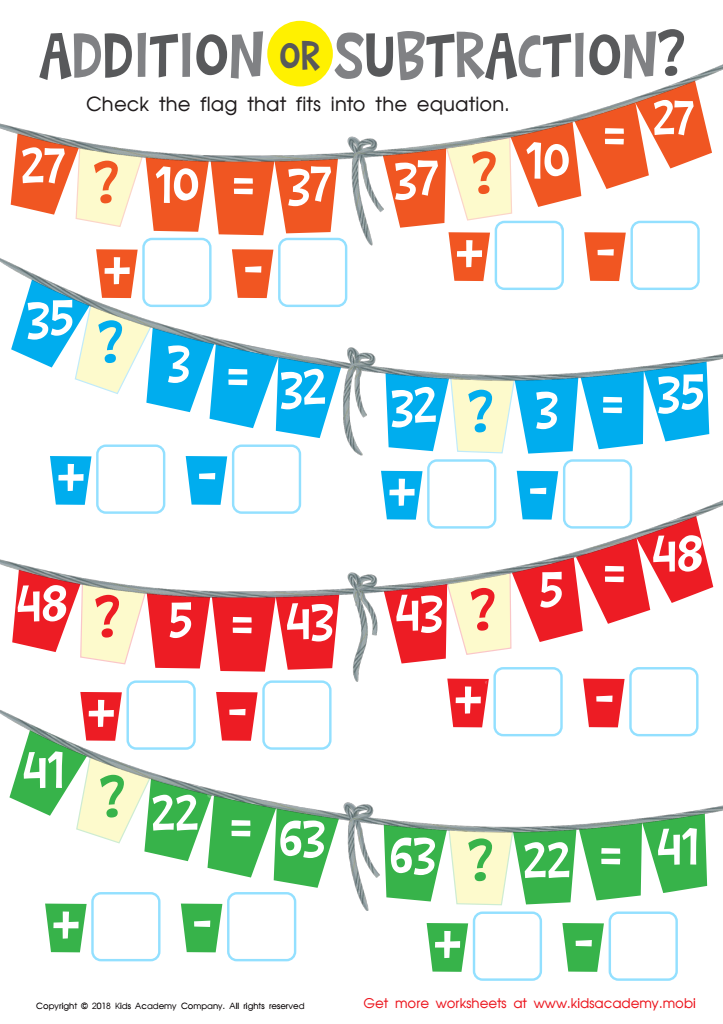
Addition or Subtraction? Worksheet
Help your math whiz's number skills advance with these colorful flag equations! With the free PDF, they'll learn to solve addition and subtraction facts by following the correct orders of operation. And the best part? They'll develop a deeper understanding of how the different operations work together within equations. Give it a try and watch their skills soar!
Addition or Subtraction? Worksheet
Worksheet
Join Kids Academy for Free
Who is primarily going to use this learning content?





Subtraction skills are foundational for a child's mathematical development, making it essential for parents and teachers to prioritize their mastery. First, subtraction isn't an isolated math skill; it interconnects with various mathematical concepts such as addition, division, and fractions. A strong grasp of subtraction aids in understanding these higher-level math topics, fostering overall numeracy.
Subtraction also plays a critical role in everyday problem-solving. From calculating change while shopping to determining how much time is left in an activity, proficiency in subtraction allows children to navigate daily tasks more confidently and independently. Moreover, having solid subtraction skills can build a child’s confidence in their mathematical abilities, promoting a positive attitude towards learning.
In the classroom context, a student's proficiency in subtraction can impact their performance across various subjects, as many educational activities require basic arithmetic skills. Struggles with subtraction can lead to difficulties in these broader academic areas, affecting overall academic achievement. Additionally, promoting these skills early on helps develop logical thinking and reasoning, critical skills not only in math but in life.
Teachers and parents should care about subtraction skills because they are a vital building block in education and daily life. Cultivating these skills early sets the stage for academic success and ensures children possess the practical tools necessary for real-world problem-solving.








