Time-telling skills Normal Worksheets
3 filtered results
-
From - To
Enhance your child's time-telling skills with our engaging Normal Worksheets! Designed for early learners, these interactive worksheets focus on teaching kids how to read clocks and understand time concepts in a fun and accessible way. From identifying hour and minute hands to solving relatable time-telling exercises, our resources cater to various learning styles and preferences. With clear instructions and vibrant illustrations, your child will gain confidence in accurately understanding and telling time. Perfect for classroom use or at-home practice, our worksheets align with educational standards, ensuring a comprehensive learning experience. Explore our Time-telling Skills worksheets and watch your child master the clock!
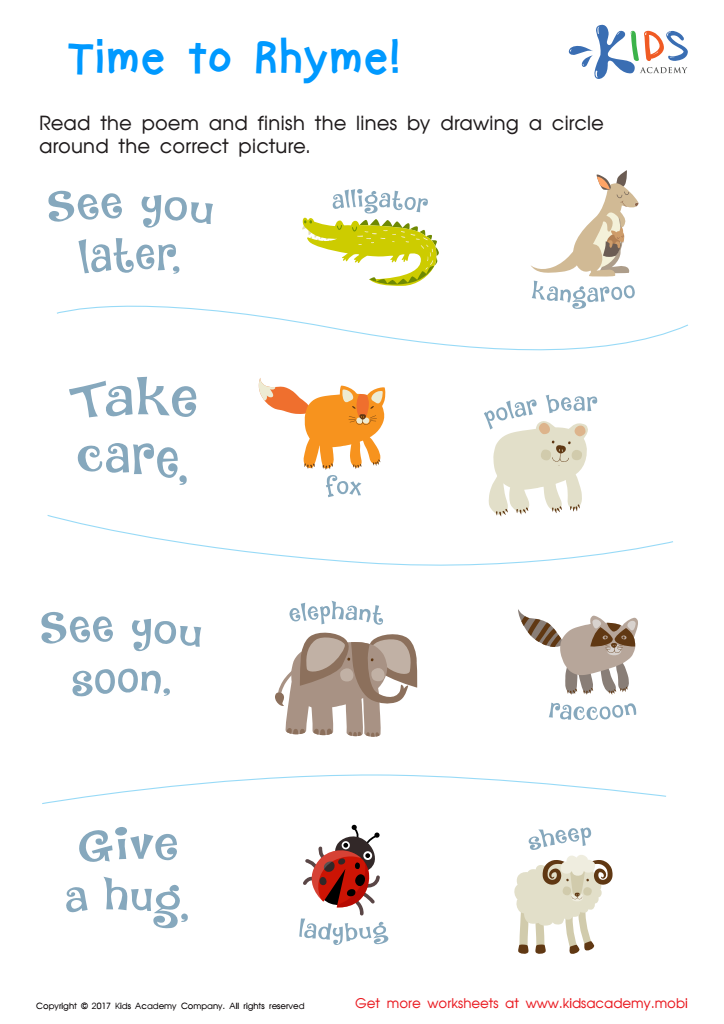
Time to Rhyme Rhyming Worksheet
 Assign to My Students
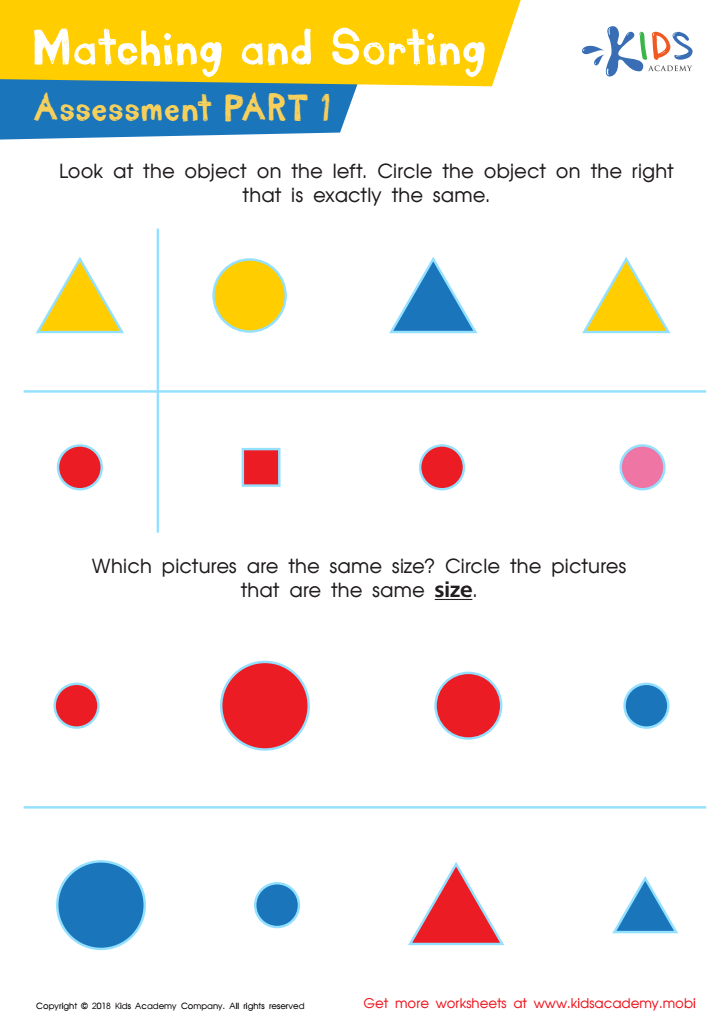
Matching and Sorting for Kindergarten: Assessment 1 Worksheet
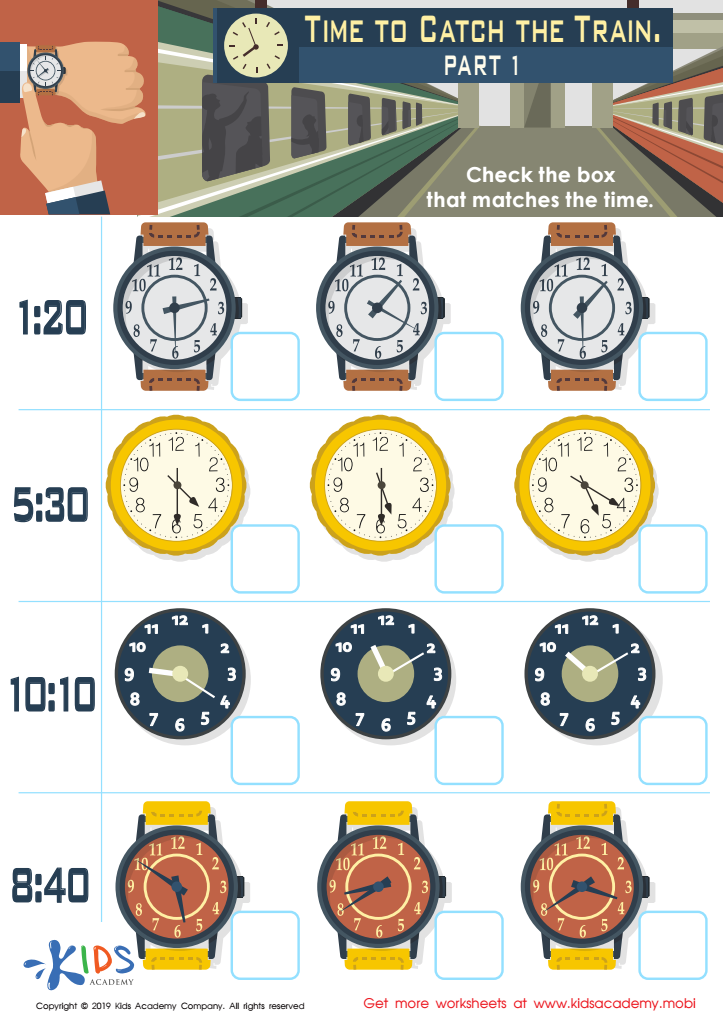
Time to Catch the Train Part 1 Worksheet






Time-telling skills are essential for children’s development and daily functioning, making them crucial for parents and teachers to emphasize. Mastering the ability to tell time helps children develop a sense of routine and structure, which is vital for managing their daily activities and responsibilities. Learning to tell time provides children with independence, enabling them to understand how to balance their academic, social, and leisure activities, ultimately boosting their confidence.
Moreover, time-telling skills are foundational for critical thinking and problem-solving. When children learn to read clocks, they engage in cognitive processes that enhance their math skills, such as counting and understanding intervals. Time-related activities encourage discussions about concepts like sequencing, time management, and the idea of past and future.
Furthermore, supporting children in acquiring time-telling skills encourages mindfulness and present-moment awareness. This is particularly important in today’s fast-paced world, where distractions are prevalent. Overall, teaching children to proficiently read and understand time can foster independence, self-regulation, and a constructive approach to productivity. For educators and parents, demonstrating the relevance of time in a child's life can further solidify understanding and promote positive outcomes in various learning settings.








