Understanding pollination Normal Worksheets
4 filtered results
-
From - To
Our "Understanding Pollination" Normal Worksheets are designed to spark curiosity and deepen understanding of how plants reproduce. Perfect for young learners, these engaging, colorful worksheets explain the essential role of bees, butterflies, and wind in the pollination process. Each activity helps children grasp crucial concepts through fun exercises that involve matching, coloring, and simple quizzes. By bridging classroom learning with natural phenomena, kids gain hands-on experience with real-world science. Ideal for home and school use, these worksheets are aligned with educational standards and aim to foster a lifelong appreciation for botanical wonders in every young mind.
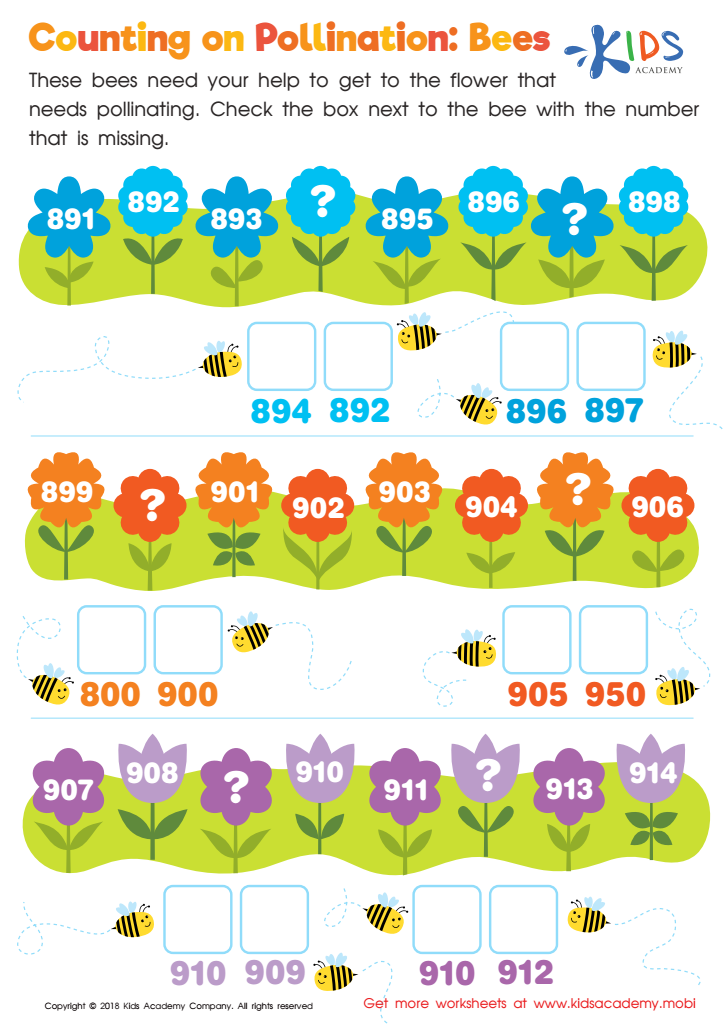
Counting on Pollination: Bees Worksheet
 Assign to My Students
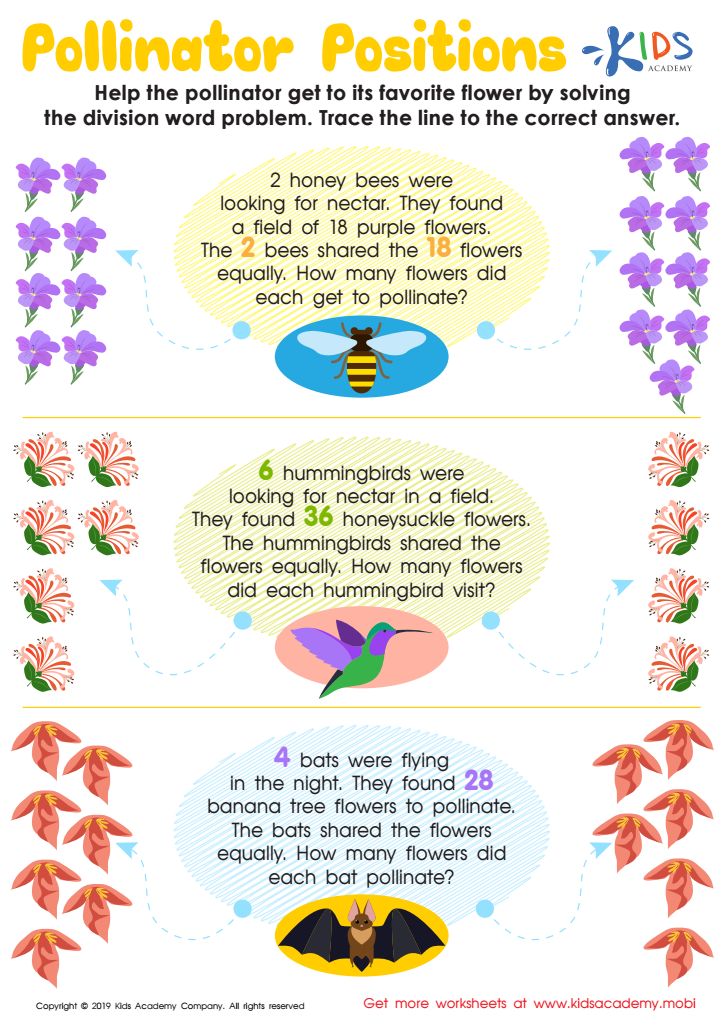
Pollinator Positions Worksheet
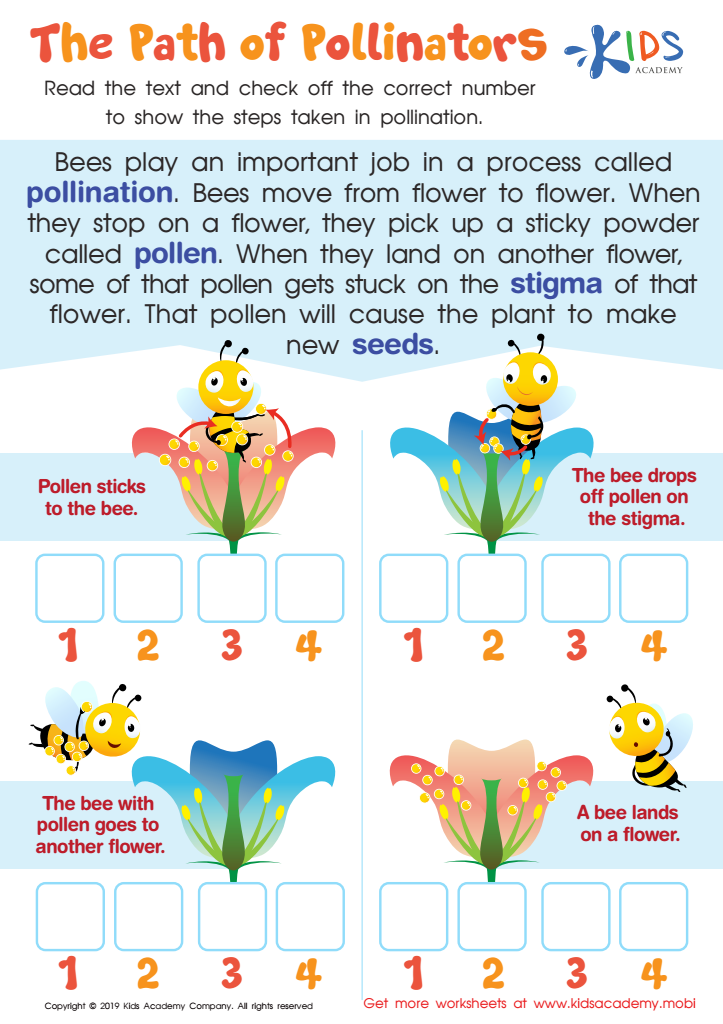
The Path of Pollinators Worksheet
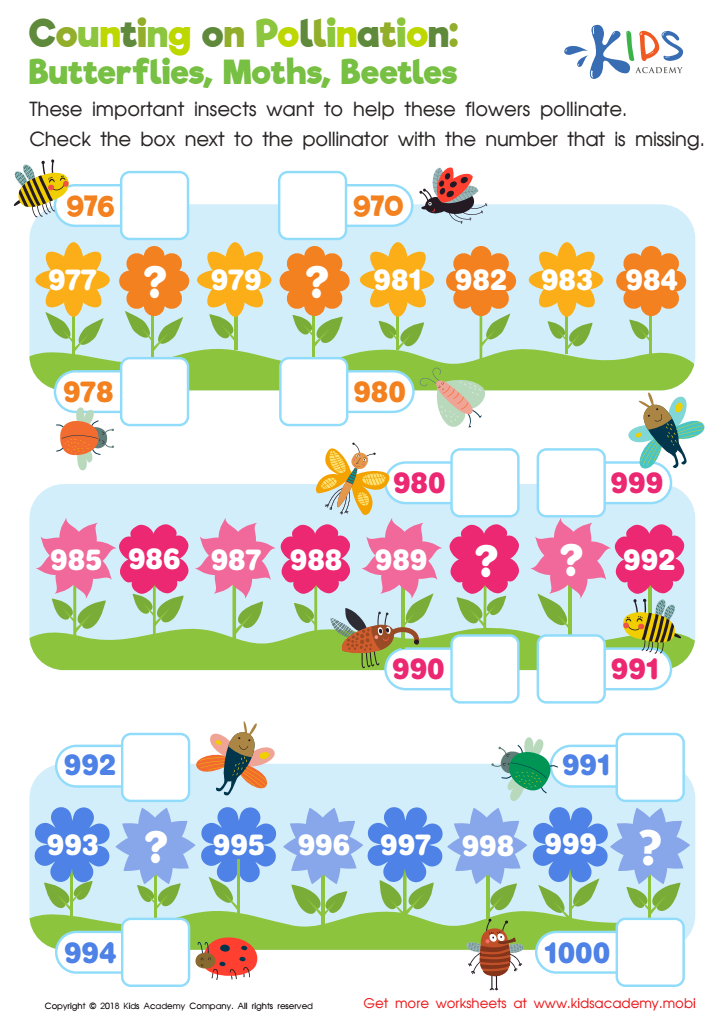
Counting on Pollination: Butterflies, Moths, Beetles Worksheet





Pollination is a vital process in the plant reproductive cycle that directly affects food production and ecosystem health. Parents and teachers should care about understanding pollination because it fosters a deeper appreciation for the natural world and underscores our reliance on nature for survival. Pollination helps plants produce fruits, vegetables, and seeds, which are critical sources of food for humans and animals alike. This understanding can drive home the importance of conserving pollinators like bees, butterflies, hummingbirds, and even wind, all of which play decisive roles in the ecosystem.
Educating children about pollination can inspire responsible and sustainable behaviors. For instance, they might understand why planting diverse flowers or reducing pesticide use can be beneficial. Engaging children with nature helps them grasp complex biological concepts in a real-world context, nurturing scientific curiosity and environmental stewardship from an early age.
Understanding pollination also links with broader educational themes such as biodiversity, food security, and climate change. As students learn that almost one-third of our food supply depends on pollinators, they become more informed global citizens, empowered to participate in meaningful conservation efforts. Ultimately, this knowledge helps build a foundation for a healthier planet and a more sustainable future.








