Visual perception Normal Geometry Worksheets
3 filtered results
-
From - To
Enhance your child's visual perception skills with our Normal Geometry Worksheets! Designed for early learners, these engaging worksheets focus on developing essential skills like shape recognition, spatial awareness, and pattern identification. Our activities combine fun visuals with interactive exercises, making learning geometry enjoyable and effective. Perfect for teachers and parents alike, these resources cater to various learning styles and promote critical thinking. By practicing with these worksheets, children will build a strong foundation in geometry and improve their overall cognitive abilities. Visit us to access a variety of worksheets that make mastering geometry a rewarding experience for young minds!
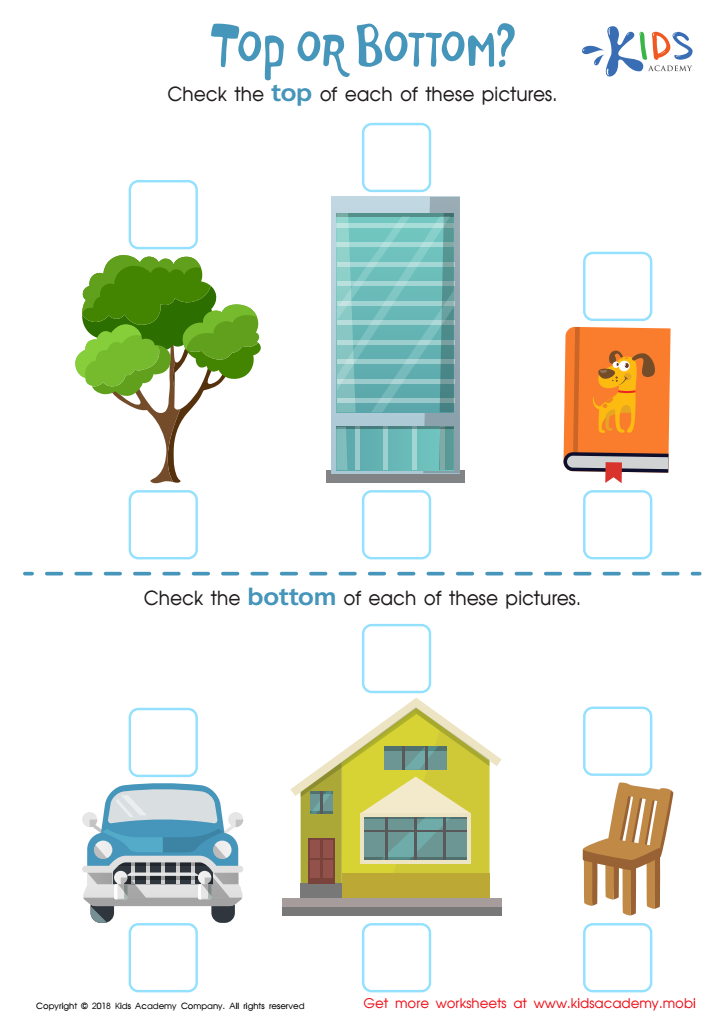
Top or Bottom Worksheet
 Assign to My Students











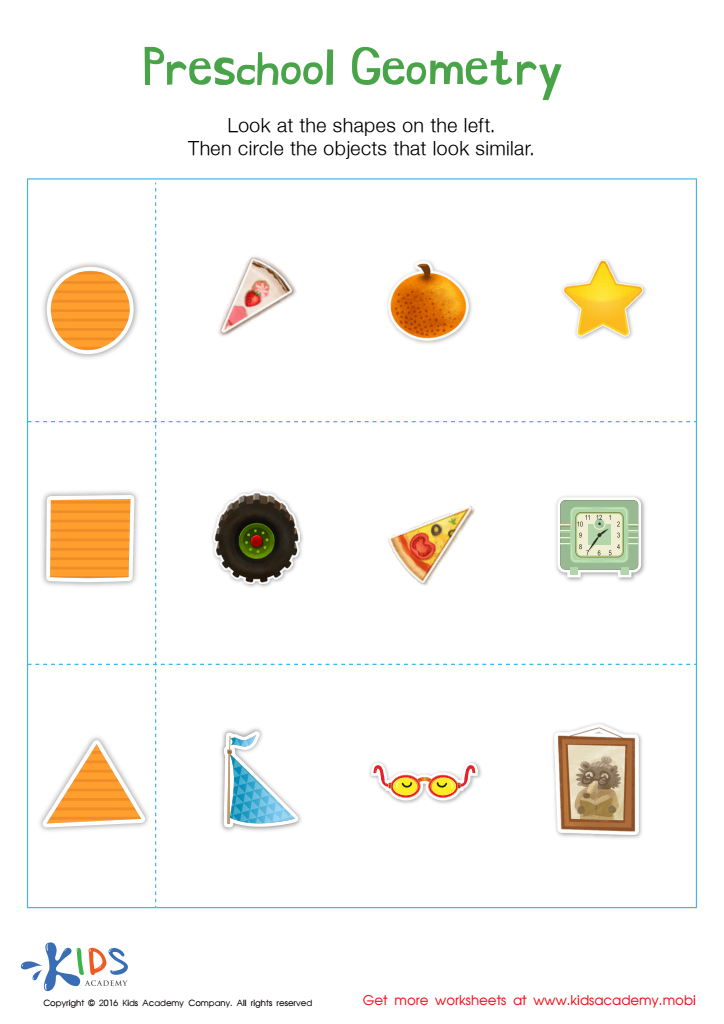
Preschool Geometry Match Up Worksheet
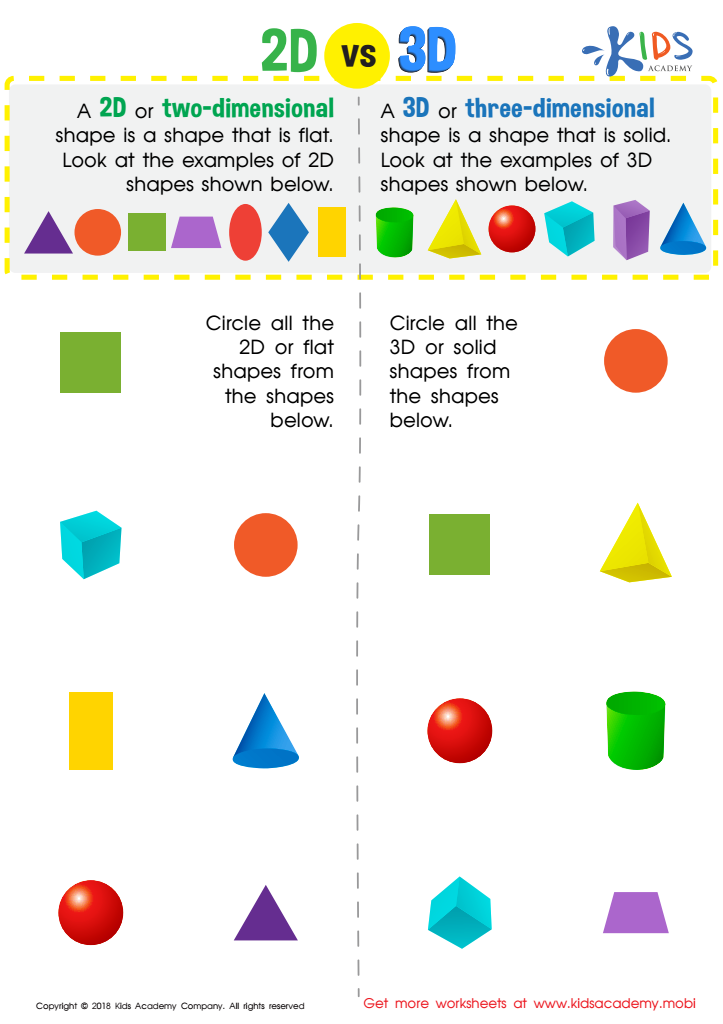
2D vs 3D Shapes Worksheet








Visual perception is crucial in early learning, particularly in understanding geometry. Parents and teachers should prioritize developing strong visual perception skills, as these foundational abilities greatly influence a child's academic success and everyday functioning.
Visual perception involves recognizing, organizing, and interpreting visual signals, which is essential for understanding shapes, sizes, positions, and spatial relationships. Normal geometry concepts, like recognizing shapes (squares, triangles, circles), understanding symmetry, and grasping spatial orientation, stem from skilled visual perception. Children who excel in these areas tend to perform better in mathematics and the sciences, fostering critical thinking and problem-solving skills.
Moreover, strong visual perception skills contribute to a child's well-being and self-confidence. Mastery in these areas enhances a child's ability to comprehend directions, follow multi-step instructions, and develop fine motor skills necessary for writing and drawing. As children find joy in visual learning, their overall engagement in classroom activities improves.
A solid foundation in visual perception also prepares children for future learning, as skills acquired in geometry translate to more complex concepts in higher grades. For these reasons, parents and teachers should actively nurture and support visual perception to ensure children flourish academically and beyond.








