Reading analog clocks Normal Math Worksheets
3 filtered results
-
From - To
Help your students master the essential skill of telling time with our engaging "Reading Analog Clocks Normal Math Worksheets." Designed for young learners, these printable sheets make learning fun and interactive by incorporating a variety of clock-reading exercises. Each worksheet offers practical activities to help children intuitively understand the minute and hour hands, boosting their confidence and proficiency. Ideal for elementary students, our resources promote hands-on learning and critical thinking. Equip your classroom with the tools needed for successful time-telling practice, all downloadable and easy to use directly from our website.
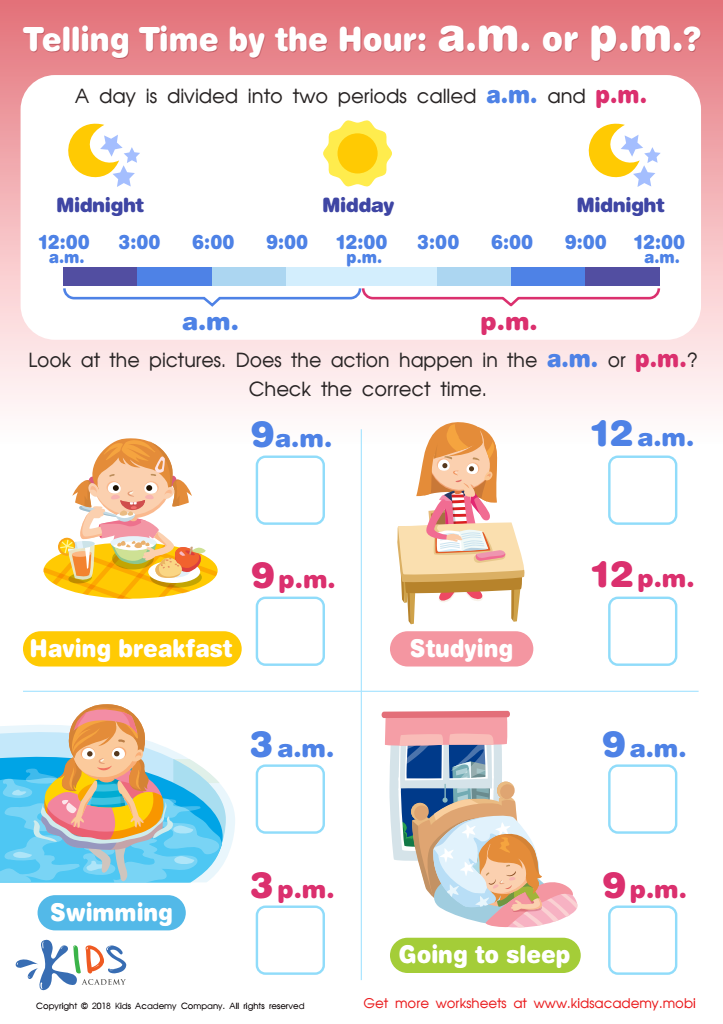
Tilling Time by the Hour: a.m. or p.m.? Worksheet
 Assign to My Students
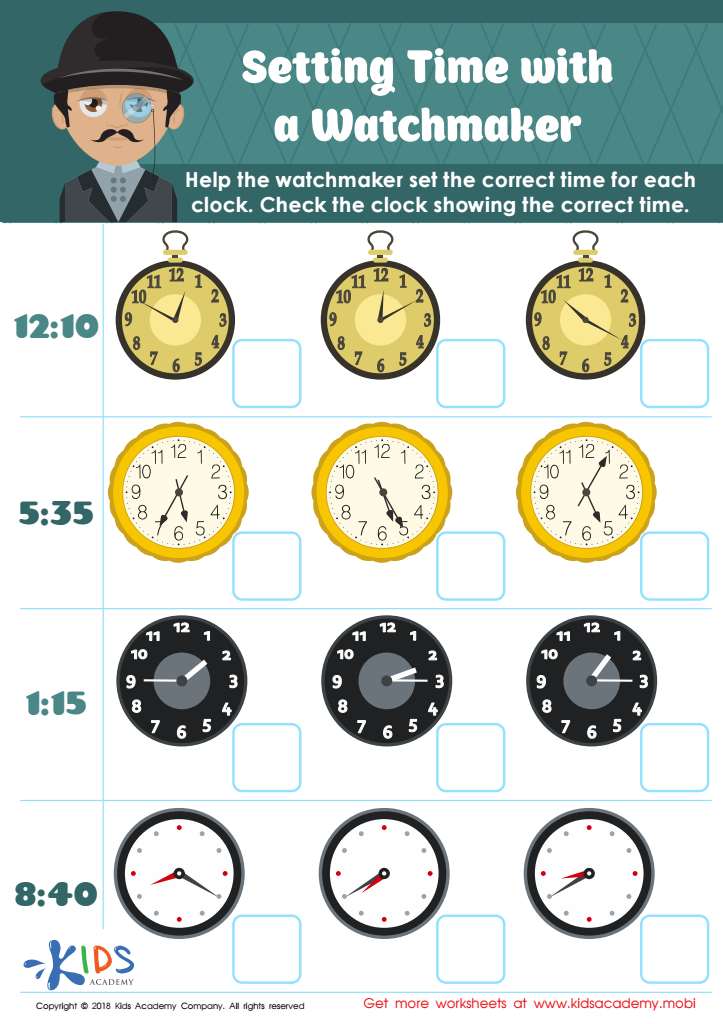
Setting Time with Watchmaker Worksheet
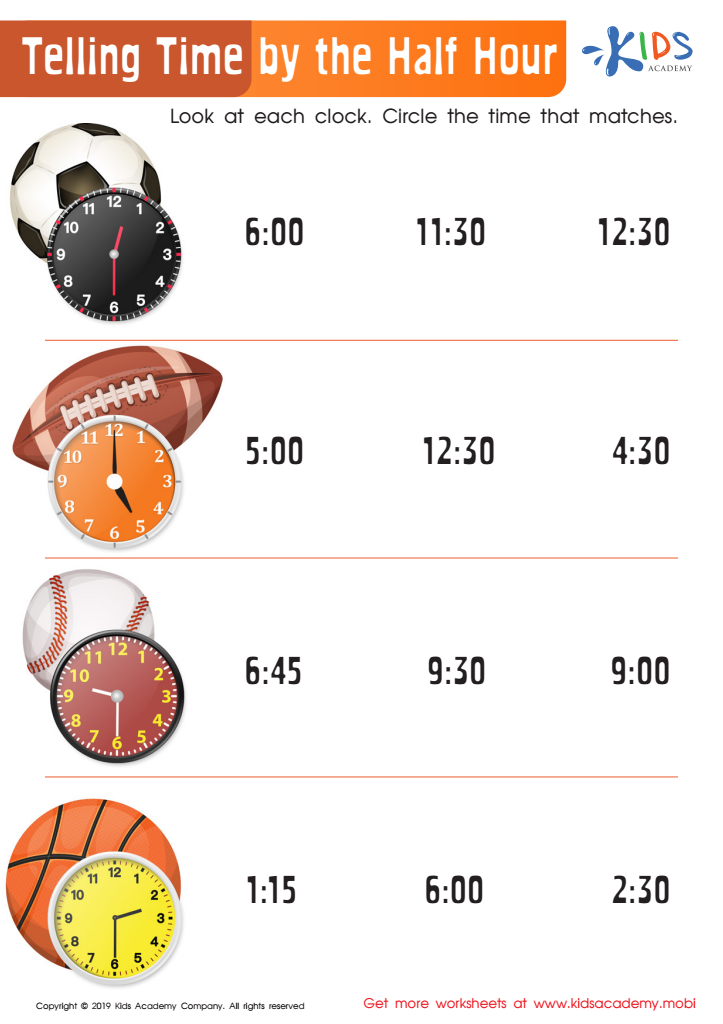
Telling Time by the Half Hour Worksheet



.jpg)




Parents and teachers should care about teaching children to read analog clocks because it enhances their understanding of time, fosters critical thinking, and develops essential life skills. Learning to read analog clocks goes beyond just telling time; it involves reading intervals, understanding the passage of time, and grasping the concept of hours, minutes, and seconds. Analog clocks visually represent time's continuity and fractions, helping children grasp mathematical concepts like halves and quarters, which are foundational for more advanced math.
Moreover, reading analog clocks improves children's problem-solving skills and strengthens their ability to connect physical space with abstract concepts, such as estimating how long activities will take. Knowing how to read analog matches real-world scenarios like catching a bus, meeting deadlines, and managing schedules, fostering responsibility and time management from an early age.
Despite the ubiquity of digital clocks and smartphones, the analog clock face remains a pervasive part of daily life. Public places like schools, airports, and traditional settings still heavily rely on analog displays. By ensuring children are adept at reading analog clocks, parents and teachers are equipping them with a versatile, indispensable skill that integrates math learning with everyday practical application and awareness.








