Understanding pollination Normal Math Worksheets
3 filtered results
-
From - To
Explore the fascinating world of pollination with our "Understanding Pollination Normal Math Worksheets." These engaging and educational worksheets combine essential math skills with intriguing facts about pollination processes in nature. Designed for early learners, the activities range from counting and addition to simple problem-solving, all while reinforcing knowledge about plants and their pollinators. Through colorful illustrations and interactive exercises, students will grasp the importance of pollination and its role in the ecosystem. Perfect for classroom or home learning, these worksheets encourage critical thinking and help young learners develop a strong foundation in math while igniting curiosity about environmental science.
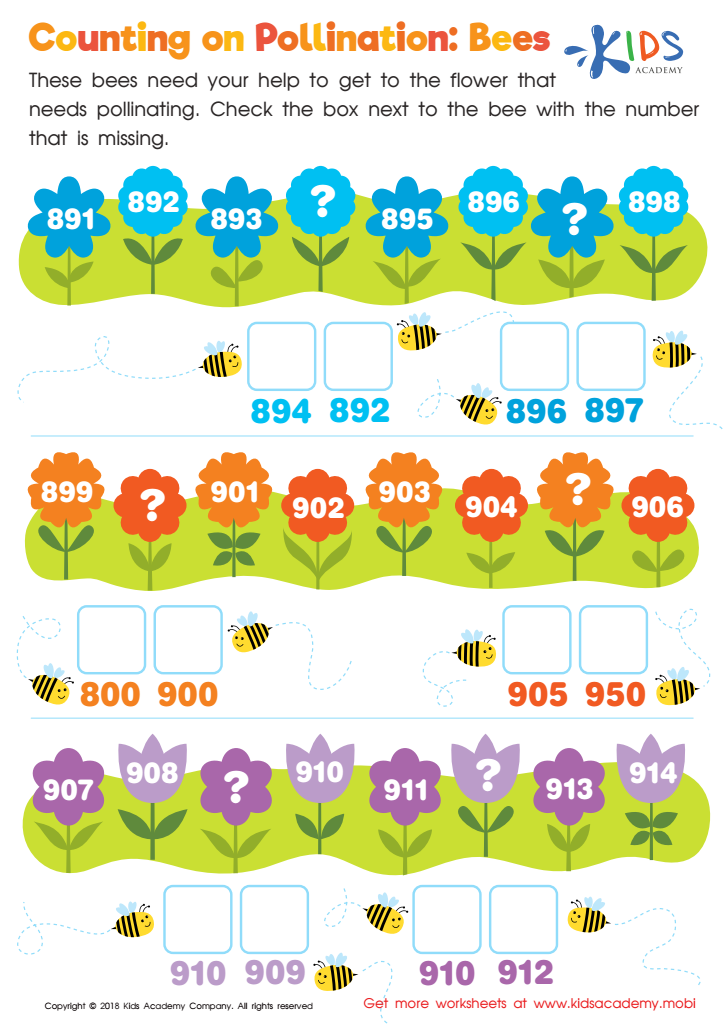
Counting on Pollination: Bees Worksheet
 Assign to My Students
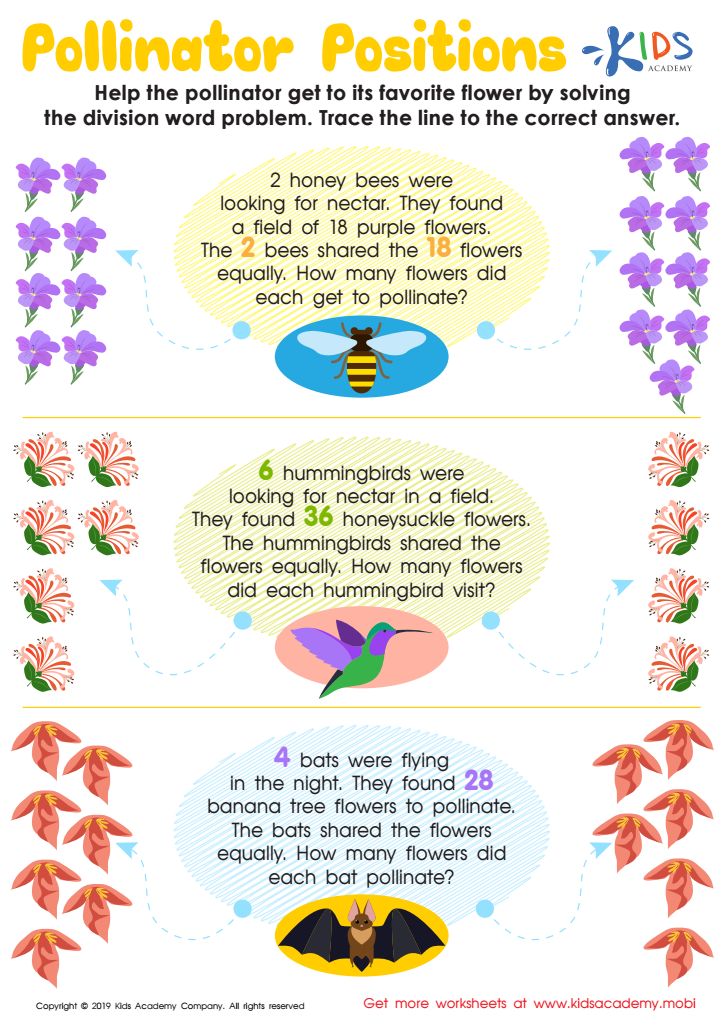
Pollinator Positions Worksheet
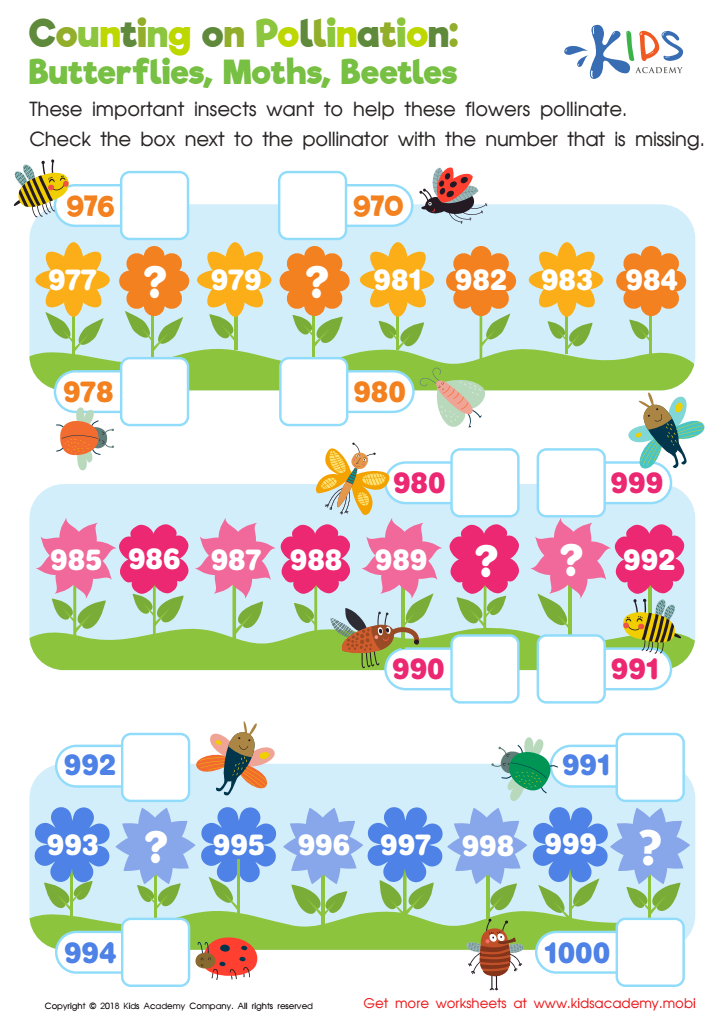
Counting on Pollination: Butterflies, Moths, Beetles Worksheet





Understanding pollination is essential for both parents and teachers, primarily because it supports children's education about nature and science. Pollination, the process by which plants reproduce, is vital for the growth of fruits, vegetables, and many plants that support our ecosystems and food supply. Teaching children about pollination not only enhances their knowledge of biology but also instills a sense of environmental responsibility and appreciation for nature.
Incorporating concepts of pollination into the classroom and at home provides an opportunity for hands-on learning. Students can engage in activities, like planting seeds and observing the growth process, which helps them understand life cycles and ecosystems. This context enriches their learning experience, bridging concepts in science and mathematics, such as measurement and data collection related to plants and their growth.
Moreover, with the recent global concerns about declining bee populations and the impacts of climate change, understanding pollination fosters discussions about sustainability. When children grasp the importance of pollinators, they become more conscientious about their environment and community. Thus, parents and teachers should prioritize lessons on pollination to empower children with knowledge that links scientific concepts to real-world applications and encourages responsible stewardship of the planet.








