
Fine Motor Skills Normal Sorting Worksheets
3 filtered results
Difficulty Level
Grade
Age
-
From - To
Subject
Activity
Standards
Enhance your child's fine motor skills with our engaging Normal Sorting Worksheets! Designed for early learners, these worksheets combine sorting activities with hands-on exercises to improve dexterity, hand-eye coordination, and cognitive development. Children will enjoy sorting various objects, colors, and shapes, fostering their ability to categorize and organize. Each worksheet is creatively designed to make learning fun and interactive while providing essential practice in fine motor skills. Ideal for home or classroom settings, these resources support the early educational journey in a playful way. Explore our collection today to boost your child's skills and confidence!
Favorites
With answer key
Interactive
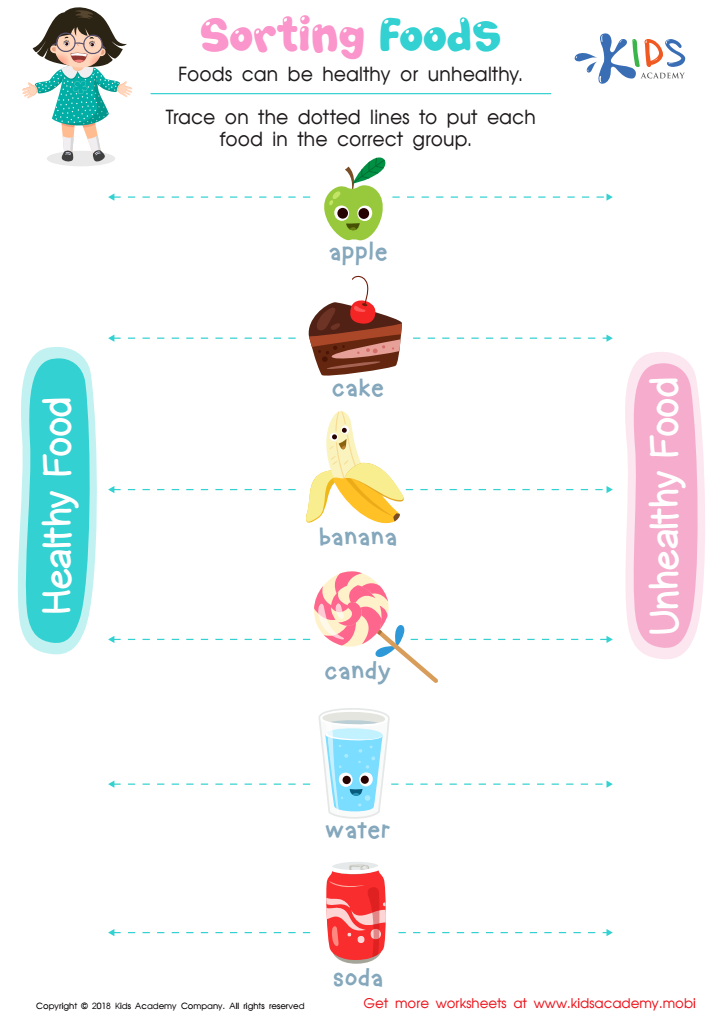
Sorting Food Worksheet
This delightful worksheet boosts critical thinking and fine motor skills. Kids use prior knowledge and pictures to sort foods into healthy and unhealthy groups. Tracing lines support accurate sorting and matching. Enjoy fun and free learning!
 Assign to My Students
Sorting Food Worksheet
Worksheet
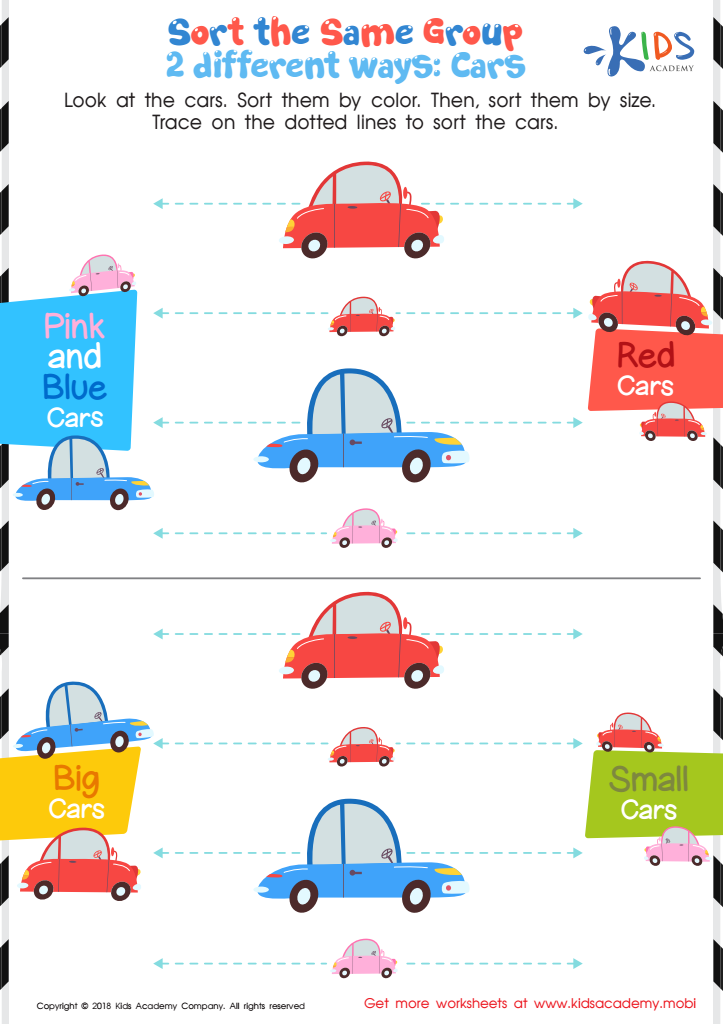
Sort the Same Group 2 Different Ways: Cars Worksheet
Look at the pictures with your child. Can they identify the objects? Ask them to sort the cars first by color and then size. Assist them to trace the dotted lines to sort the cars by color and size. This worksheet lets you easily assess your child's color and size organization skills.
Sort the Same Group 2 Different Ways: Cars Worksheet
Worksheet
Join Kids Academy for Free
Who is primarily going to use this learning content?








Fine motor skills play a significant role in a child's overall development, particularly in early childhood education. Normal sorting, which involves categorizing objects by size, shape, or color, is an essential fine motor activity that nurtures dexterity, hand-eye coordination, and hand strength. Parents and teachers should care about facilitating these skills for several reasons.
Firstly, fine motor skills are foundational for everyday tasks, such as writing, dressing, and self-feeding. As children engage in normal sorting, they practice gripping, manipulating, and controlling small objects, which enhances their readiness for these activities.
Secondly, normal sorting contributes to cognitive development. It promotes problem-solving skills and critical thinking as children learn to differentiate and categorize based on specific attributes. This process directly correlates with early math and science concepts, laying the groundwork for future academic success.
Lastly, engaging in sorting activities fosters concentration and patience. As children complete sorting tasks, they improve their attention spans and learn the value of persistently working toward a goal. By prioritizing fine motor skills through normal sorting, parents and teachers empower children with the tools they need for everyday tasks and future learning opportunities. Overall, investing in these skills is crucial for a child’s holistic development.








