Basic Math Skills Normal Word Problems Worksheets
4 filtered results
-
From - To
Explore our "Basic Math Skills Normal Word Problems Worksheets" designed to enhance your child's mathematical proficiency in a fun and engaging way. These worksheets provide a variety of real-life word problems that encourage critical thinking and problem-solving skills. Aligned with common core standards, each worksheet focuses on essential concepts such as addition, subtraction, multiplication, and division. Perfect for beginner learners, they promote interactive learning and help children practice math in relatable contexts. Easy to print and suitable for home or classroom use, these worksheets will support your child's journey to mastering basic math skills with confidence and enthusiasm!
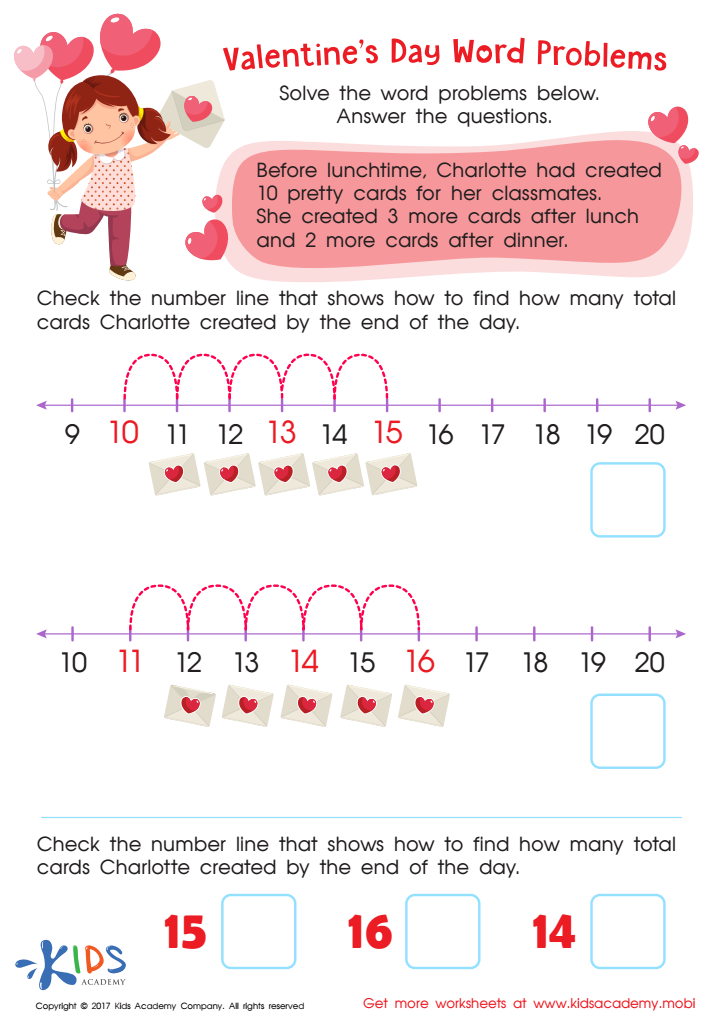
Valentines Day Word Problem Worksheet
 Assign to My Students
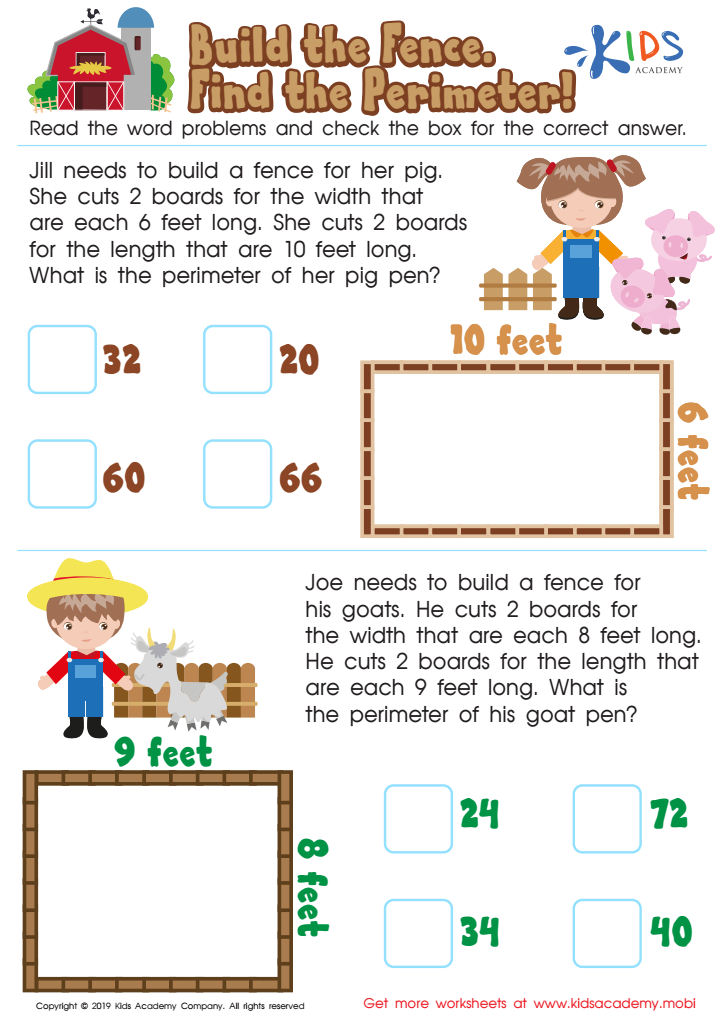
Build the Fence, Find the Perimeter Worksheet
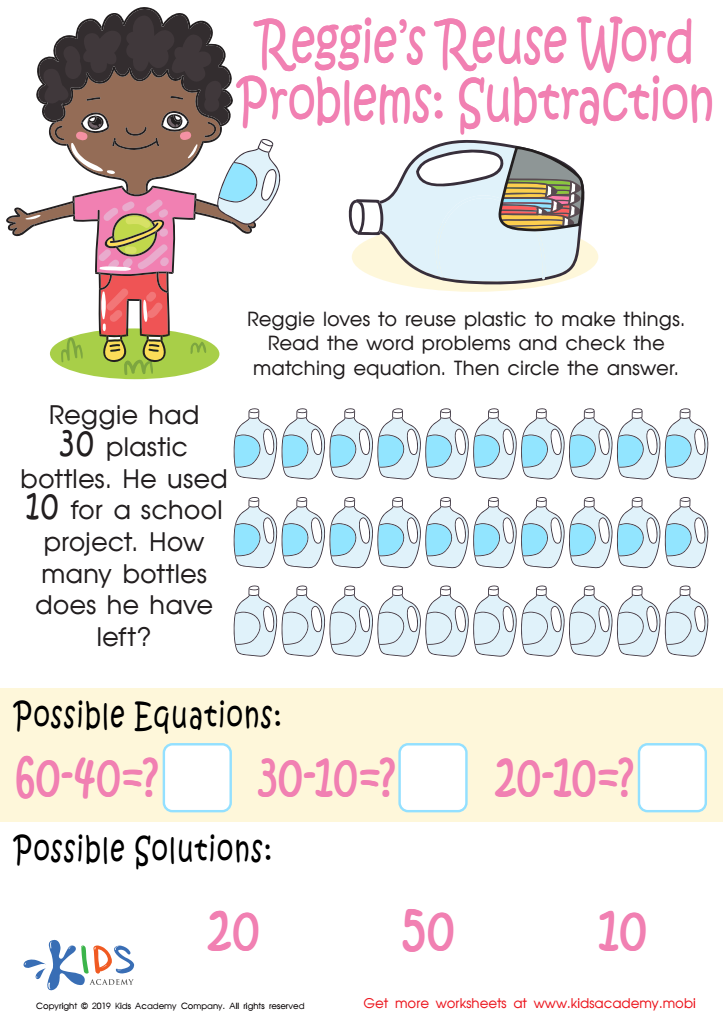
Reggie's Reuse Word Problems: Subtraction Worksheet
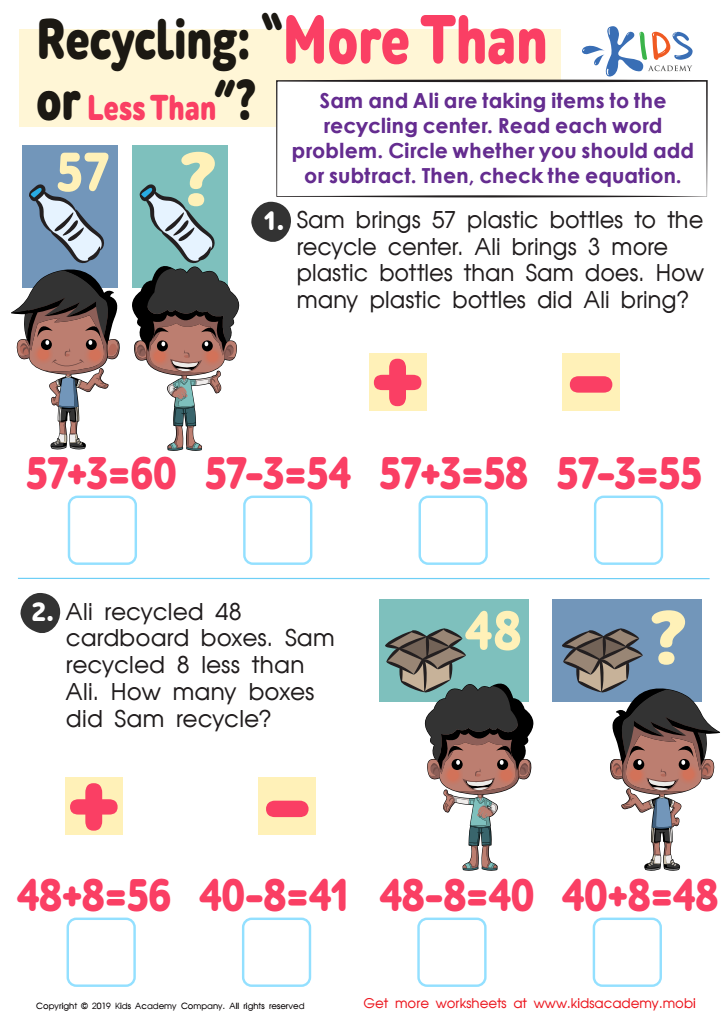
Recycling - More or Less Worksheet








Parents and teachers should prioritize basic math skills and the understanding of normal word problems because these skills are foundational for children's cognitive development and future academic success. Word problems, in particular, bridge the gap between abstract mathematical concepts and real-life applications. By engaging with these problems, children learn to extract relevant information, identify relationships, and apply problem-solving strategies.
Moreover, proficiency in basic math equips students with critical thinking skills necessary for navigating everyday situations, such as budgeting, cooking, and planning payments, thereby fostering independence. The ability to decode word problems also enhances reading comprehension, as students must comprehend language in order to solve the problems effectively.
Additionally, early mastery of math concepts boosts confidence and reduces math anxiety, creating a more positive attitude towards learning. This holistic approach not only helps in math but supports learning across disciplines, reinforcing essential skills like reasoning and logic.
By emphasizing basic math skills and word problems, parents and teachers set the groundwork for lifelong mathematical thinking, which is increasingly vital in today’s technology-driven world. Ultimately, these skills cultivate informed, capable individuals who can thrive in both academic settings and everyday life.








