Reading readiness Normal Preschool Phonics Worksheets
3 filtered results
Difficulty Level
Grade
Age
-
From - To
Subject
Activity
Standards
Explore our “Reading Readiness Normal Preschool Phonics Worksheets,” designed to cultivate foundational literacy skills in young learners. These engaging and interactive worksheets introduce preschoolers to essential phonics concepts alongside the alphabet, enhancing their reading preparedness. Each worksheet is tailored to spark creativity through fun activities, including matching letters with sounds, tracing exercises, and identifying phonetic patterns. Perfect for at-home practice or classroom learning, our resources aid in developing sound recognition and early reading abilities. Foster a love for reading and set the stage for academic success with these carefully crafted worksheets that make learning enjoyable and effective for your little ones!
Favorites
With answer key
Interactive
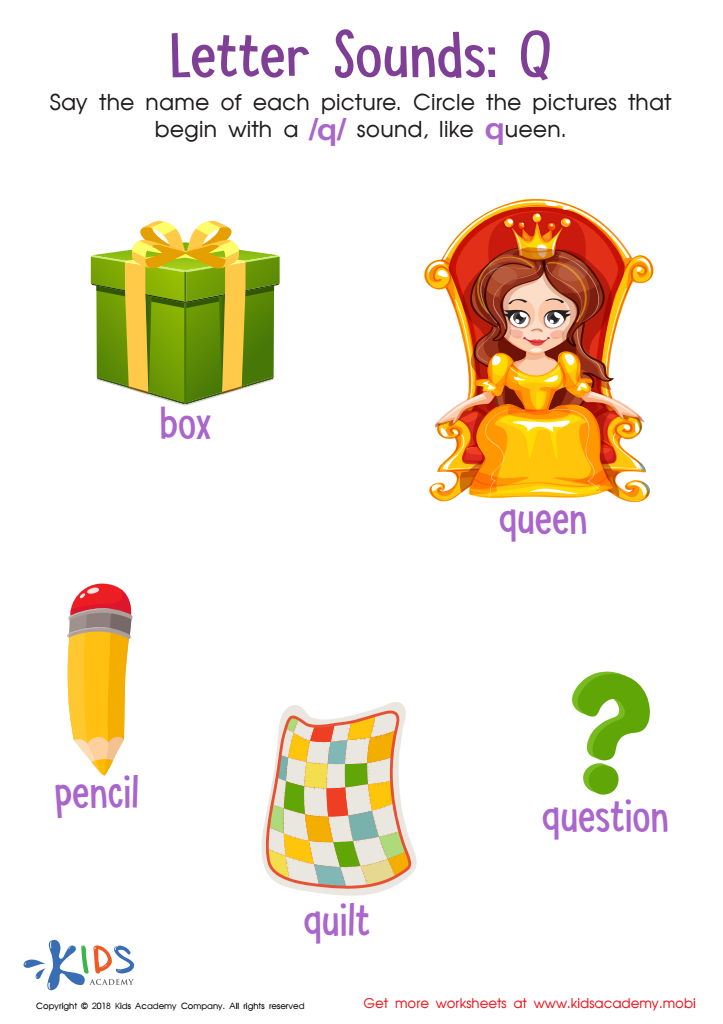
Letter Q Sounds Worksheet
Kids can get confused between "K" and "Q" sounds. Help them learn with this phonics worksheet. They'll name each image and read the word underneath. Point out that words with "Q" also have a "U" which affects how it sounds. Have them circle the matching pictures and watch as they learn this unique letter sound.
 Assign to My Students
Letter Q Sounds Worksheet
Worksheet
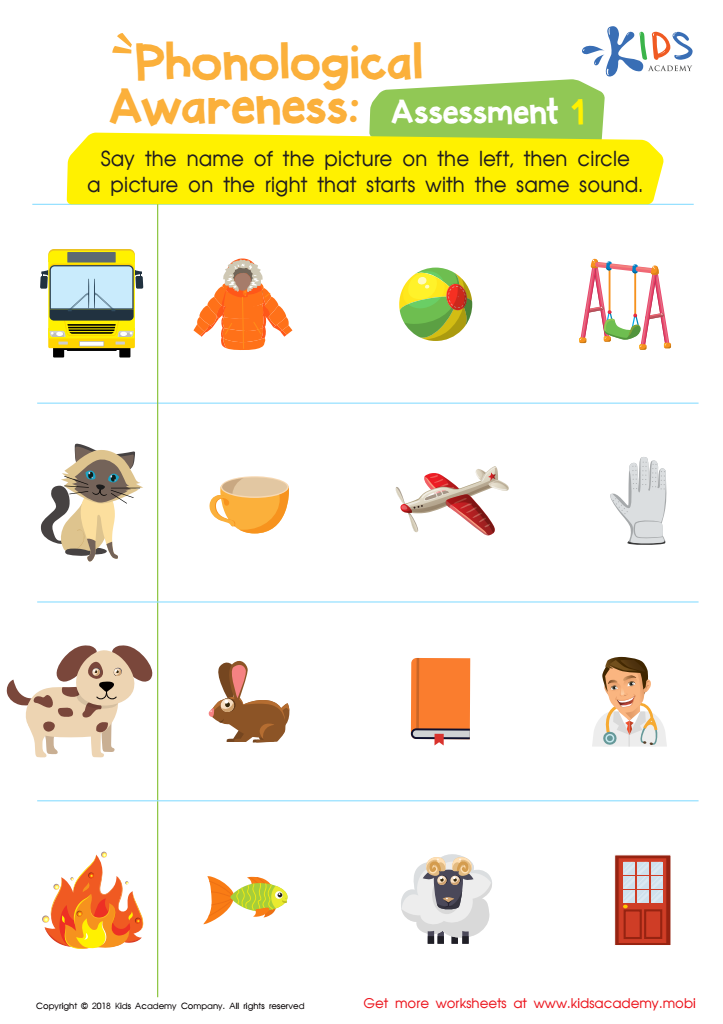
Phonological Awareness: Assessment 1 Worksheet
This worksheet helps kids build key phonics skills for pre-reading. They say each picture name aloud, focusing on the starting sound. Then, they match the sound with an image in the same row. Use as a checkpoint for kindergarten or grade 1 phonics readiness.
Phonological Awareness: Assessment 1 Worksheet
Worksheet
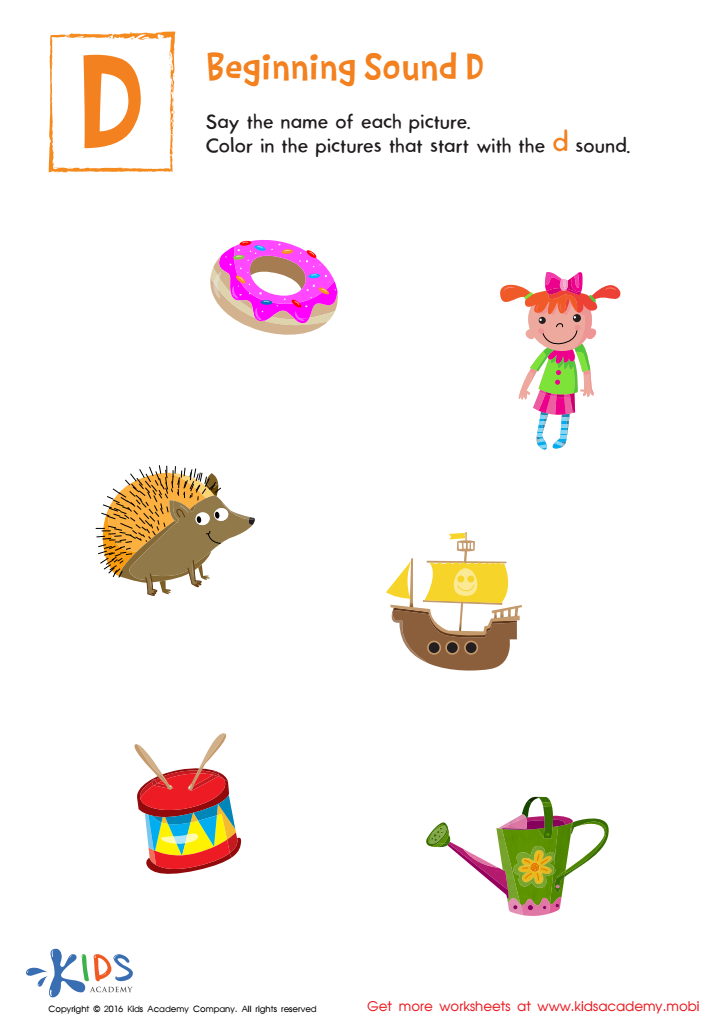
Beginning Sound D Worksheet
Reinforce phonics with this vibrant beginning sound d worksheet! Pictures help kids identify words beginning with 'd' and develop early reading skills. Sounding out each word increases literacy!
Beginning Sound D Worksheet
Worksheet
Join Kids Academy for Free
Who is primarily going to use this learning content?





Reading readiness is critical for early literacy development, and parents and teachers play a vital role in fostering this skill in preschool-aged children. At this stage, phonics instruction is especially important, as it lays the groundwork for reading success. Understanding phonics helps children recognize the relationship between letters and sounds, enabling them to decode words properly.
When children are reading-ready, they develop confidence, a love for reading, and strong comprehension skills. This not only enhances their academic performance but also impacts their overall cognitive development. Engaging preschoolers with age-appropriate phonics activities helps to cultivate phonemic awareness—the ability to hear, identify, and manipulate individual sounds in words—which is essential for fluent reading.
Moreover, investing time in reading readiness ensures that children develop essential communication skills, which are critical for social interactions and building relationships. Parents can reinforce phonics learning at home by reading, engaging in letter recognition games, and encouraging storytelling.
Teachers can personalize phonics activities to cater to different learning paces and preferences, supporting every child’s individual growth. Ultimately, prioritizing reading readiness and phonics in preschool can create a strong foundation that leads to lifelong literacy and academic success.