Color recognition Normal Preschool Worksheets - Page 2
26 filtered results
-
From - To

Astronaut Coloring Page
 Assign to My Students
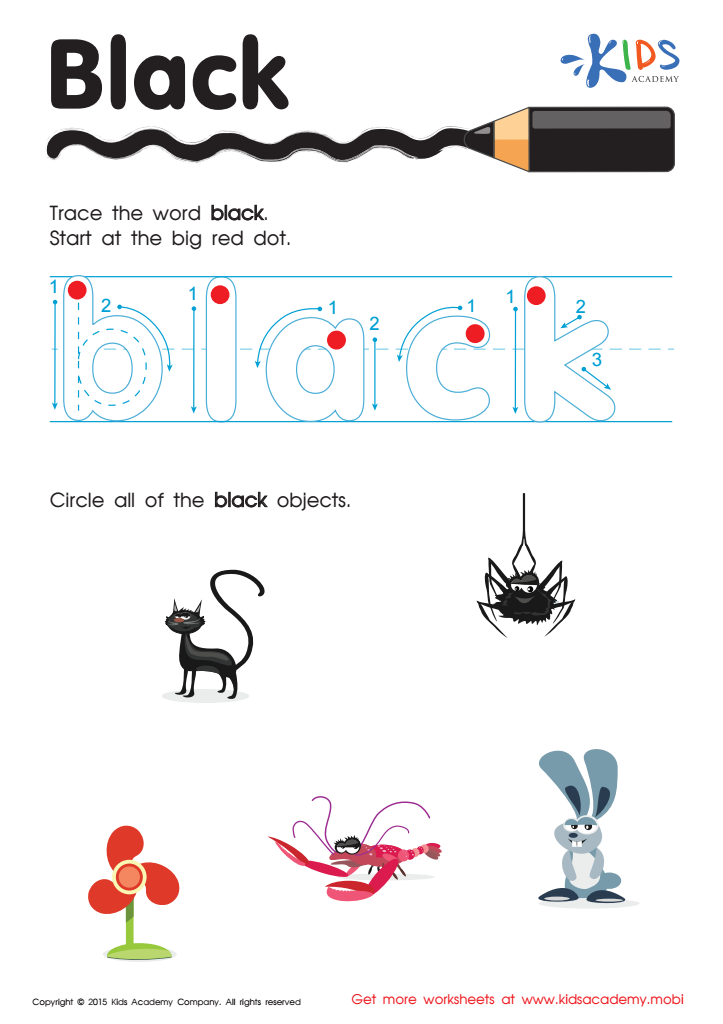
Black Tracing Color Words Printable








Color recognition is a fundamental skill in early childhood development that parents and teachers should prioritize for several reasons. Firstly, it serves as a building block for more complex cognitive processes. Understanding and identifying colors help children categorize and interpret the world around them, laying the groundwork for later skills in subjects such as math and science where sorting and classifying are essential.
Secondly, color recognition plays a role in language development. As children learn the names of colors, they expand their vocabulary and start forming more complex sentences. This not only improves their communication skills but also enhances their ability to follow instructions, participate in discussions, and express themselves creatively.
Social and emotional development is another key factor. Recognizing colors can help children better understand their own emotions and convey them effectively. For example, they might associate certain colors with feelings or events, aiding in emotional expression which is crucial for mental well-being.
In addition, engagement in activities involving colors, such as art and playful learning exercises, stimlates creativity and fine motor skills. Thus, incorporating color recognition into early education enriches a child holistically, paving the way for academic and personal success. By fostering this essential skill, parents and teachers set a strong foundation for various avenues of learning and development.