Rhyming skills development Normal Preschool Worksheets
3 filtered results
-
From - To
Help your preschooler enhance their rhyming skills with our engaging Normal Preschool Worksheets from Kids Academy. Designed specifically for young learners, these printable activities promote phonemic awareness, improving their ability to recognize and produce rhyming words. Through fun exercises like matching rhyming pairs and completing rhyming word families, children build a strong foundation for reading and language development. Our worksheets are crafted to support early literacy in a playful, effective way, making learning both enjoyable and educational. Strengthen your child's language skills today with Kids Academy rhyming worksheets, nurturing a love for words and sounds.
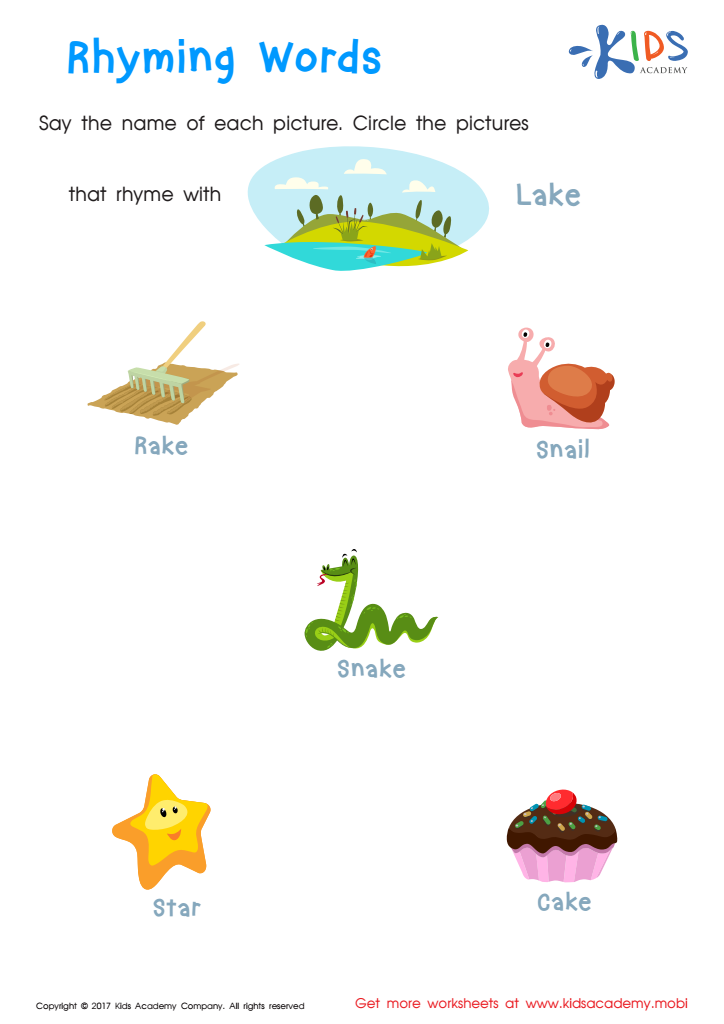
Rhyming Words Rhyming Worksheet
 Assign to My Students
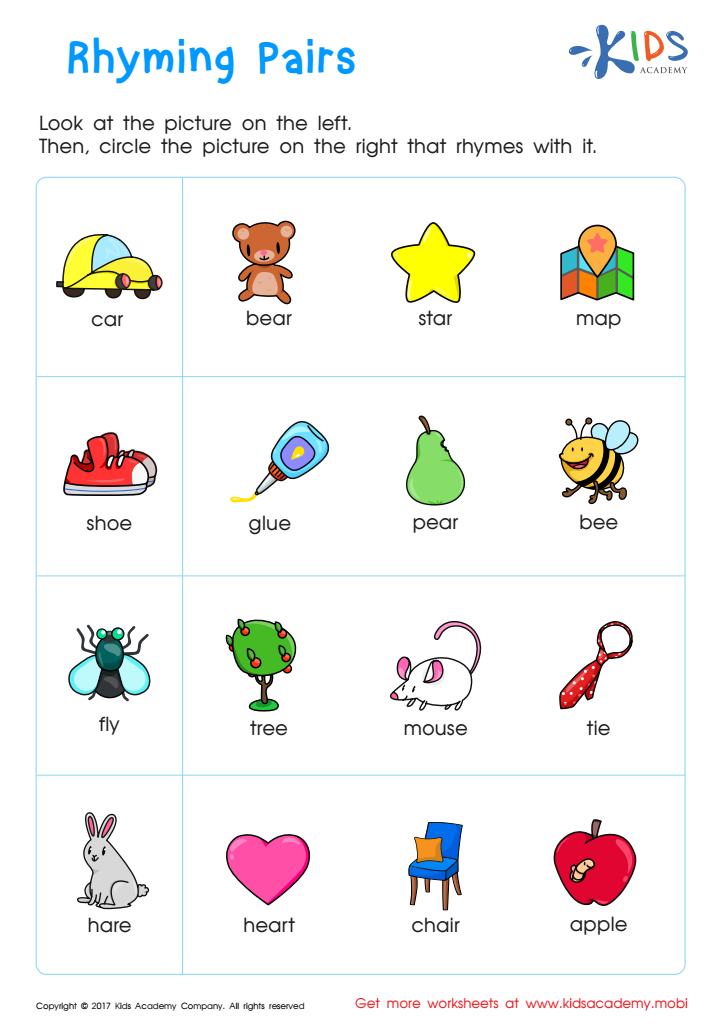
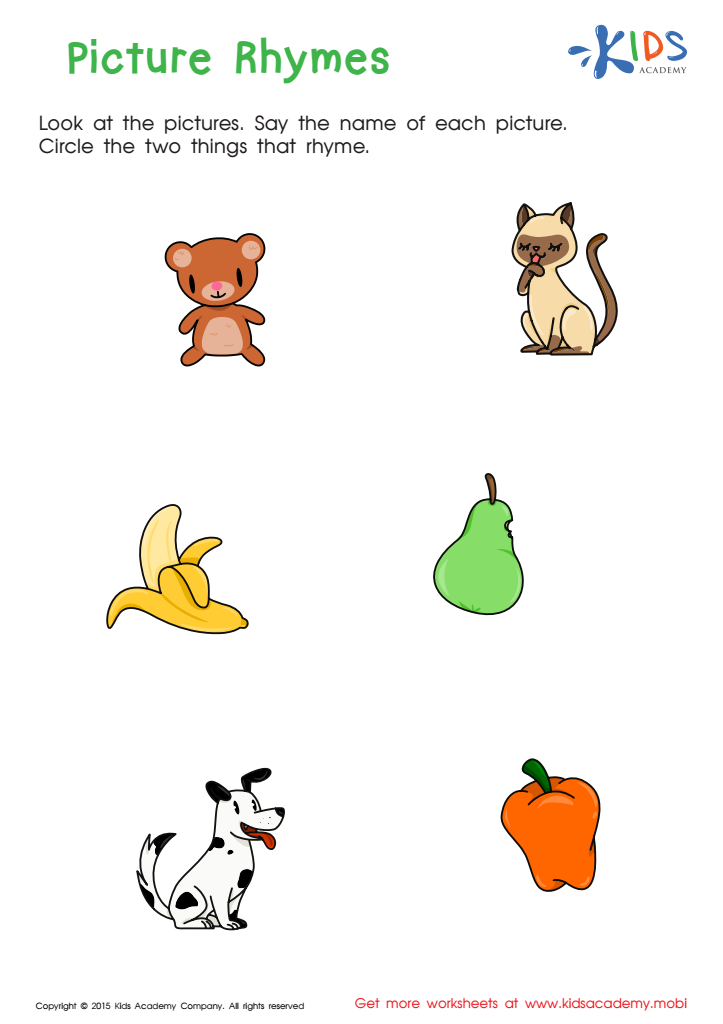
First Words: Picture Rhymes Worksheet






Rhyming skills development in preschoolers is foundational for their emerging literacy, making it a critical focus for parents and teachers. When children identify and generate rhymes, they enhance their phonological awareness—the ability to recognize and manipulate sounds in words. This skill is essential for later reading and writing proficiency.
Understanding rhymes helps children discern patterns and structures in language, enabling them to predict and decode new words. This predictive ability aids in smoother and more accurate reading. Furthermore, recognizing rhyming words can boost memory and recall, helping children remember and internalize new vocabulary.
Moreover, engaging in rhyming activities like songs, rhymes, and poems makes learning enjoyable and interactive, fostering a love for language and reading. This positive association with reading and language arts encourages a lifelong interest in literacy.
Socially, rhyming activities often involve group interactions, promoting collaboration, listening, and turn-taking among peers. It's also a confidence booster; children feel proud to participate in and understand playful language games.
Thus, prioritizing rhyming skills development equips preschoolers with crucial tools for academic success, cognitive growth, and social development. Parents and teachers have a significant role in nurturing these skills through intentional and playful engagements.