Problem-Solving Skills Normal Preschool Addition Worksheets
3 filtered results
-
From - To
Enhance your preschooler's problem-solving abilities with our engaging "Problem-Solving Skills Normal Preschool Addition Worksheets." Specifically designed to polish early math skills, these worksheets provide a perfect blend of learning and fun. With visually appealing exercises that focus on basic addition, children will improve their cognitive and analytical skills. Our printable worksheets are tailored for young learners, ensuring they progressively build confidence in handling numbers. Through colorful illustrations and interactive tasks, kids can practice adding numbers in an exciting and stress-free manner. Foster a love for math in your preschooler and watch their problem-solving capabilities soar with these expert-designed activities!
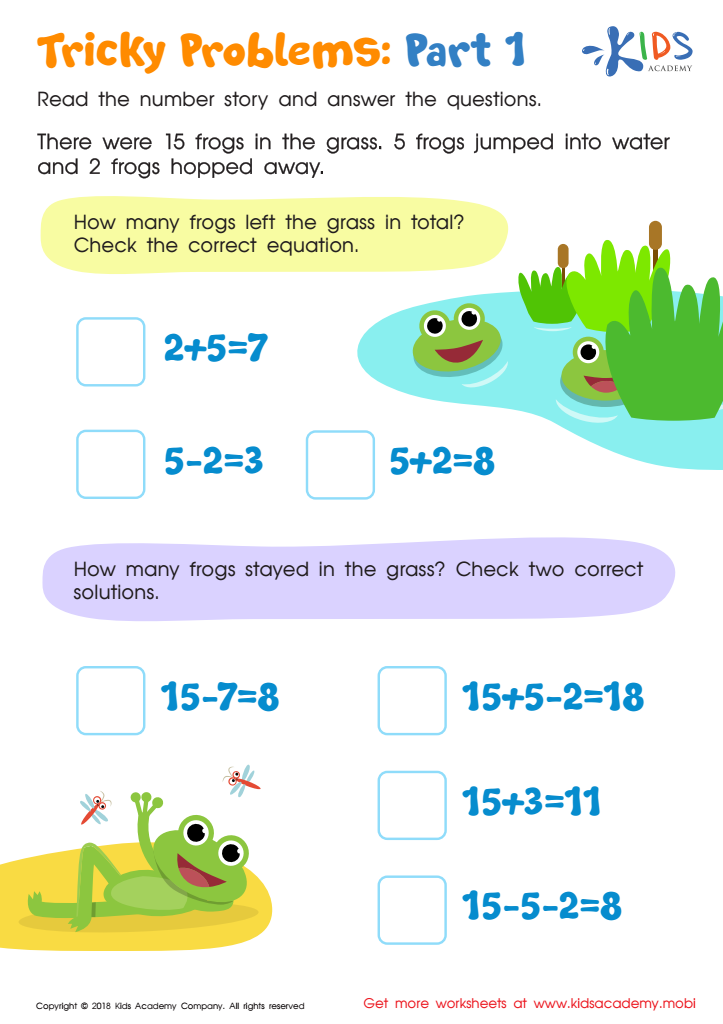
Tricky Problems Worksheet: Part 1
 Assign to My Students
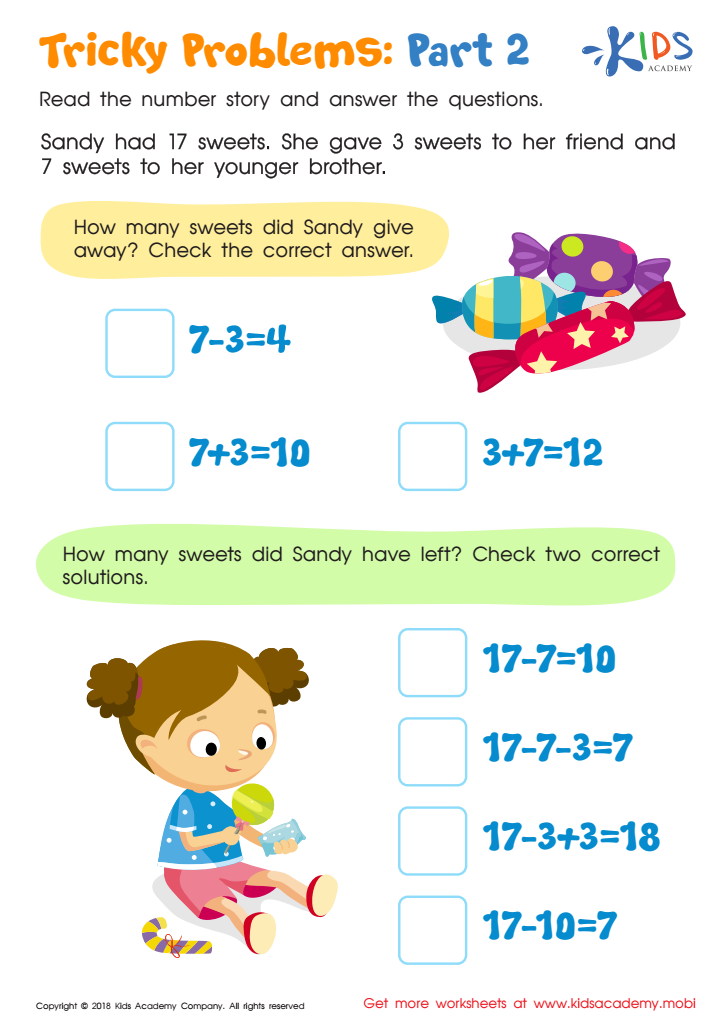
Tricky Problems Worksheet: Part 2
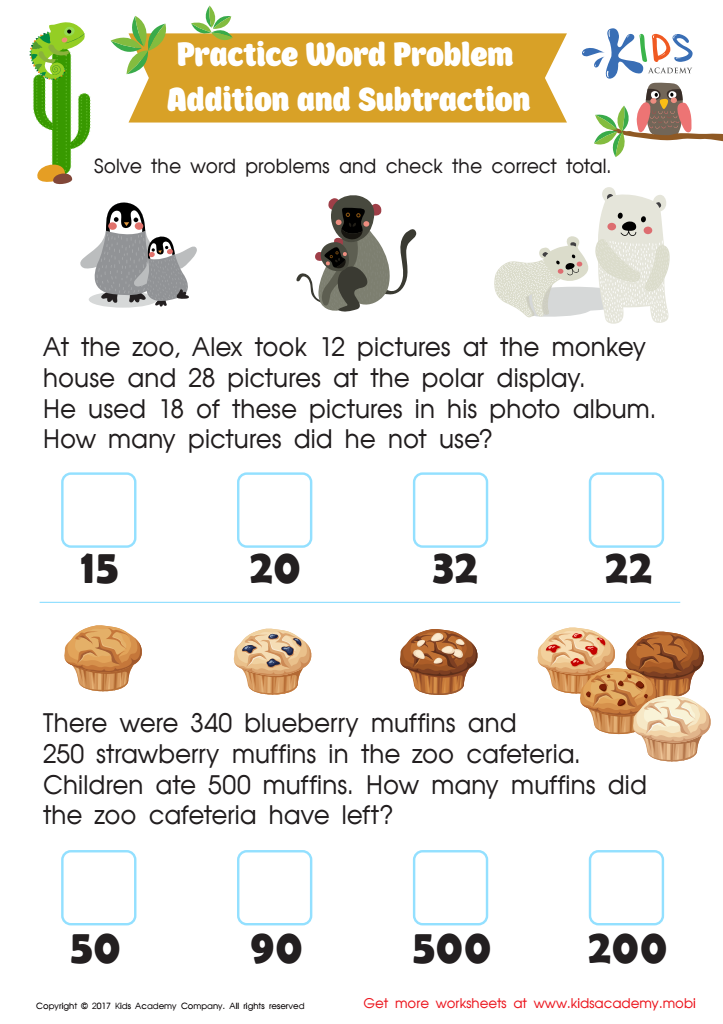
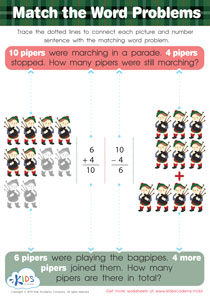
Addition and Subtraction: Word Problems Worksheet








Problem-solving skills in early childhood, particularly in the realm of preschool addition, are crucial foundations for a child's cognitive development. When parents and teachers prioritize these skills, they are fostering a love for learning, critical thinking, and the ability to navigate challenges. Preschoolers who engage in problem-solving tasks develop greater persistence and resilience, as they learn that making mistakes is part of learning. Addition and other mathematical tasks teach children not just about numbers, but also about pattern recognition, logical reasoning, and systematic thinking.
Understanding basic addition prepares children for more complex mathematical concepts encountered later in their education. These early experiences can set children on a successful academic trajectory, giving them confidence in their abilities and helping them to see themselves as competent learners. Moreover, problem-solving in math encourages communication skills, as children often need to explain their thinking process and reasoning.
Parents and teachers play a pivotal role in guiding and encouraging these experiences. When they value and actively support the development of problem-solving skills, they help children develop a mindset that appreciates challenge and effort. This solid foundation not only aids academic success but also promotes lifelong curiosity and self-confidence, equipping children to handle both academic and real-world problems more effectively.