Number Recognition Normal Preschool Matching Worksheets
3 filtered results
-
From - To
Introducing our "Number Recognition Normal Preschool Matching Worksheets," designed to make early learning both fun and effective. Tailored for preschoolers, these printable sheets help children identify and match numbers through playful activities. Each worksheet builds essential math skills, including counting, number recognition, and fine motor development. With engaging illustrations, kids learn to connect numbers with their corresponding quantities, ensuring a solid foundation for future math success. Ideal for parents and educators, these resources offer a perfect balance of education and entertainment, turning practice into play. Explore now and watch your child’s confidence in numbers grow!
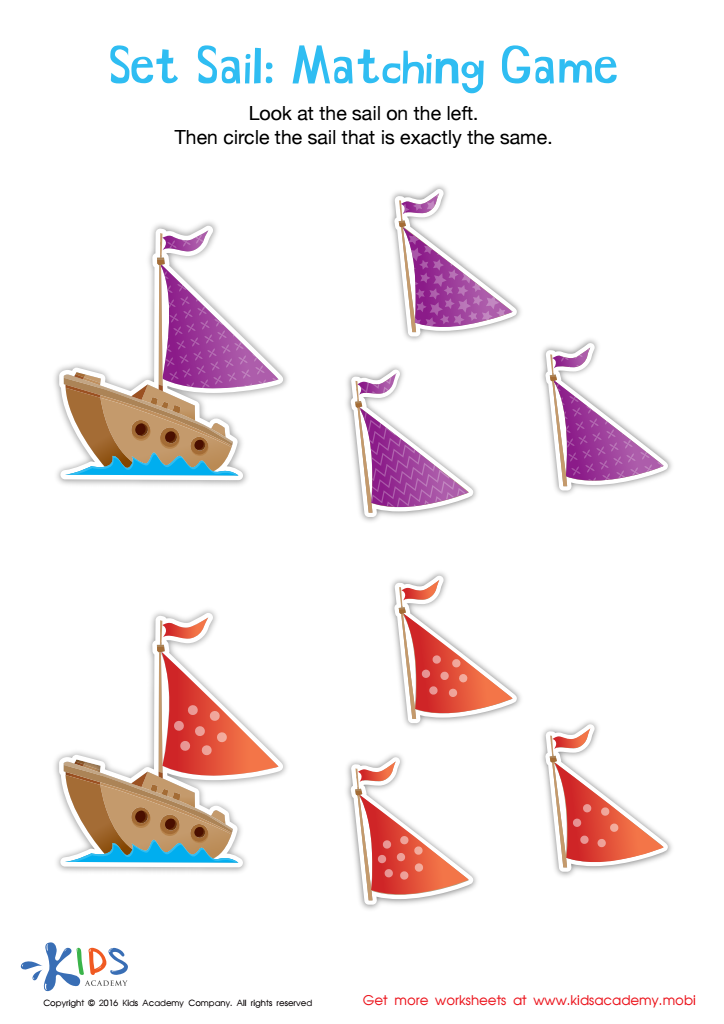
Set Sail Worksheet
 Assign to My Students
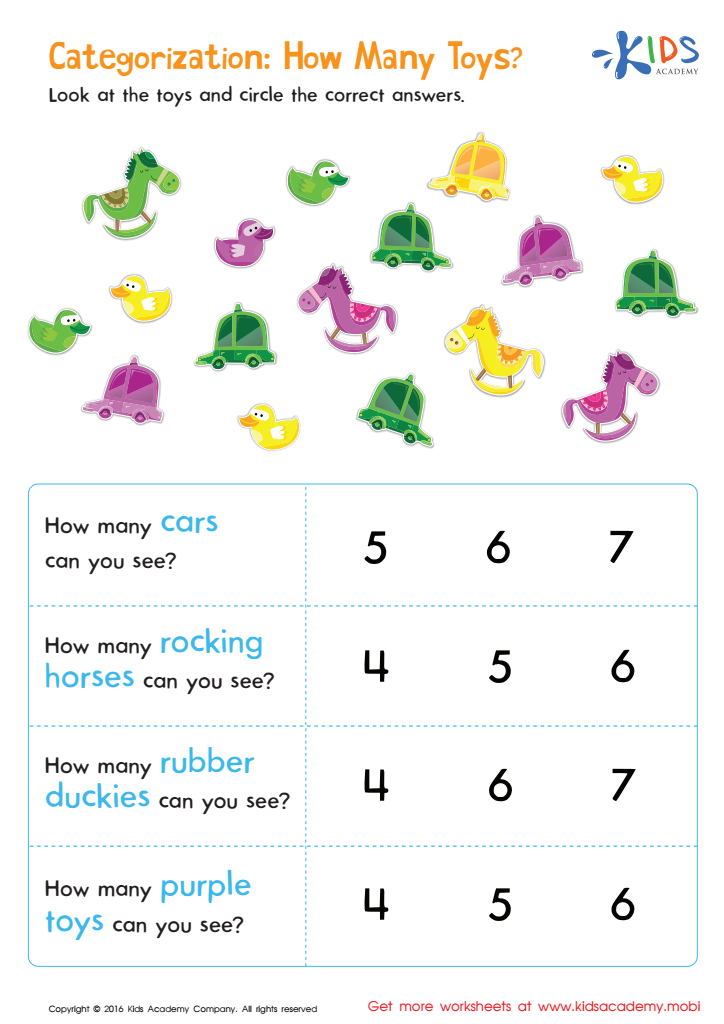
Classifying Toys by Type and Color Sorting Worksheet
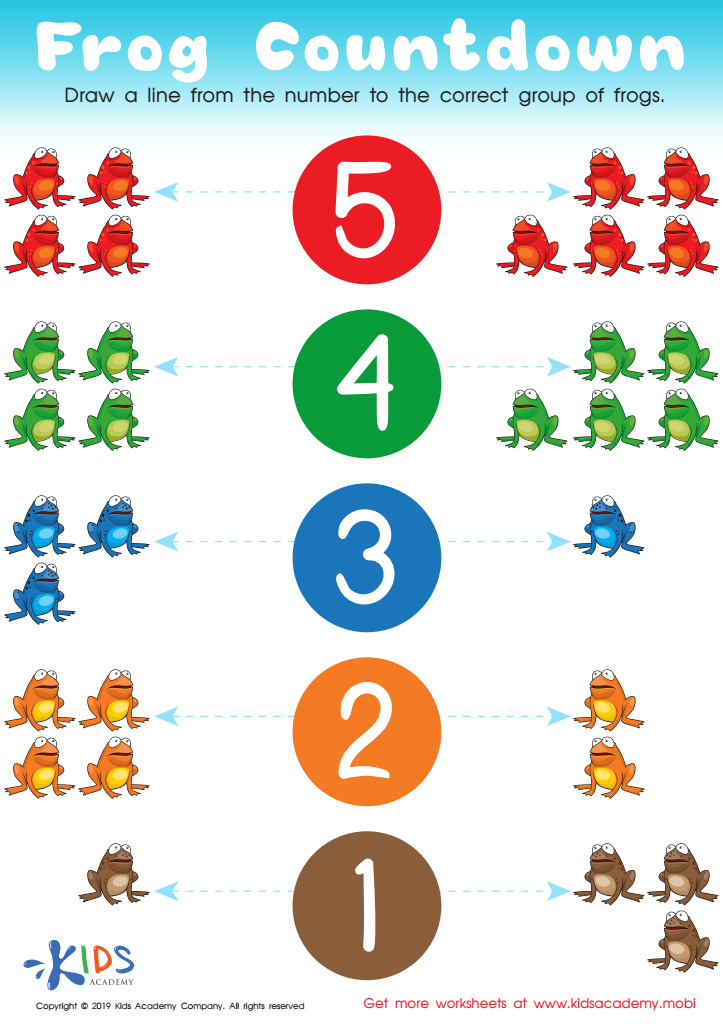
Frog Countdown Worksheet








Number recognition and matching form the cornerstone of early mathematical learning and cognitive development. Both parents and teachers should prioritize these activities because they fundamentally shape a child's ability to understand and interpret mathematical concepts. Number recognition involves identifying and naming numbers, while matching involves pairing identical numbers or quantities.
Firstly, fostering these skills at a preschool level sets the stage for more advanced mathematical learning. Recognizing numbers and their associated quantities helps children with basic counting, understanding relative size, and mastering the concept of one-to-one correspondence, all of which are crucial for their scholastic journey. Secondly, these activities improve cognitive abilities by enhancing memory, attention to detail, and logical reasoning. As they match numbers with quantities or other numbers, children inherently develop problem-solving skills and analytical thinking.
Additionally, improving number recognition and matching align with developmental milestones outlined in early childhood education standards. For teachers, this ensures that their students are meeting educational benchmarks, and for parents, it offers an opportunity to actively participate in their child's learning process, thus strengthening the parent-child bond and enhancing the child's emotional security.
In sum, prioritizing number recognition and matching in preschool propels children towards academic success, cognitive development, and emotional wellbeing, which collectively contribute to a well-rounded foundation for future learning.