Pattern recognition Normal Preschool Patterns Worksheets
4 filtered results
-
From - To
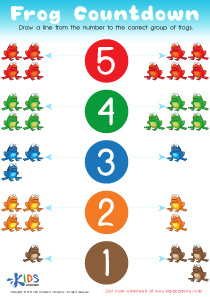
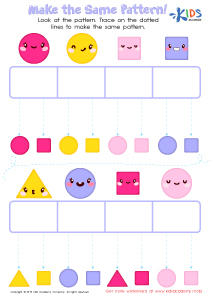
Enhance your preschooler's early math skills with our engaging Pattern Recognition Worksheets! Tailored for young learners, these worksheets help children identify, create, and extend patterns using colorful shapes, animals, and everyday objects. Our activities are designed to promote critical thinking and cognitive development while keeping learning fun and interactive. Each worksheet encourages kids to recognize patterns in various contexts, laying a strong foundation for future mathematical concepts. Perfect for home or classroom use, these printables provide a seamless way for educators and parents to foster pattern recognition skills. Start your child's journey into the world of patterns today!
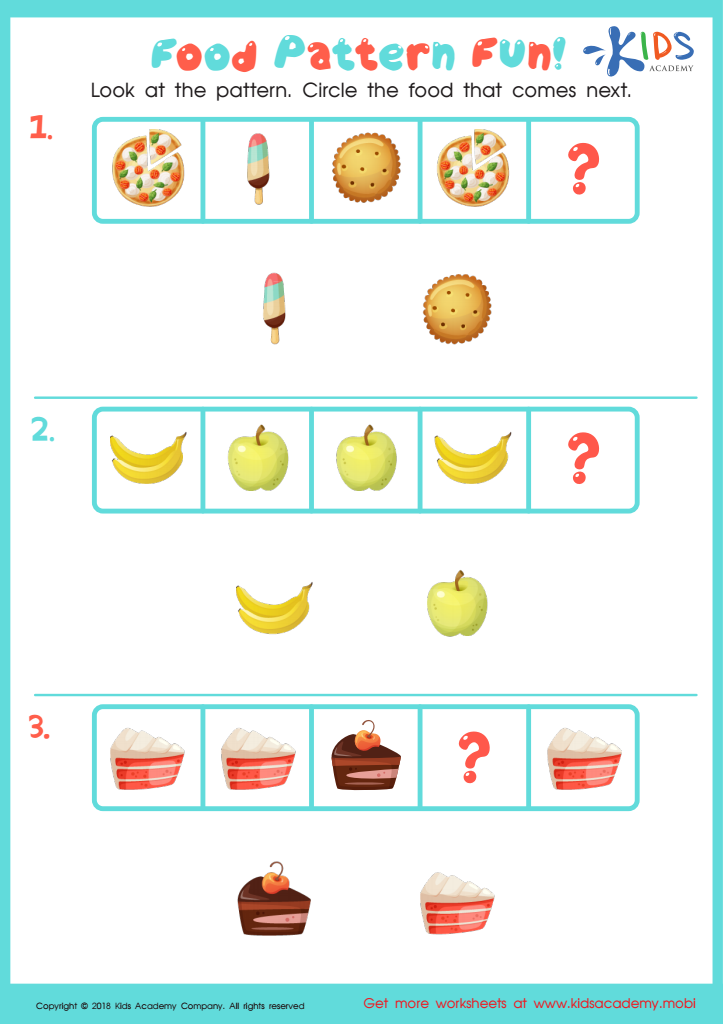
Food Pattern Fun Worksheet
 Assign to My Students
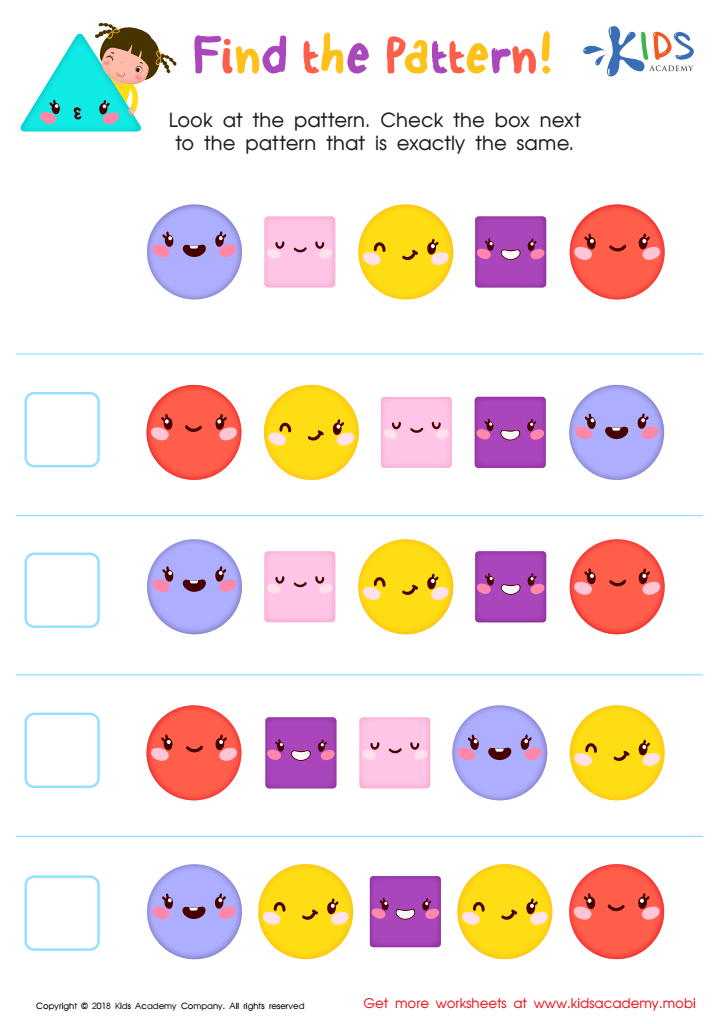
Find the Pattern Worksheet
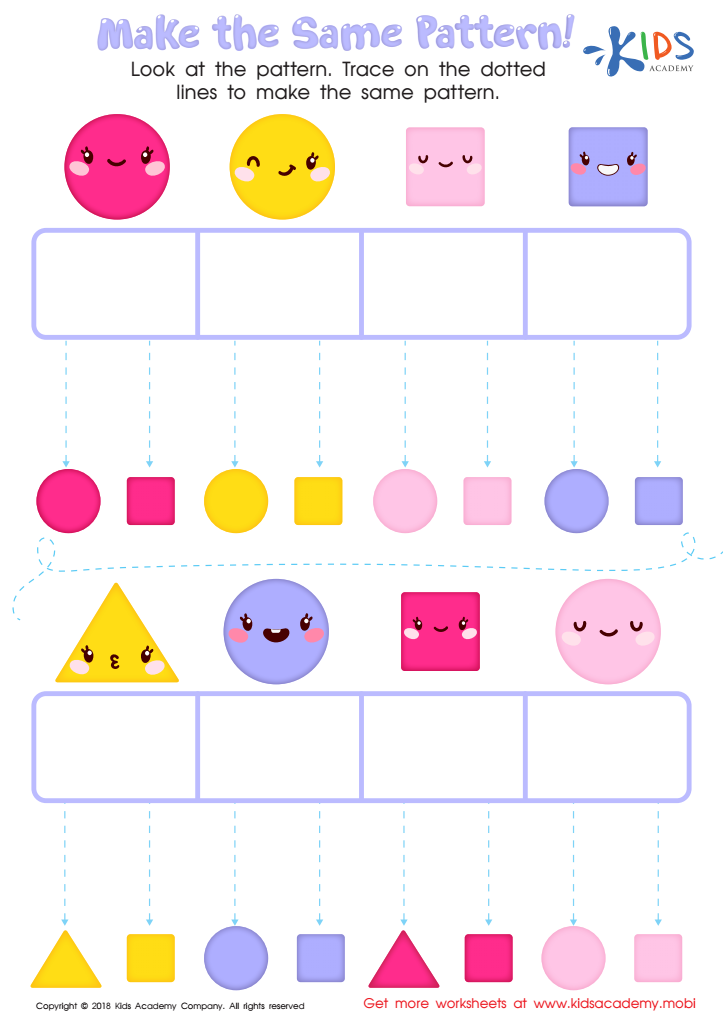
Make the Same Pattern Worksheet
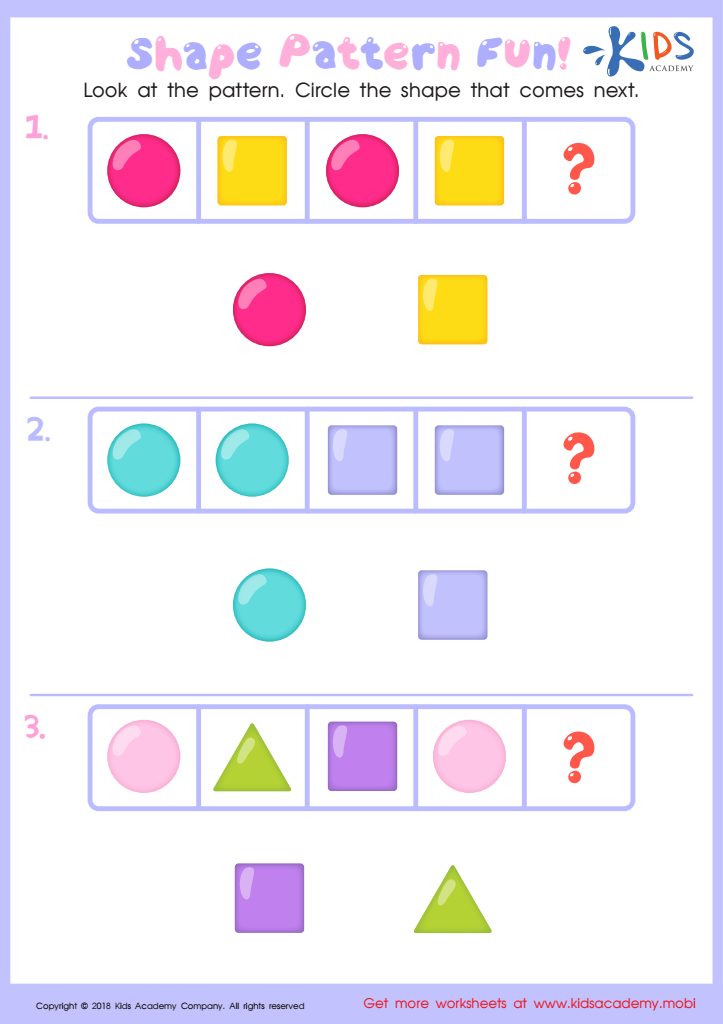
Shape Pattern Fun Worksheet




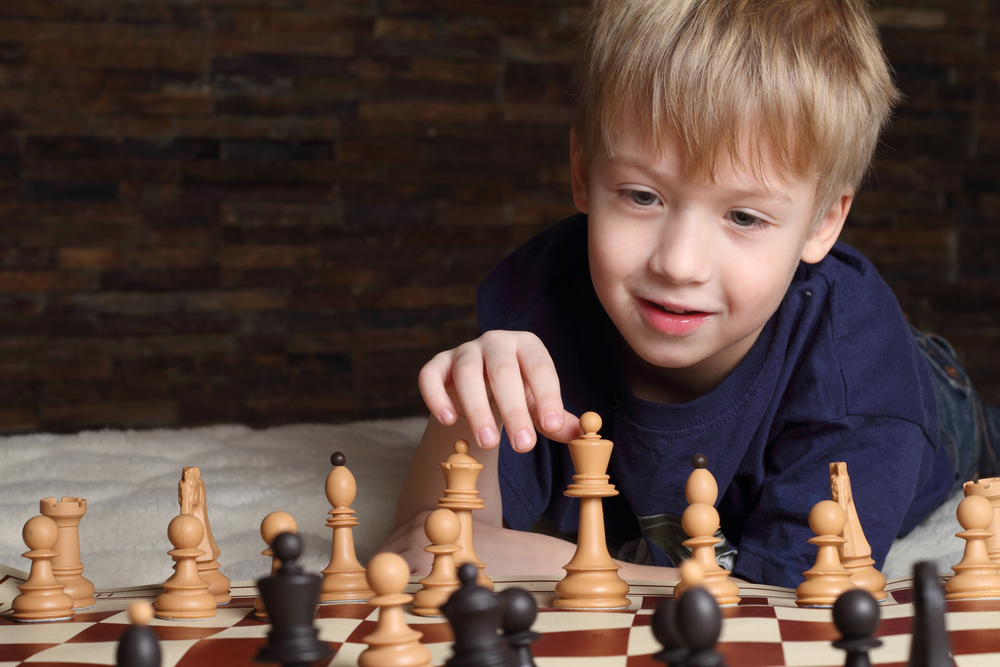



Pattern recognition is a fundamental cognitive skill that young children develop during their early formative years. For parents and teachers in preschool settings, understanding and fostering pattern recognition is crucial. Patterns are everywhere in our environment, from natural sequences, like the change of seasons, to manmade creations, such as numbers and letters. When children learn to identify and create patterns, they boost their critical thinking and problem-solving skills.
This skill aids in mathematical understanding, as recognizing patterns is the foundation for counting, addition, and other numeracy skills. For instance, children who understand patterns can grasp concepts like skip counting or multiplication more easily. Furthermore, recognizing patterns enhances cognitive development and supports future learning experiences.
Engaging in activities that promote pattern recognition—such as songs, games, art, or nature walks—can cultivate dialogue and creativity. These experiences also help develop fine motor skills as children manipulate objects to create patterns.
Ultimately, when parents and teachers prioritize pattern recognition in preschool, they not only enrich children’s early educational journeys but also lay the groundwork for a lifelong love of learning and an analytical mindset. Thus, understanding and supporting this crucial developmental stage is vital for a child’s future success.