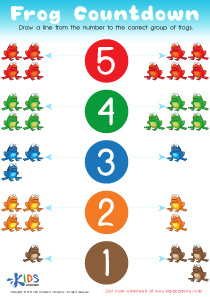
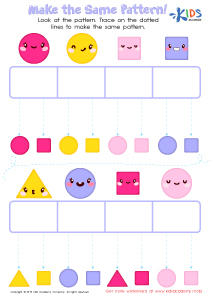
Division practice Normal Preschool Word Problems Worksheets
4 filtered results
-
From - To
Unlock your child's mathematical potential with our Division Practice Normal Preschool Word Problems Worksheets. Designed specifically for young learners, these engaging worksheets introduce division concepts through fun and relatable scenarios. Kids will solve age-appropriate word problems that enhance their critical thinking and number skills while building a solid foundation in math. Ideal for home or classroom use, our worksheets support early education by integrating play into learning. Make division enjoyable and interactive with our colorful and thoughtfully crafted problems, geared to keep preschoolers motivated and eager to learn. Transform math practice into a delightful adventure with Kids Academy!
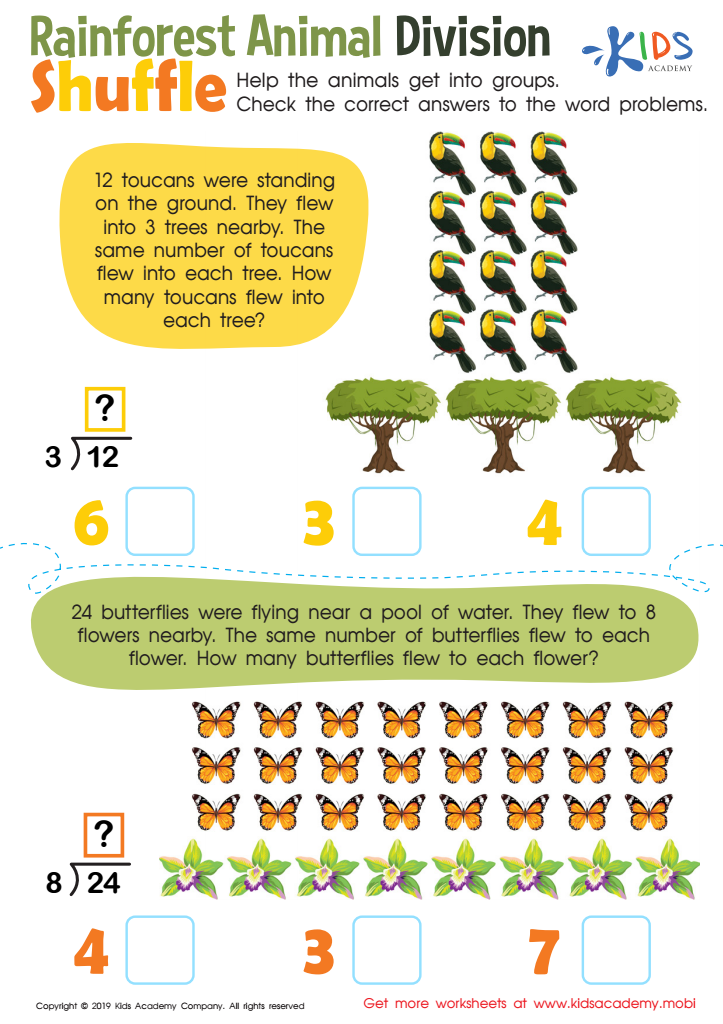
Rainforest Animal Division Worksheet
 Assign to My Students
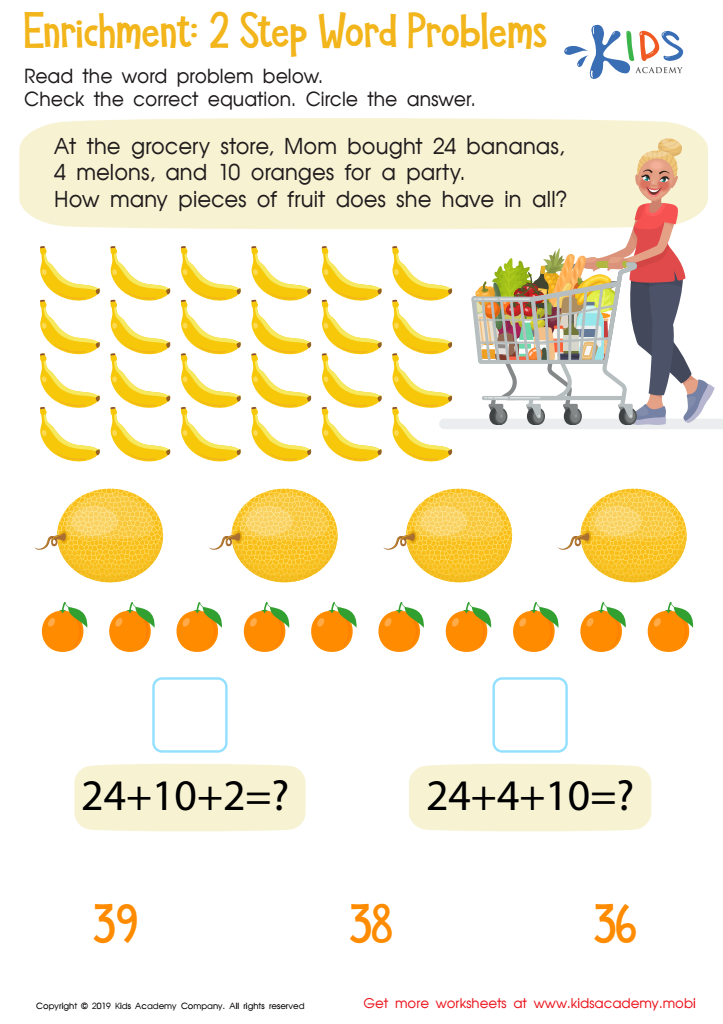
Enrichment -2 Step Word Problems Worksheet
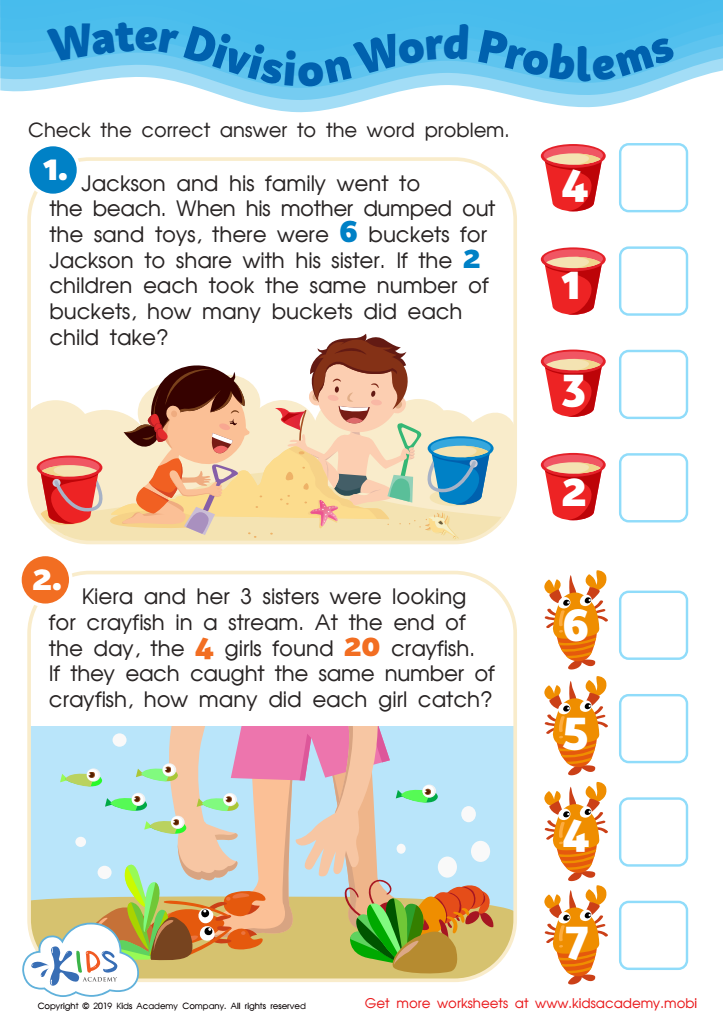
Water Division Word Problems Worksheet
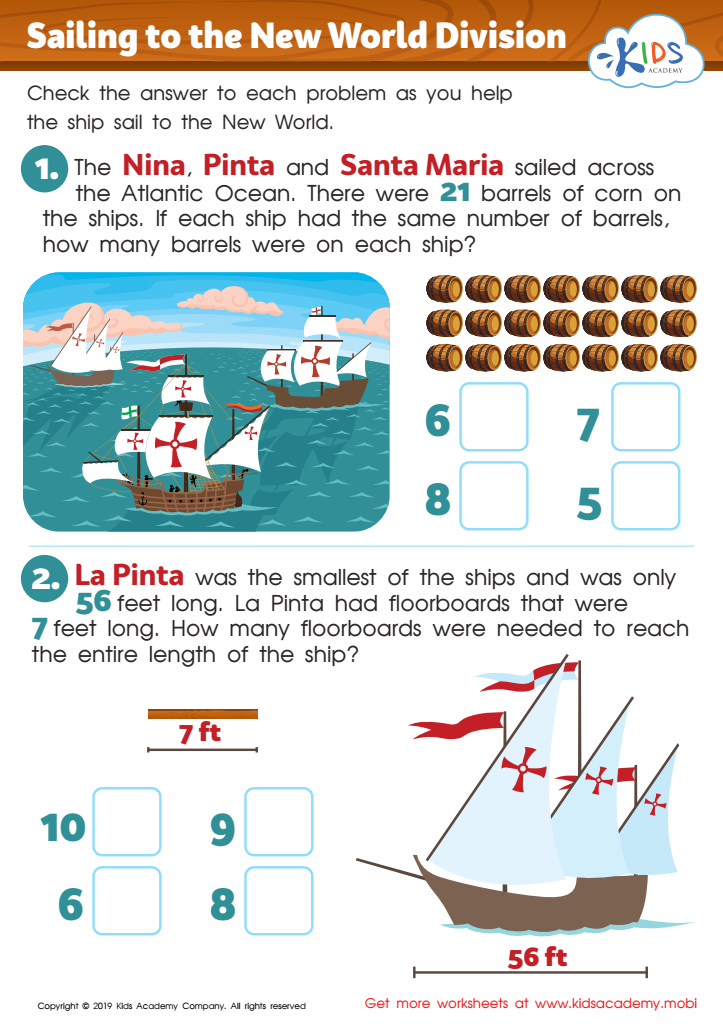
Sailing to the New World Division Worksheet








Parents and teachers should prioritize division practice in preschool because it lays the foundation for essential mathematical skills. Division, often misunderstood as simply "sharing," introduces children to the concepts of equal distribution, number relationships, and problem-solving. Engaging in normal preschool word problems helps young learners connect abstract concepts to real-world situations, fostering a deeper understanding of mathematics.
Word problems stimulate critical thinking, encouraging children to analyze scenarios, identify relevant information, and devise strategies for solving challenges. This builds cognitive skills that are crucial for later academic success. Additionally, incorporating division into everyday conversations—such as when sharing snacks or toys—makes learning naturally integrated into their environment.
Furthermore, division fosters social skills, as children often work collaboratively to solve problems, discussing their thought processes and listening to others' ideas. This not only enhances their mathematical abilities but also improves communication and teamwork.
Ultimately, establishing a strong mathematical foundation in preschool through activities like division practice paves the way for more advanced concepts in later grades. By nurturing these skills early on, parents and teachers equip children with the tools they need for lifelong learning and confidence in their mathematical abilities.