Logical Reasoning Normal Preschool Word Problems Worksheets
4 filtered results
Difficulty Level
Grade
Age
-
From - To
Subject
Activity
Standards
Explore our Logical Reasoning Normal Preschool Word Problems Worksheets, designed to enhance young minds' critical thinking and problem-solving skills. These engaging worksheets feature age-appropriate scenarios that encourage children to apply logical reasoning in everyday situations. By tackling these fun word problems, preschoolers will develop essential math concepts, improve their reading comprehension, and boost their analytical abilities. Perfect for at-home learning or classroom activities, these resources foster a love for learning while preparing kids for future academic challenges. Ideal for morning routines or supplemental learning, our worksheets create a solid foundation in logical reasoning for your child's educational journey.
Favorites
With answer key
Interactive
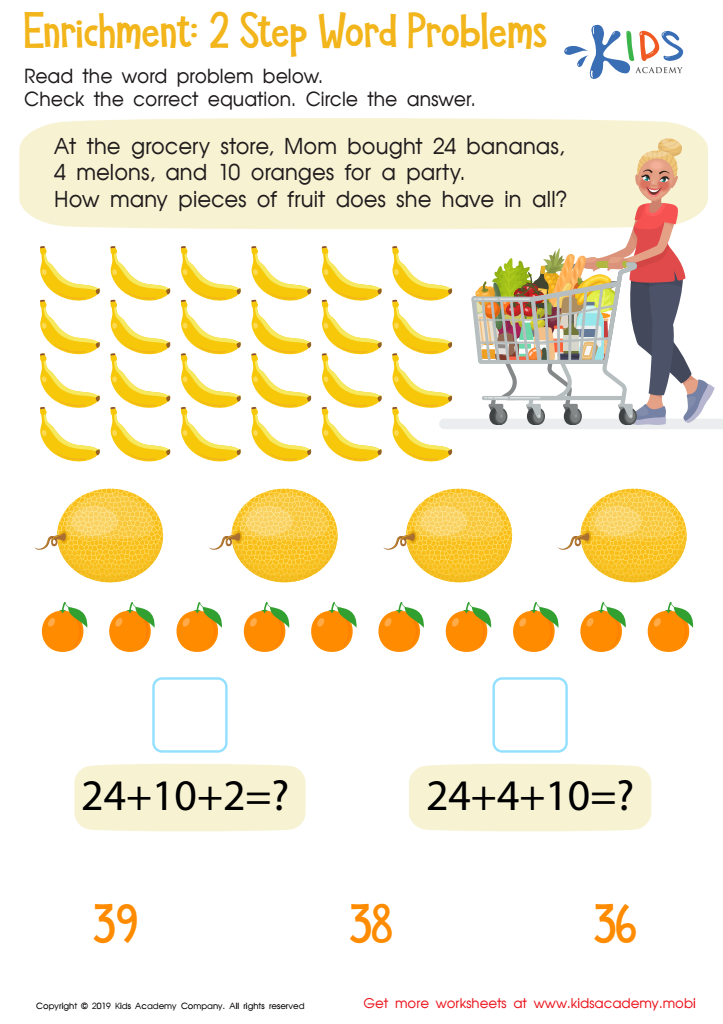
Enrichment -2 Step Word Problems Worksheet
Help your students learn math easier and faster with this colorful worksheet. Read the word problem and then guide them in checking the correct equation and finding the answer. Your students will benefit from the extra help, as they work through new concepts each day.
 Assign to My Students
Enrichment -2 Step Word Problems Worksheet
Worksheet
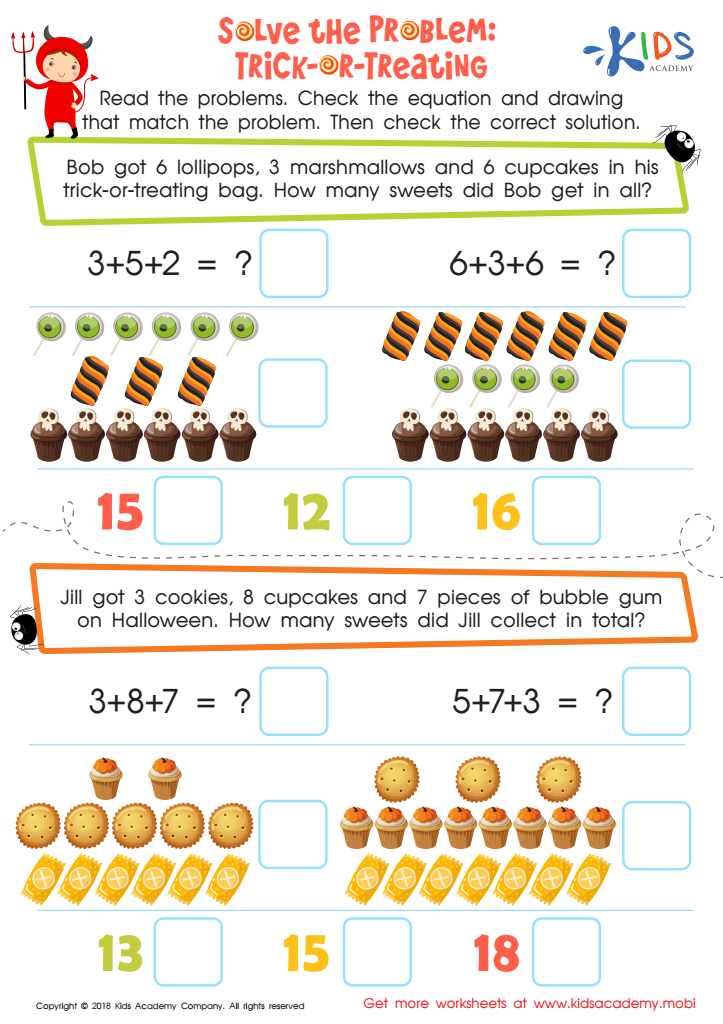
Solve the Problem: Trick–or–treating Worksheet
Kids will love this fun PDF worksheet for trick-or-treating! It's packed with yummy images and math practice. They can read the word problems, count and add numbers, check their answers, and match the addition equations with the pictures. Math made delicious!
Solve the Problem: Trick–or–treating Worksheet
Worksheet
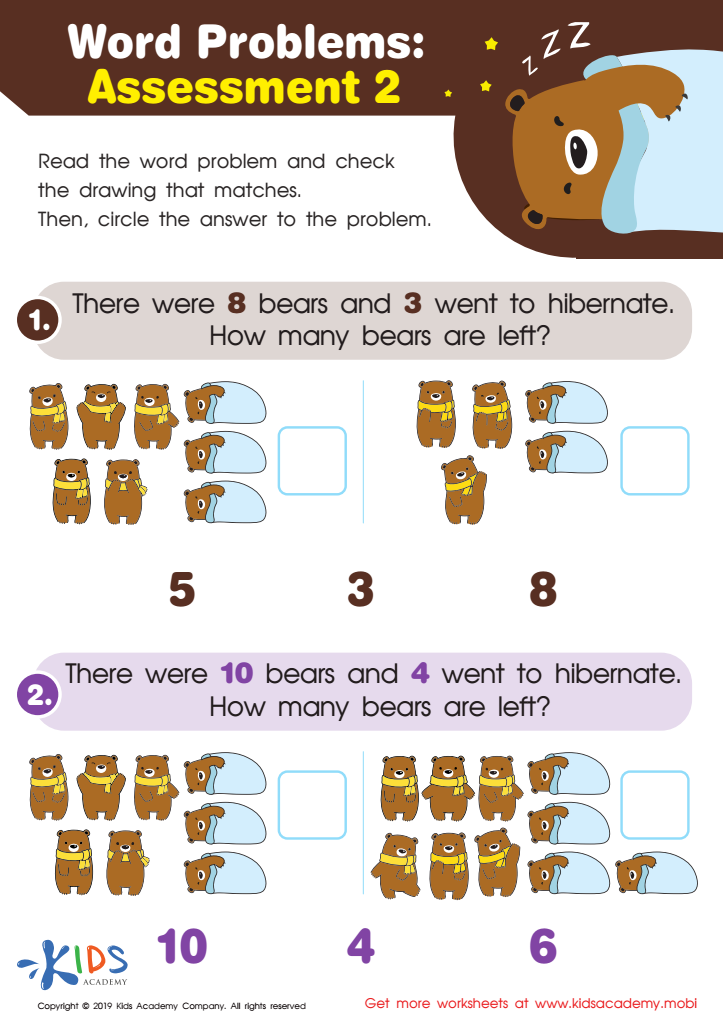
Word Problems: Assessment 2 Worksheet
This bear-themed worksheet is a great way to test subtraction skills. Have your child read the word problems and match the correct drawing with the answer. It's a fun way to quiz them without them even knowing. Enjoy counting cute snoozing bears! (80 words)
Word Problems: Assessment 2 Worksheet
Worksheet
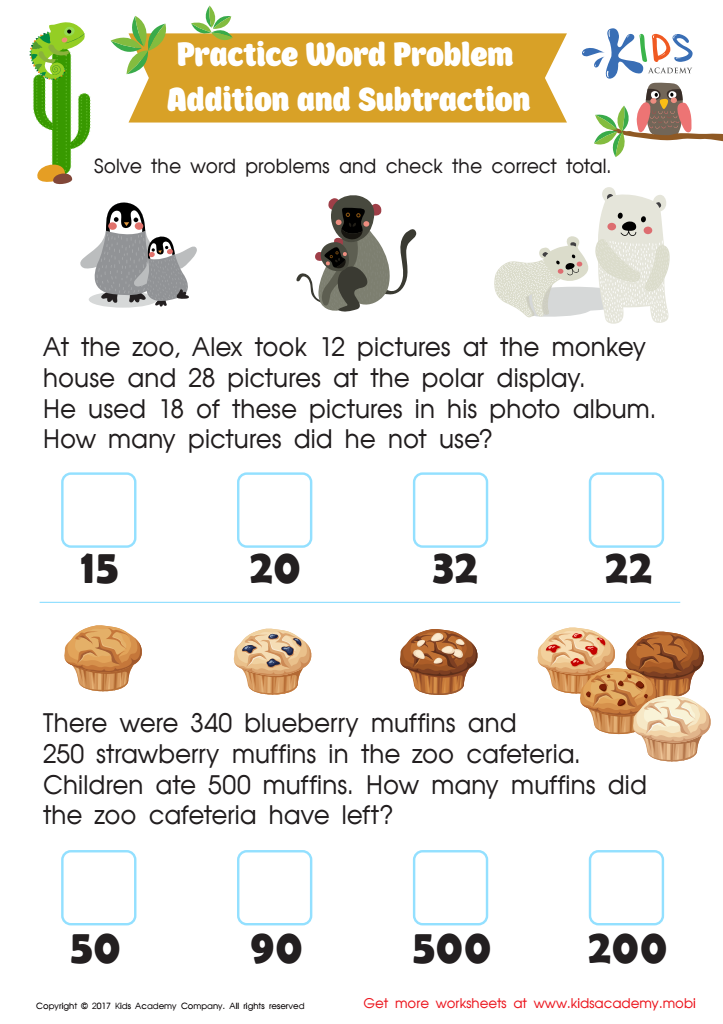
Addition and Subtraction: Word Problems Worksheet
Word problems can be difficult, but they offer another way to understand math. Our 3rd grade worksheet takes your child to the zoo; two intriguing word problems will test their thinking skills and help them find the total.
Addition and Subtraction: Word Problems Worksheet
Worksheet
Join Kids Academy for Free
Who is primarily going to use this learning content?








Parents and teachers should care about Logical Reasoning Normal Preschool Word Problems because they play a crucial role in developing critical thinking, problem-solving abilities, and foundational mathematics skills in young children. Engaging preschoolers in word problems enhances their ability to understand different contexts and translate real-life situations into mathematical concepts. This strengthens their cognitive abilities and boosts language skills, as children must comprehend the problem and articulate their thought process.
Logical reasoning activities help children learn to analyze information, identify patterns, and make inferences, essential skills for future academic success. Early exposure to these challenges encourages a growth mindset, highlighting that perseverance will lead to improvements and intellectual rewards.
Additionally, incorporating logical reasoning into daily learning fosters social-emotional skills. Collaborating with peers to solve problems cultivates teamwork and communication, while experiencing successes or failures helps build resilience and emotional regulation.
Ultimately, nurturing logical reasoning in preschoolers prepares them for a lifetime of academic pursuits and informed decision-making, setting the stage for successful futures. By prioritizing such engaging learning opportunities, parents and teachers empower children to thrive both in school and beyond.