Subtraction practice Normal Preschool Word Problems Worksheets
3 filtered results
-
From - To
Explore our engaging Subtraction Practice Normal Preschool Word Problems Worksheets designed to make learning math fun for young learners! These worksheets provide delightful, age-appropriate scenarios that encourage critical thinking and problem-solving skills. Each word problem is crafted to challenge preschoolers while fostering their understanding of basic subtraction concepts. By integrating everyday situations, children will learn to relate math to the world around them. Whether at home or in the classroom, these worksheets are perfect for helping preschoolers build a strong foundation in math. Start your child's subtraction journey today and watch their confidence grow with practice!
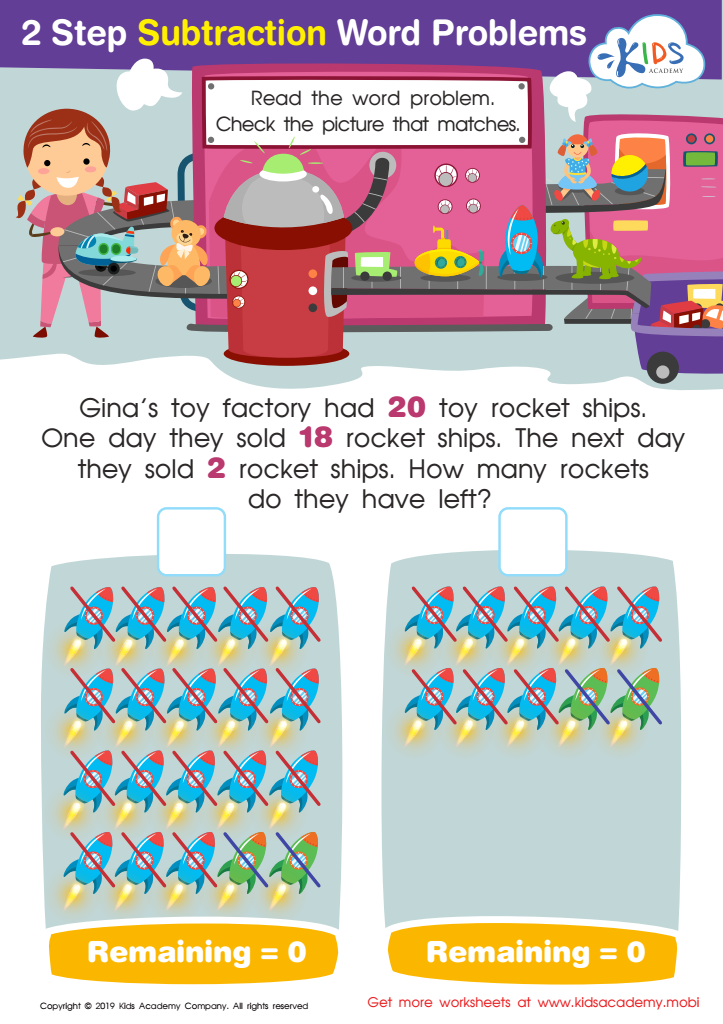
Step Subtraction Word Problems Worksheet
 Assign to My Students
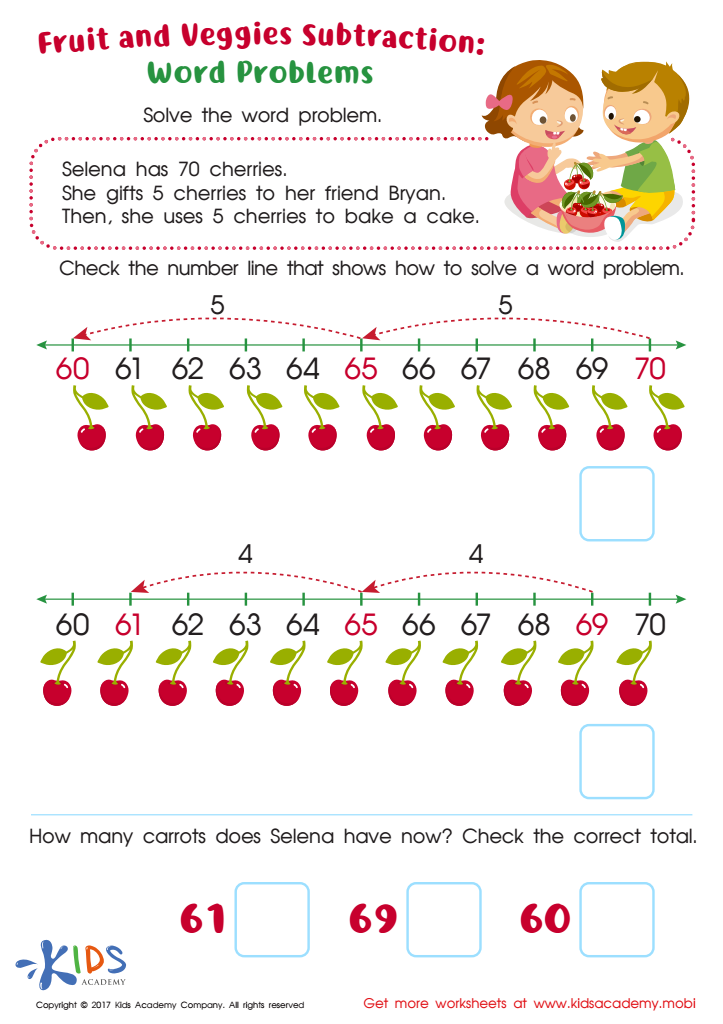
Subtraction Word Problems Free Printable
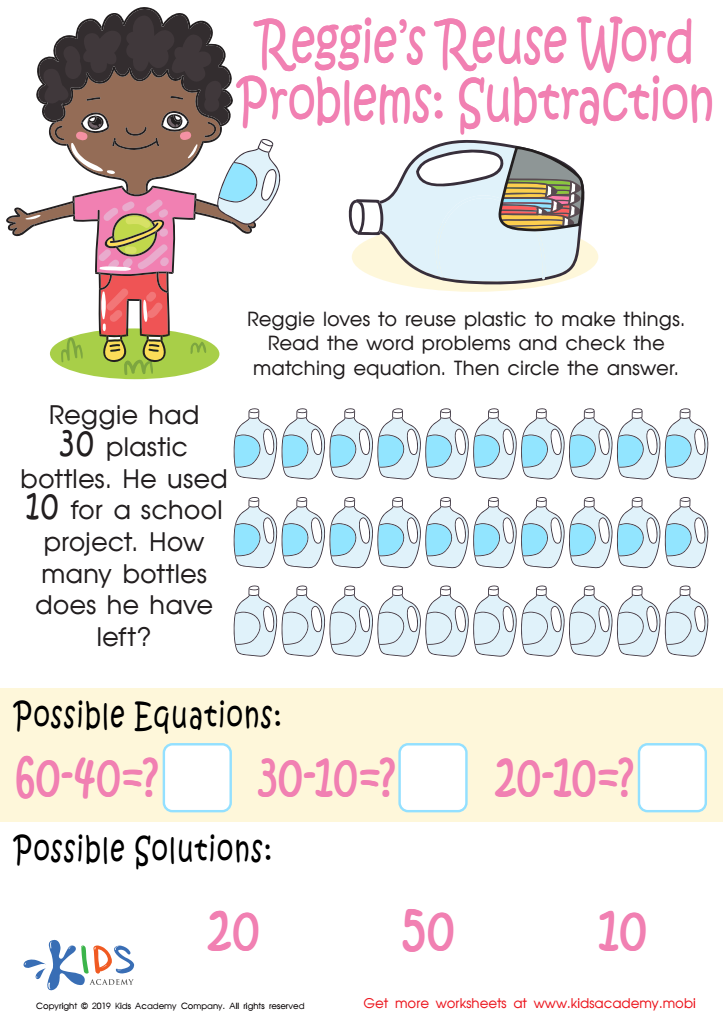
Reggie's Reuse Word Problems: Subtraction Worksheet








Parents and teachers should prioritize subtraction practice through normal preschool word problems for several fundamental reasons. Firstly, engaging children in real-life scenarios makes learning more relevant and relatable. Word problems stimulate critical thinking and problem-solving skills while transitioning abstract numerical concepts into practical applications. This enhances a child's understanding of subtraction by allowing them to visualize and contextualize mathematical challenges.
Moreover, addressing subtraction in a story format promotes language development and comprehension skills. Children learn to decipher the narrative, grasp the core of the problem, and articulate their thought processes, which fosters both communication skills and cognitive flexibility.
Additionally, interactive subtraction word problems can boost a child’s confidence as they learn to navigate challenges. They provide opportunities for self-correction and independent problem-solving, cultivating resilience and a positive attitude toward math.
Furthermore, practicing subtraction prepares students for future learning. Mastery of foundational math concepts like subtraction is essential for more complex mathematical operations they will encounter later on.
In summary, normal preschool word problems in subtraction significantly contribute to a child's overall development, integrating numerical skills, language enhancement, and critical thinking that are vital for academic success and daily life.