Analytical skills Normal Preschool Reading Worksheets
4 filtered results
-
From - To
Boost your preschooler's learning journey with our Analytical Skills Normal Preschool Reading Worksheets! Designed for young learners, these engaging worksheets help develop critical thinking and comprehension abilities through interactive reading activities. Children will explore patterns, make connections, and enhance their problem-solving skills while having fun. Designed to be age-appropriate, our worksheets make learning enjoyable and accessible, promoting a love for reading. Perfect for parents and educators alike, these resources encourage independent thinking and foster a strong foundation for future academic success. Dive into the world of analytical skills with our comprehensive collection and watch your child's confidence soar!

Finding the Details and Connections: Assessment 2 Worksheet
 Assign to My Students
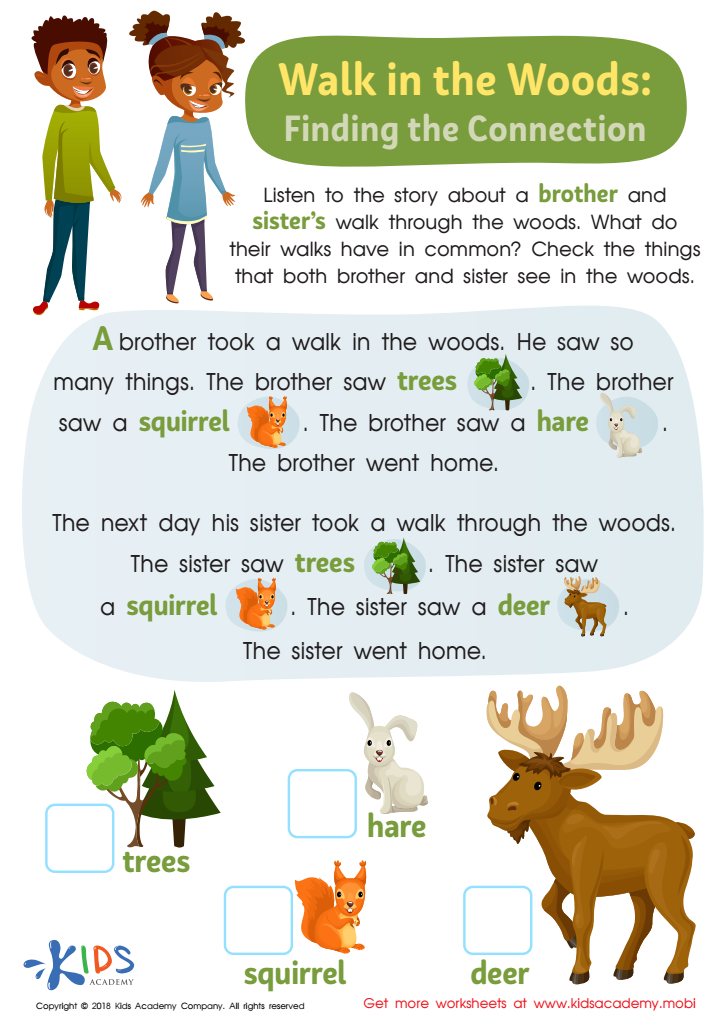
Walk In the Woods: Finding Connections Worksheet
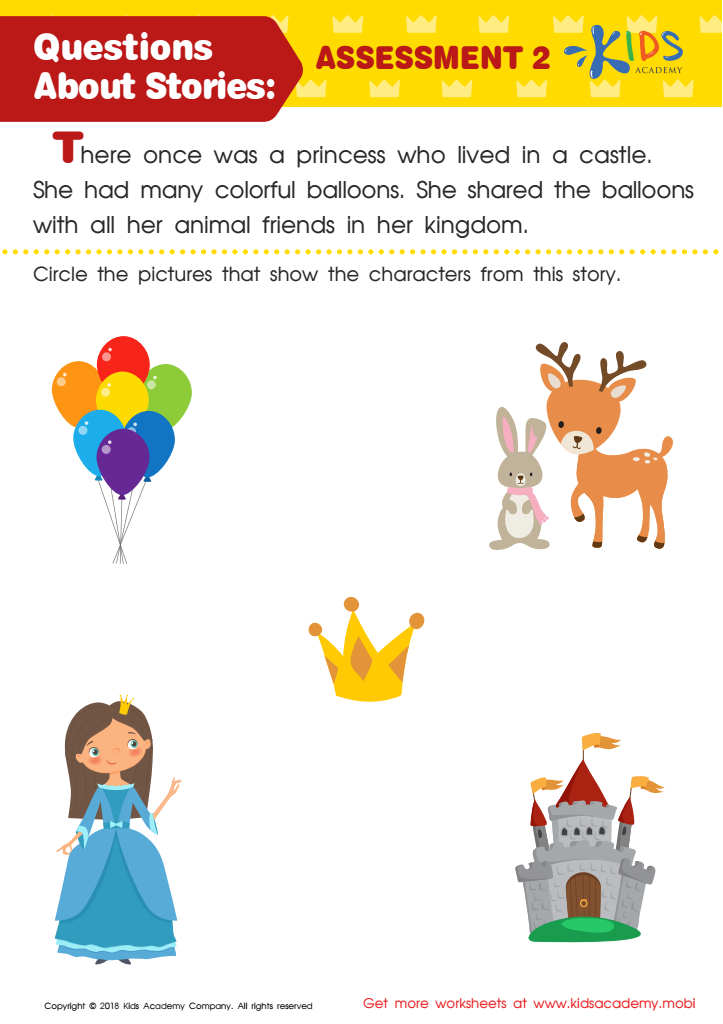
Questions About Stories: Assessment 2 Worksheet
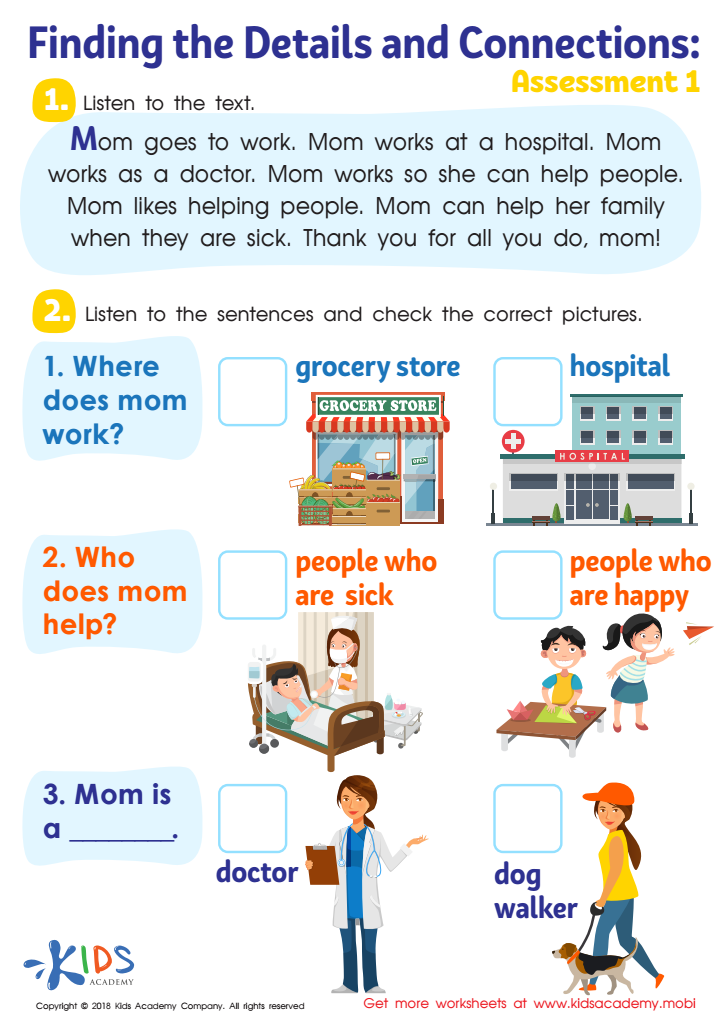
Finding the Details and Connections: Assessment 1 Worksheet








Parents and teachers should prioritize analytical skills in preschool reading for several compelling reasons. Analytical skills encompass the ability to think critically, recognize patterns, and understand relationships between concepts. When children engage with reading materials at an early age, they learn to decode words, make inferences, and identify main ideas and supporting details.
Fostering analytical skills in preschoolers actively supports their overall cognitive development. As children analyze stories, they enhance their language proficiency and vocabulary, which lays a solid foundation for effective communication. Additionally, strong analytical skills empower children to make logical connections and draw conclusions, promoting problem-solving abilities that are essential throughout their education.
Moreover, enhancing analytical skills in literacy cultivates a love for reading and encourages curiosity and exploration, which can drive lifelong learning. By valuing and supporting analytical reading, parents and teachers create a rich environment where children become adept learners, capable of engaging in discussions and expressing their thoughts clearly.
Ultimately, nurturing analytical skills during these formative years contributes to building critical thinkers who are prepared for the complexities of future academic pursuits, equipping them to navigate both educational and real-world challenges effectively.