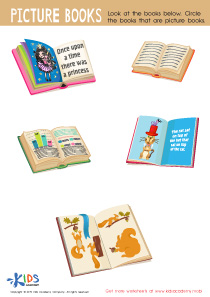
Vocabulary enhancement Normal Preschool Reading Worksheets
8 filtered results
-
From - To
Enhance your preschooler's vocabulary with our expertly designed Normal Preschool Reading Worksheets! These fun and engaging printables from Kids Academy make learning new words easy and enjoyable for young minds. Focusing on early reading skills and vocabulary development, our worksheets are perfect for tapping into your child's natural curiosity. Bright, colorful, and thoughtfully curated, these activities support recognition and comprehension of new words in context, boosting confidence and language proficiency. By fostering a love for reading early on, we set the foundation for academic success. Visit us now to explore and download your free worksheets, and watch your child's vocabulary expand!
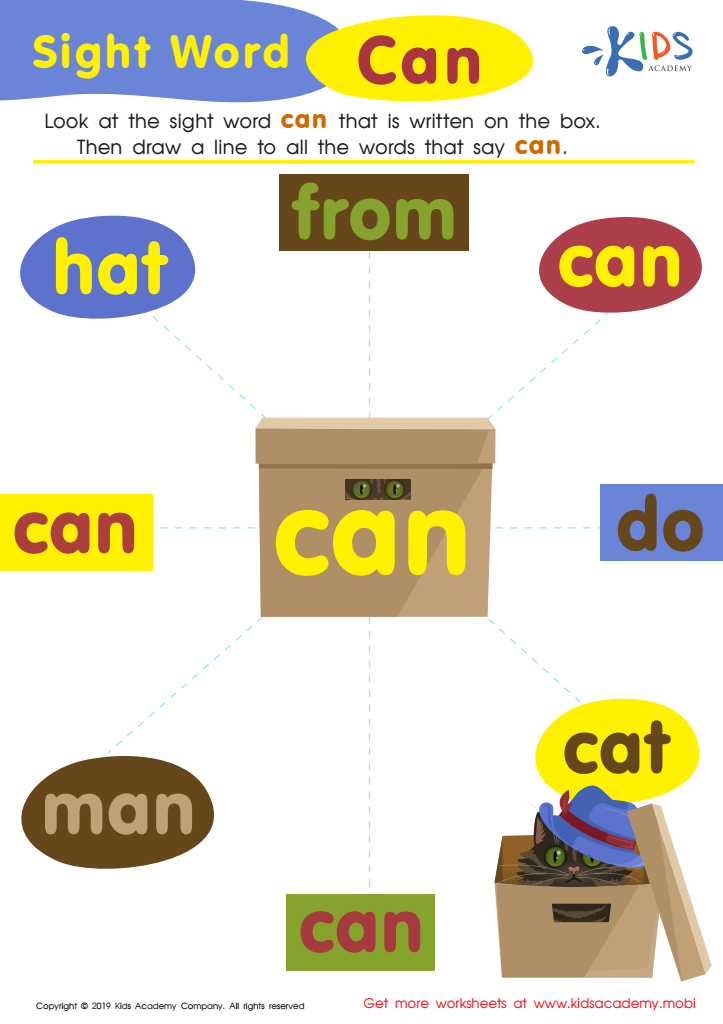
Sight Word Can Worksheet
 Assign to My Students
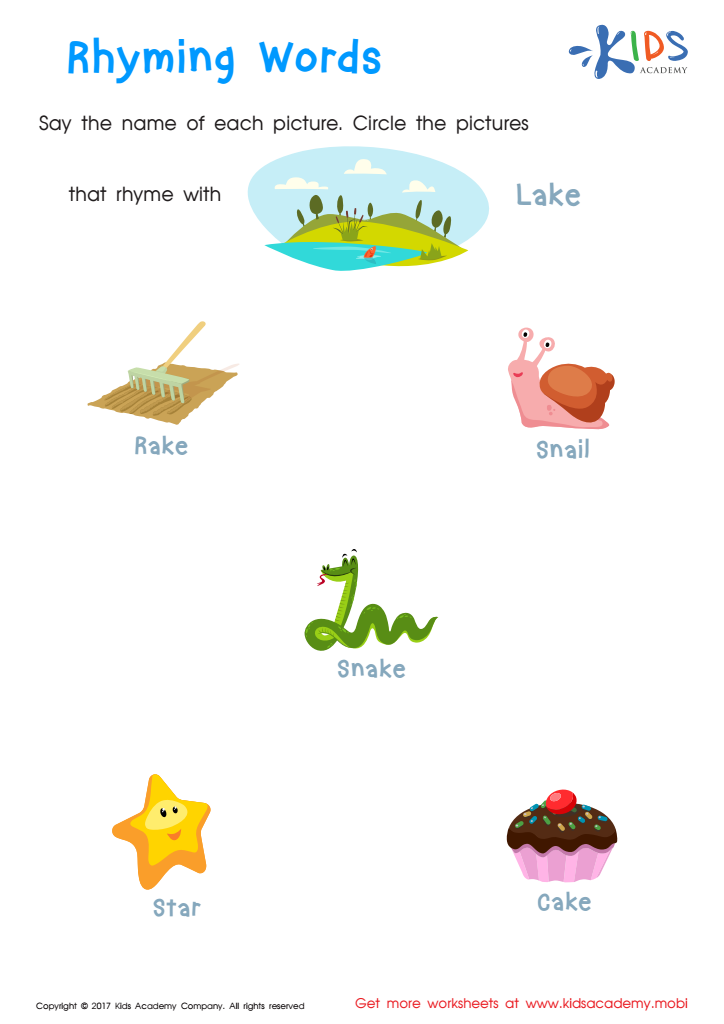
Rhyming Words Rhyming Worksheet
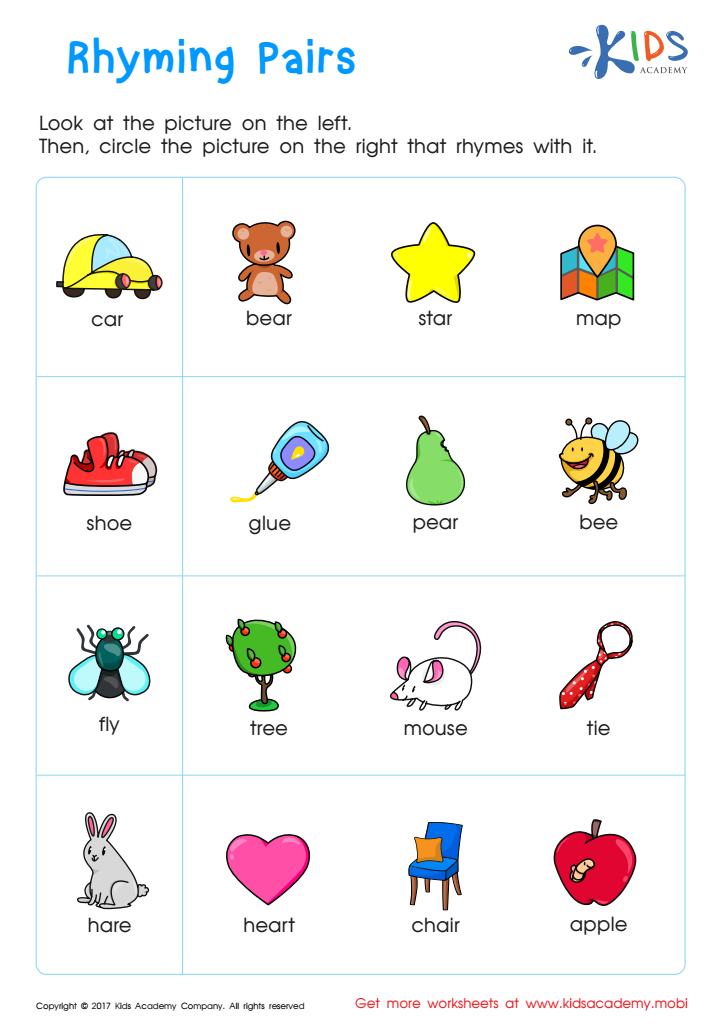
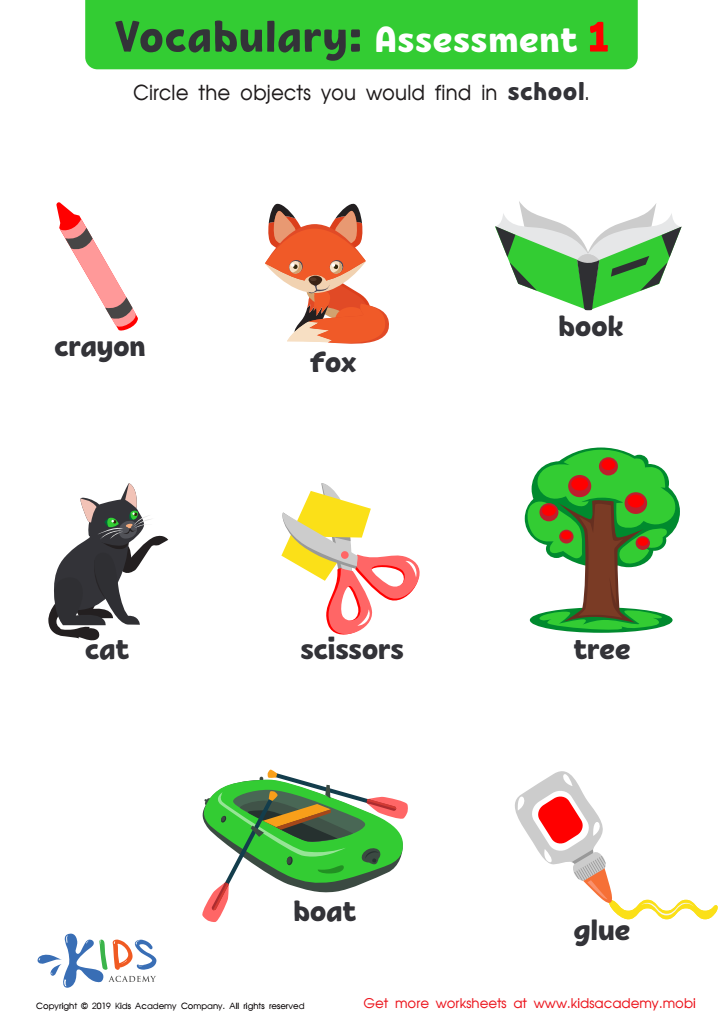
Vocabulary: Assessment 1 Worksheet
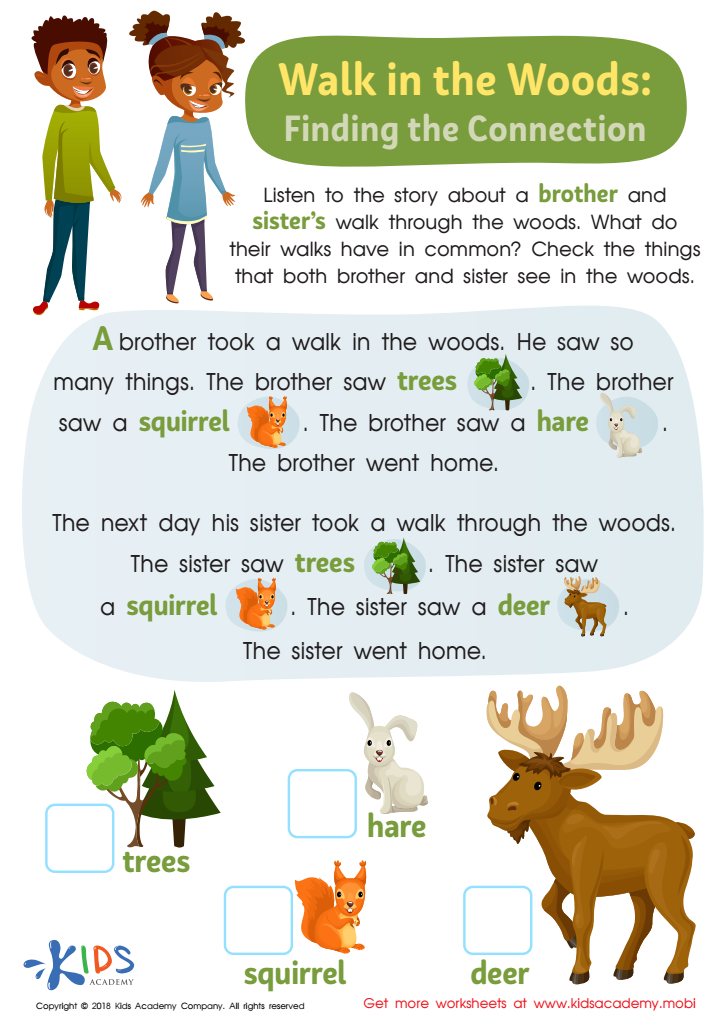
Walk In the Woods: Finding Connections Worksheet
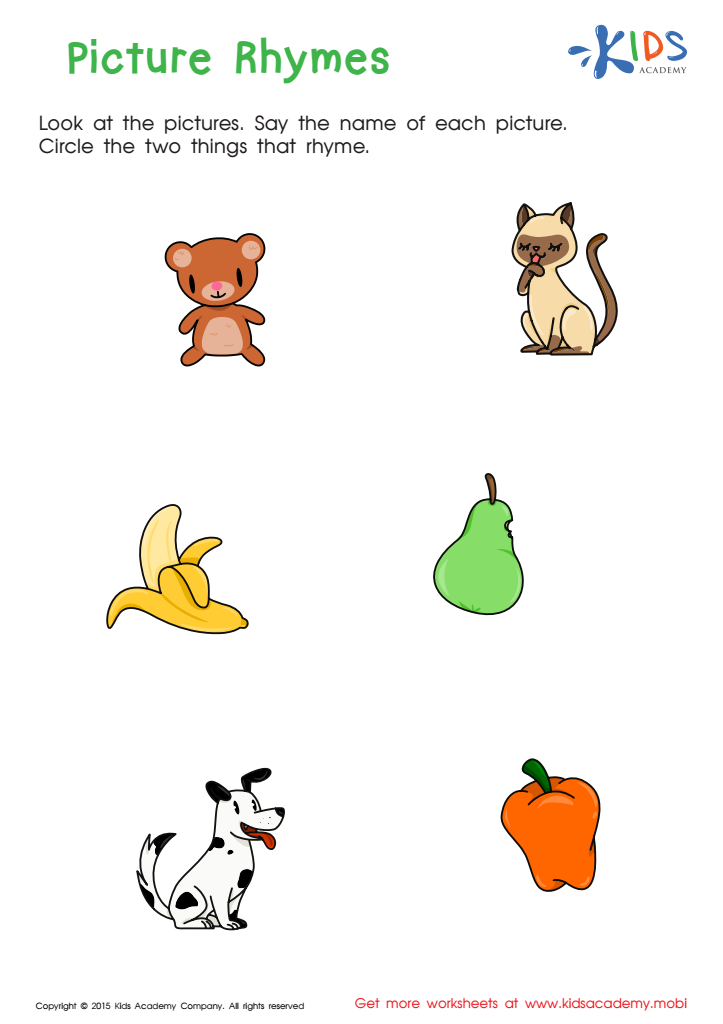
First Words: Picture Rhymes Worksheet
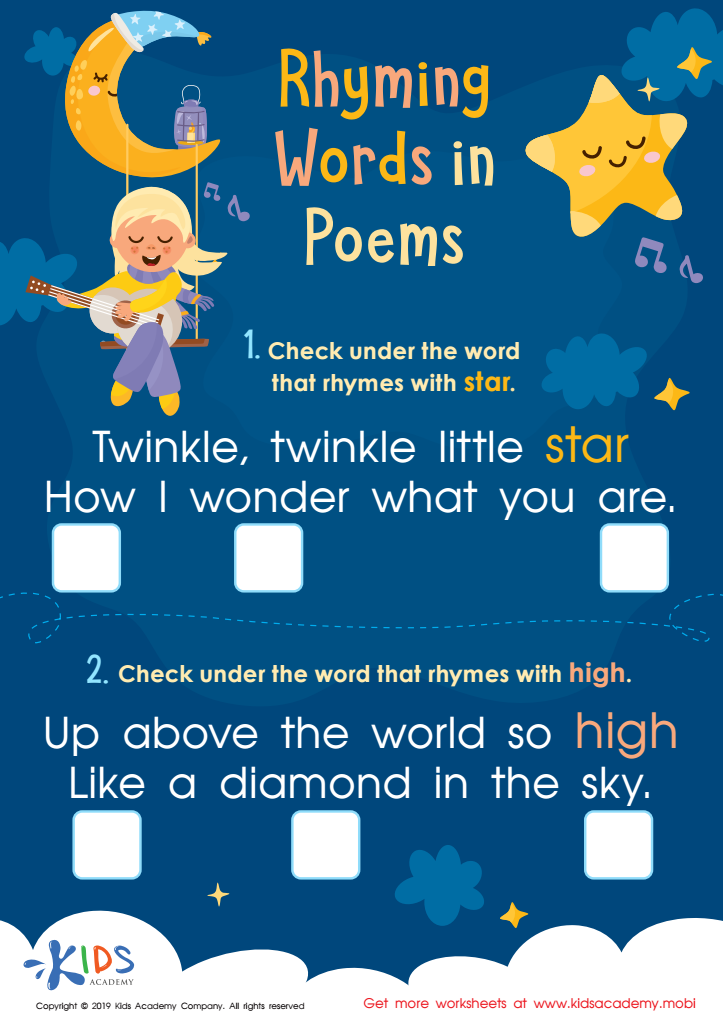
Rhyming Words in Poems Worksheet
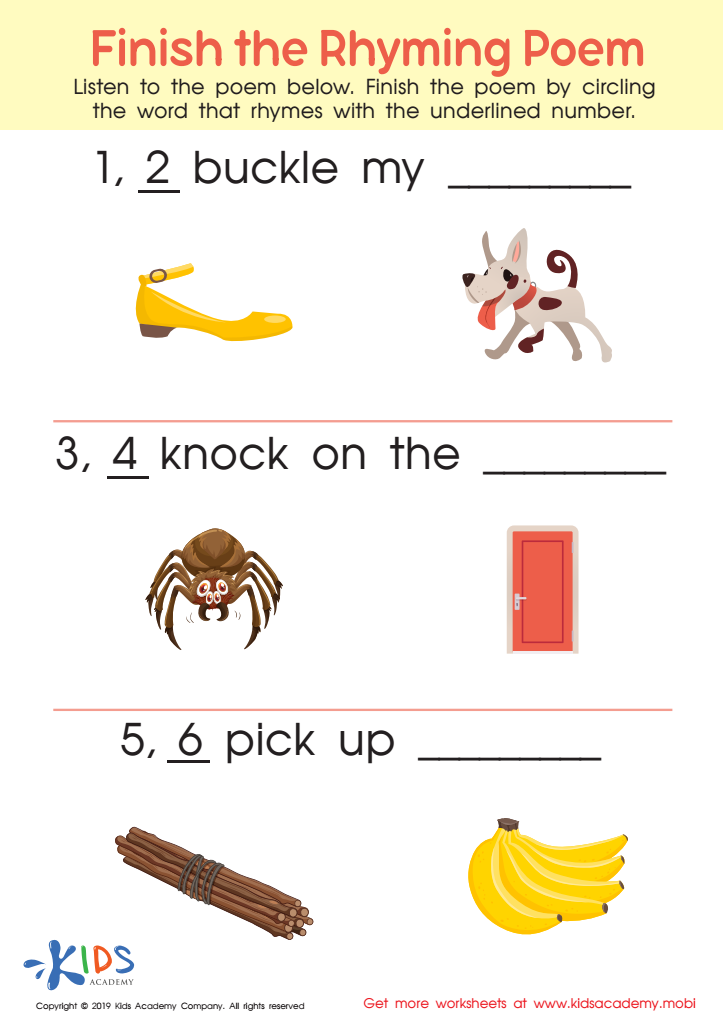
Finish Rhyming Poem Worksheet








Vocabulary enhancement during the preschool years is crucial for a child's overall development and long-term academic success. At this critical stage, children's brains are highly receptive to learning new words and concepts. A rich vocabulary not only improves communication skills but also enhances cognitive and social-emotional development.
Parents and teachers should invest in vocabulary building because it lays the foundation for reading comprehension, which is essential for all other subjects. A robust vocabulary allows children to understand instructions, questions, and stories better, thus making learning more efficient and enjoyable. Moreover, strong vocabulary skills enable children to express their thoughts and emotions more clearly, fostering better social interactions and emotional regulation.
Furthermore, research indicates a direct link between vocabulary skills in early childhood and later literacy and academic achievement. Children with a well-developed vocabulary are more likely to excel in school and have higher confidence in their academic abilities. Engaging in activities such as reading aloud, interactive storytelling, and structured play can significantly enhance vocabulary acquisition.
In summary, vocabulary enhancement during preschool years paves the way for superior linguistic, cognitive, and social development. Teachers and parents play a pivotal role in this process by creating a language-rich environment filled with diverse opportunities for children to encounter and use new words.