Contextual understanding Normal Building Vocabulary Worksheets
5 filtered results
-
From - To
Enhance your child’s vocabulary with our Contextual Understanding Normal Building Vocabulary Worksheets. Designed for early grade students, these engaging worksheets help kids build essential reading and language skills by teaching them how to infer word meanings from context. Each activity offers thoughtfully crafted sentences and clues to promote critical thinking and contextual comprehension. Perfect for classroom use or at-home learning, these printables not only expand vocabulary but also boost reading comprehension. Foster a love for words and reading in your child with our expertly developed, easy-to-use materials. Start building a robust vocabulary foundation today!
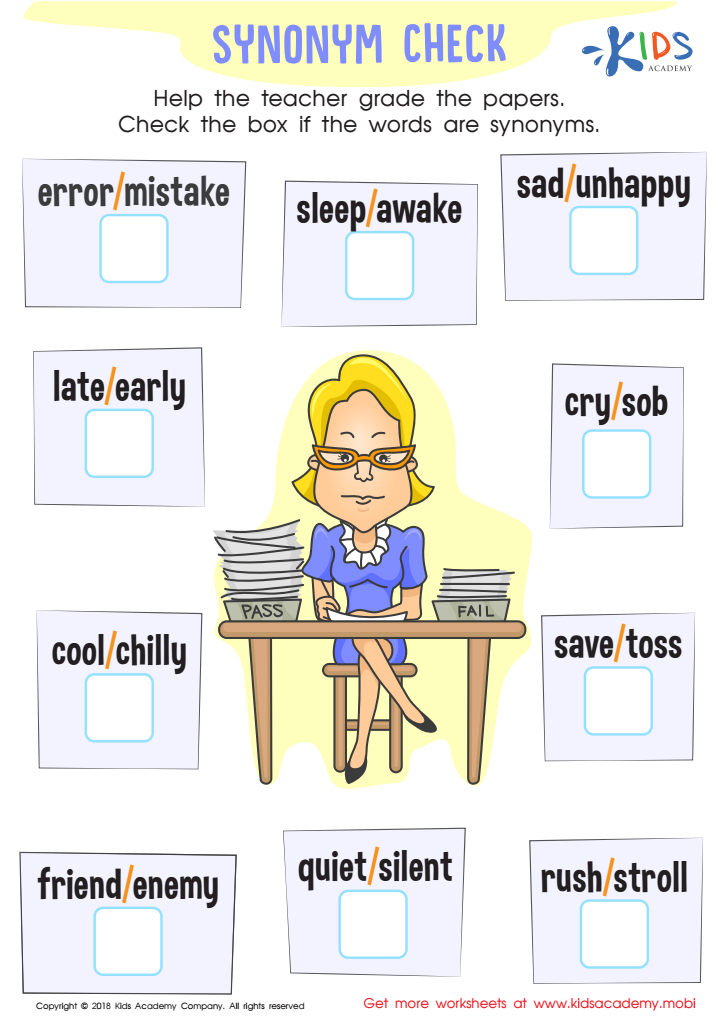
Synonym Check Worksheet
 Assign to My Students











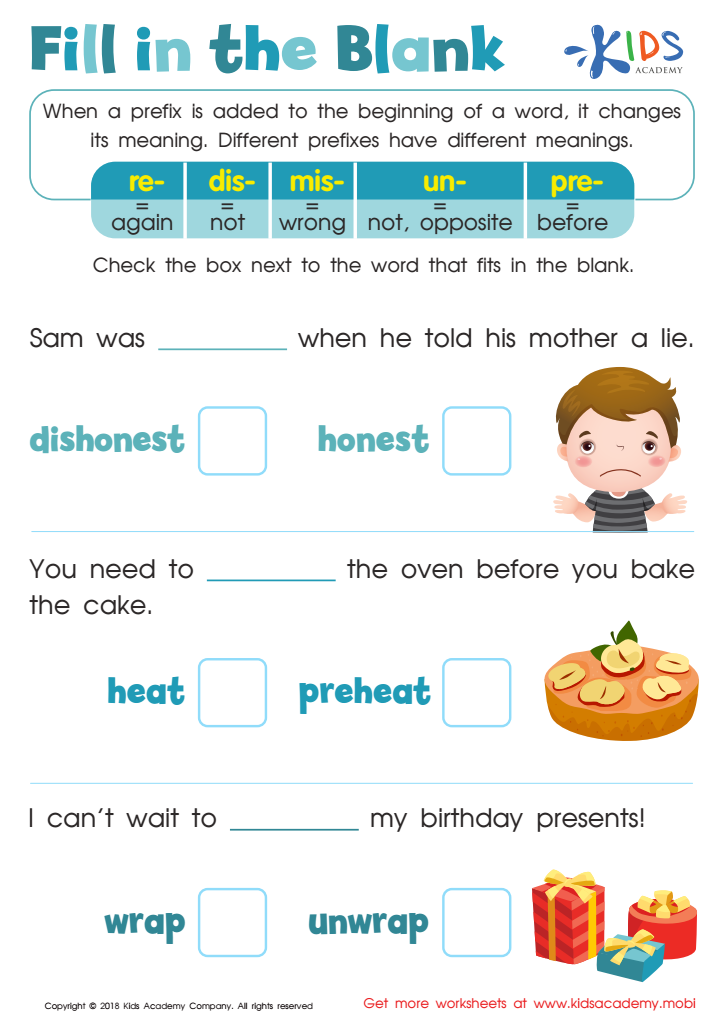
Reading: Fill in the Blank Worksheet
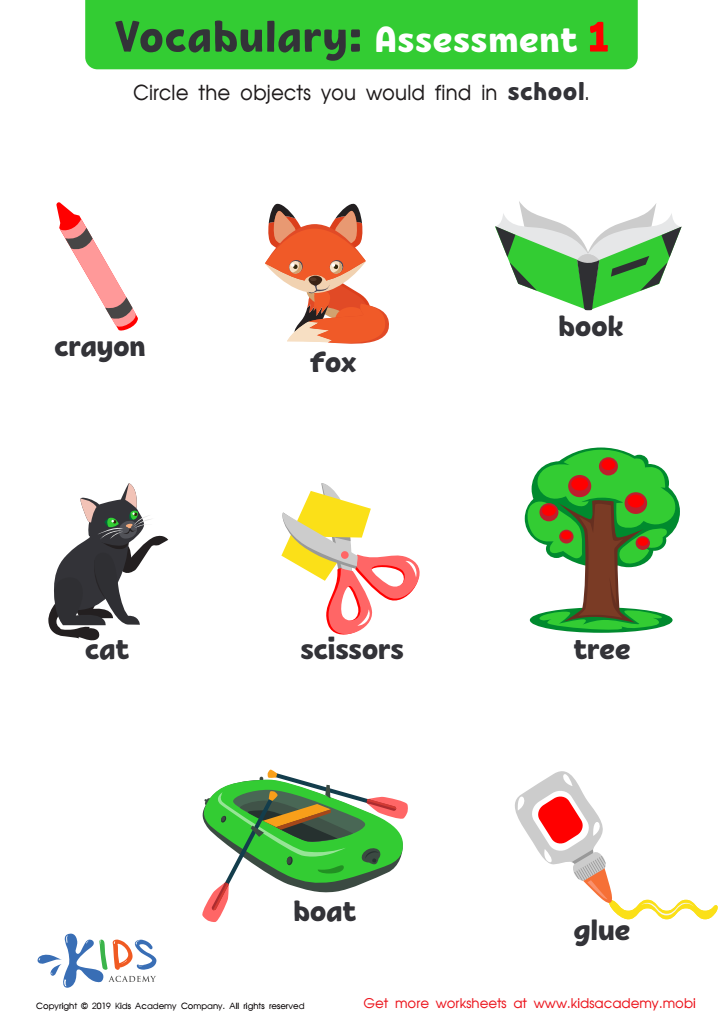
Vocabulary: Assessment 1 Worksheet
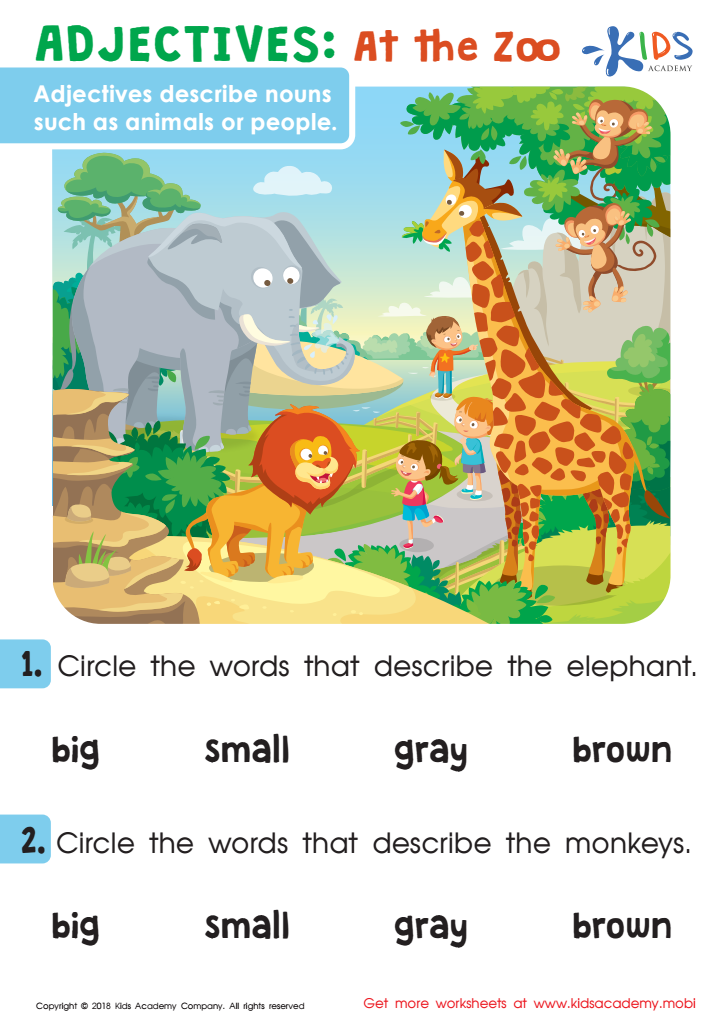
Adjectives: At The Zoo Worksheet
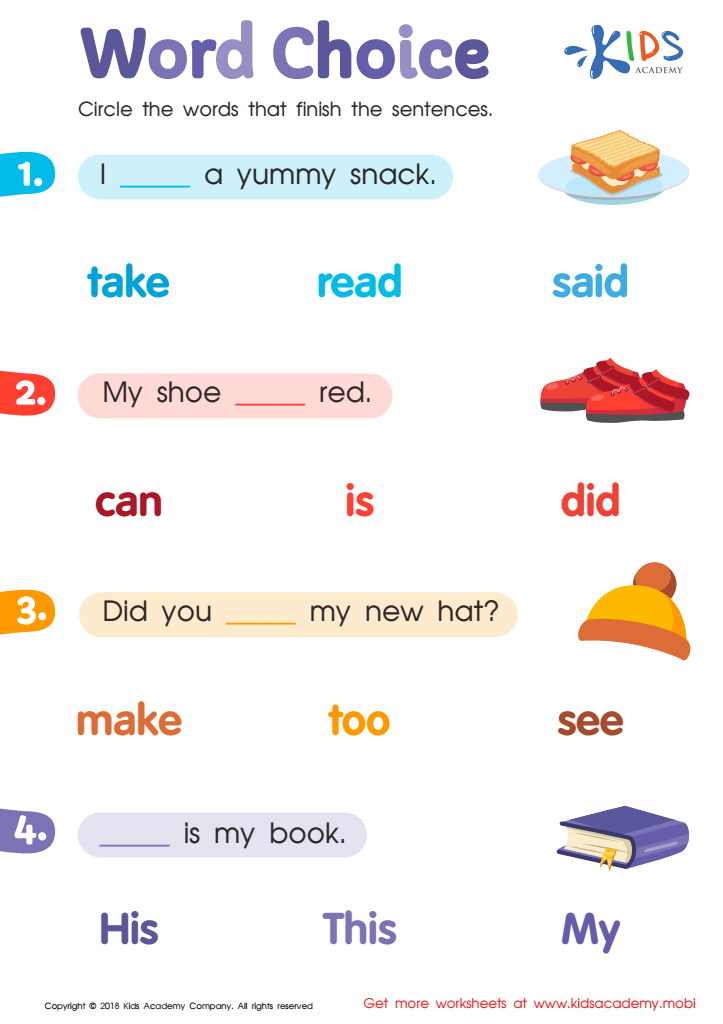
Word Choice Worksheet








Parents and teachers play a crucial role in a child's language development, especially when it comes to building an extensive vocabulary within context. Contextual understanding and vocabulary development are foundational for effective communication and academic success.
Firstly, when children learn new words in context, they can grasp the appropriate usage and nuances of those words, making it easier to remember and apply them correctly. For instance, learning the word "bark" in the context of a dog not only helps them understand the sound a dog makes but also differentiates it from the bark of a tree.
Secondly, a strong, context-based vocabulary enhances reading comprehension. Children who can identify and understand words while reading are more likely to grasp the overall message, theme, and details of the text. This boosts their confidence and encourages a love for reading, which is critical to lifelong learning.
Lastly, vocabulary and contextual understanding aid in cognitive development. They sharpen a child's ability to think critically and solve problems by enabling them to draw connections between different concepts. For these reasons, parents and teachers should emphasize vocabulary-building within context, as it is key to developing articulate, knowledgeable, and confident individuals.








