Word identification Normal Building Vocabulary Worksheets
3 filtered results
-
From - To
Enhance your child's reading skills with our "Word Identification Normal Building Vocabulary Worksheets." Designed for early grade learners, these engaging worksheets help students recognize, read, and understand essential vocabulary words. By incorporating fun activities, children will build their comprehension and word identification skills in an interactive manner. Our carefully crafted exercises align with educational standards, ensuring a strong foundation in language development. Perfect for classroom or homeschooling settings, these resources provide a variety of exercises suitable for different learning styles. Empower your child to master vocabulary with confidence! Visit our site to access these valuable worksheets and watch their literacy skills flourish.
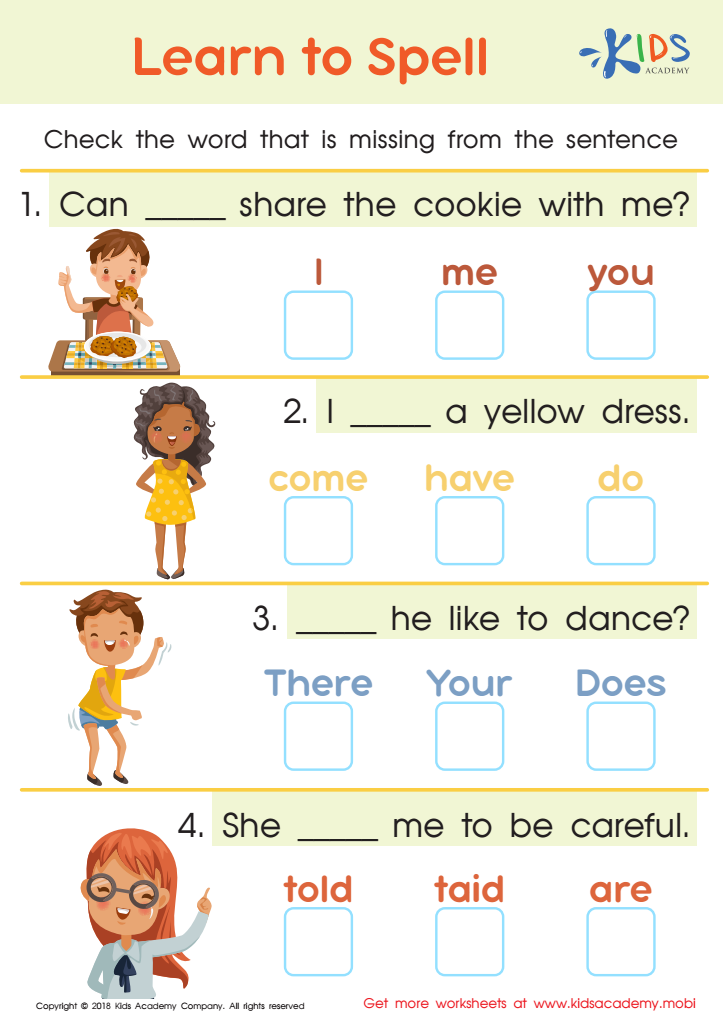
Learn to Spell Worksheet
 Assign to My Students











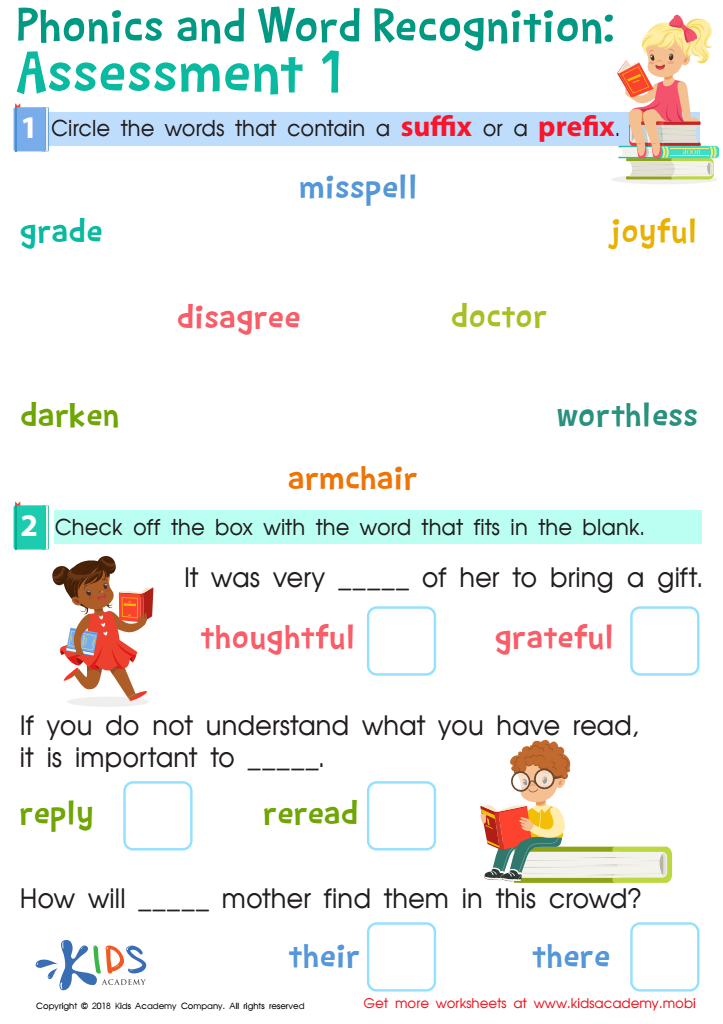
Phonics and Word Recognition: Assessment 1 Worksheet
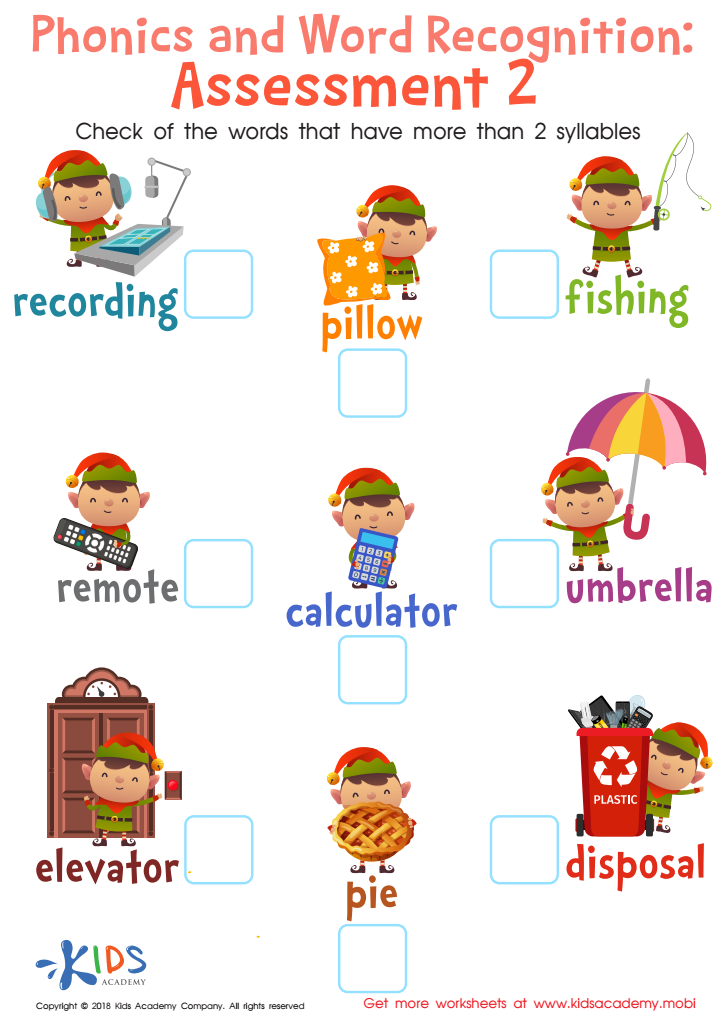
Phonics and Word Recognition: Assessment 2 Worksheet








Word identification and vocabulary building are crucial aspects of early literacy that significantly impact a child’s overall academic success. For parents and teachers, understanding and supporting these skills is essential, as they form the foundation for comprehension and communication.
Firstly, word identification helps children recognize and understand words quickly, which is vital for fluent reading. When children can accurately decode words, they can focus on understanding the meaning of the texts they are reading rather than getting bogged down by unfamiliar words. This fluency contributes to better comprehension and a greater love for reading.
Secondly, building vocabulary expands a child’s ability to express themselves and understand the world around them. A rich vocabulary enables improved writing, enhanced critical thinking skills, and the capacity to grasp more complex concepts across subjects.
Moreover, when parents and teachers prioritize vocabulary development and word identification, they foster an environment of curiosity and learning. Engaging children in discussions, reading aloud, and introducing new words in meaningful contexts creates opportunities for them to explore language and build confidence.
In sum, prioritizing word identification and vocabulary in early education equips children with essential skills that will benefit their academic journeys and lifelong learning.








