Rhyming skills development Normal Reading Worksheets
3 filtered results
-
From - To
Enhance your child's reading abilities with our "Rhyming Skills Development Normal Reading Worksheets." Perfect for early learners, these engaging worksheets focus on building phonemic awareness and vocabulary by exploring the fun world of rhymes. Children will enjoy activities that encourage word recognition, sound patterns, and creative expression. Each worksheet is crafted to align with educational standards, making learning both effective and enjoyable. Reinforce writing skills while sparking a love for language, as kids delight in connecting words with similar sounds. With our playful and interactive approach, your young readers will develop essential literacy skills that will set the foundation for future learning.
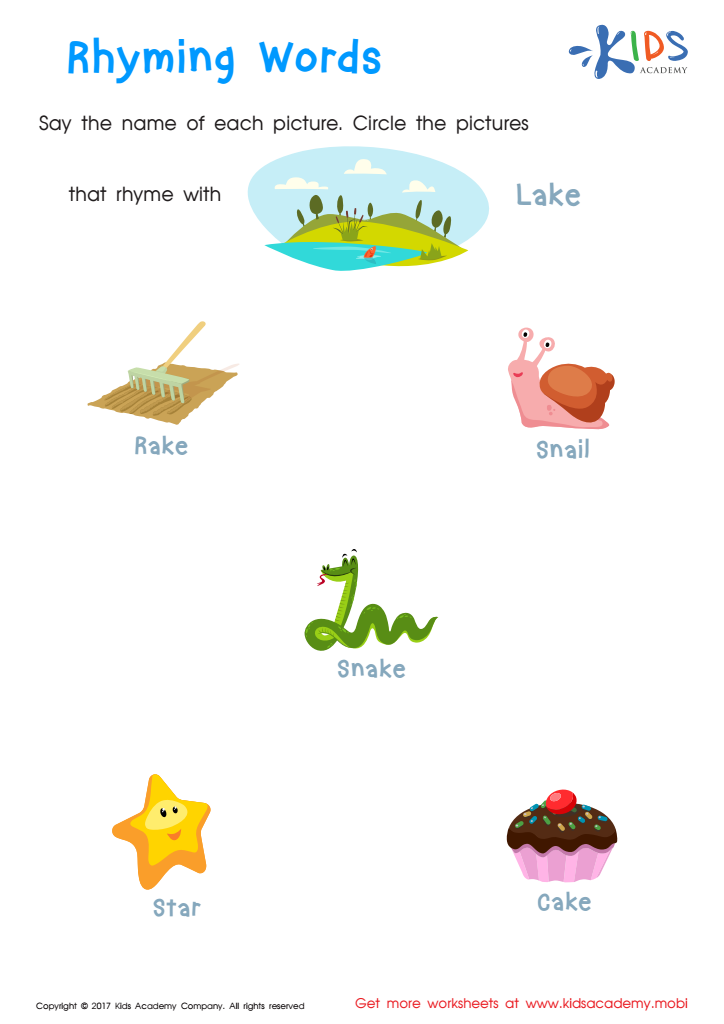
Rhyming Words Rhyming Worksheet
 Assign to My Students
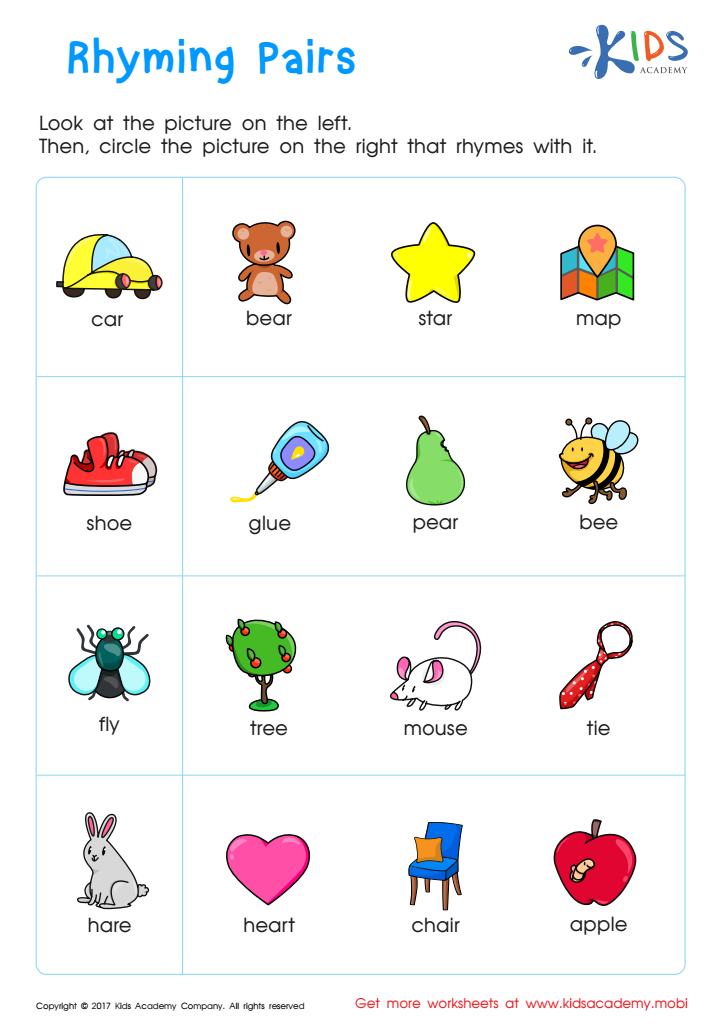
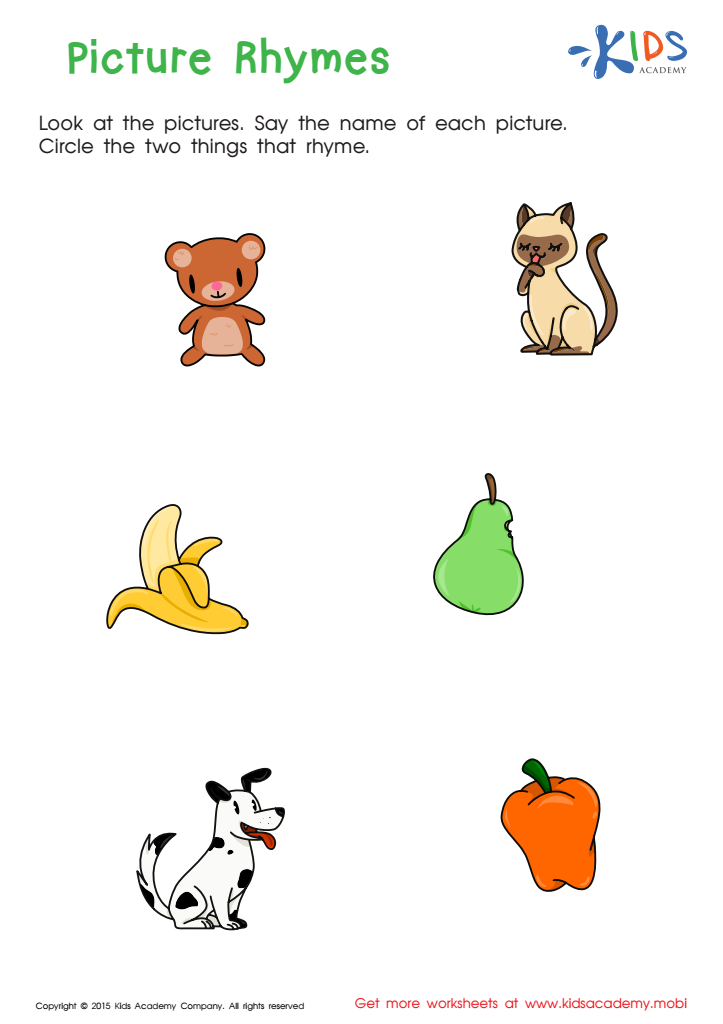
First Words: Picture Rhymes Worksheet





.jpg)


Rhyming skills are a fundamental aspect of early literacy development and play a crucial role in helping young children become proficient readers. When parents and teachers prioritize rhyming skills, they unlock several important cognitive benefits for children. Firstly, rhyming helps children recognize phonemic patterns and sounds within words, fostering phonological awareness, which is a predictor of successful reading ability. As they listen for and produce rhymes, children learn to segment sounds and blend them, crucial skills for decoding words while reading.
Moreover, engaging with rhymes enhances vocabulary comprehension and language development, as children are introduced to new words and concepts in a playful, memorable manner. Additionally, rhyming activities can improve memory retention, making it easier for children to recall words and their meanings.
Furthermore, learning to rhyme stimulates creativity and expression, encouraging children to play with language and explore the rhythm and melody of words. Parents and teachers can use rhyming games and songs to create a fun, interactive environment that supports these skills. By emphasizing rhyming, caregivers help lay a solid foundation for reading success, fostering a lifelong love for literacy and learning.








