Spatial awareness Normal Reading Worksheets
3 filtered results
-
From - To
Enhance your child's reading skills with our engaging Spatial Awareness Normal Reading Worksheets! Designed for early learners, these worksheets help children develop essential spatial awareness by integrating reading comprehension exercises with visual-spatial concepts. Each activity encourages kids to recognize patterns, directions, and positions, making learning fun and interactive. Our resources cater to various skill levels, ensuring that every child can build confidence and proficiency in their reading abilities. Explore our printable worksheets to support your child’s learning journey and foster critical thinking skills that are vital for academic success. Create a solid foundation in literacy and spatial awareness today!
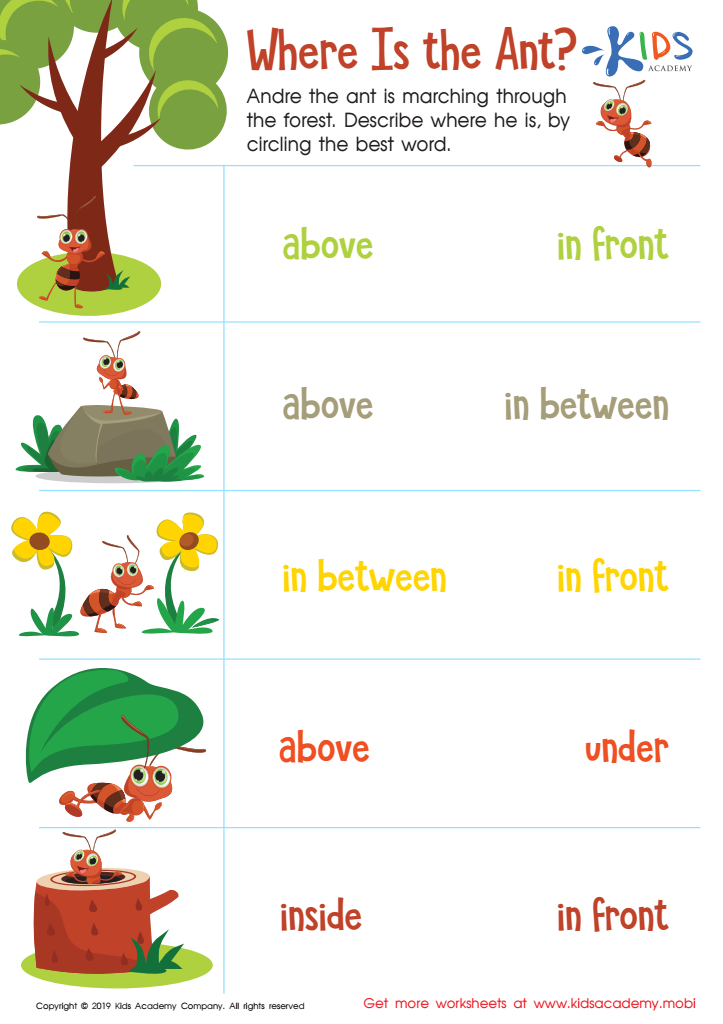
Where Is the Ant? Worksheet
 Assign to My Students
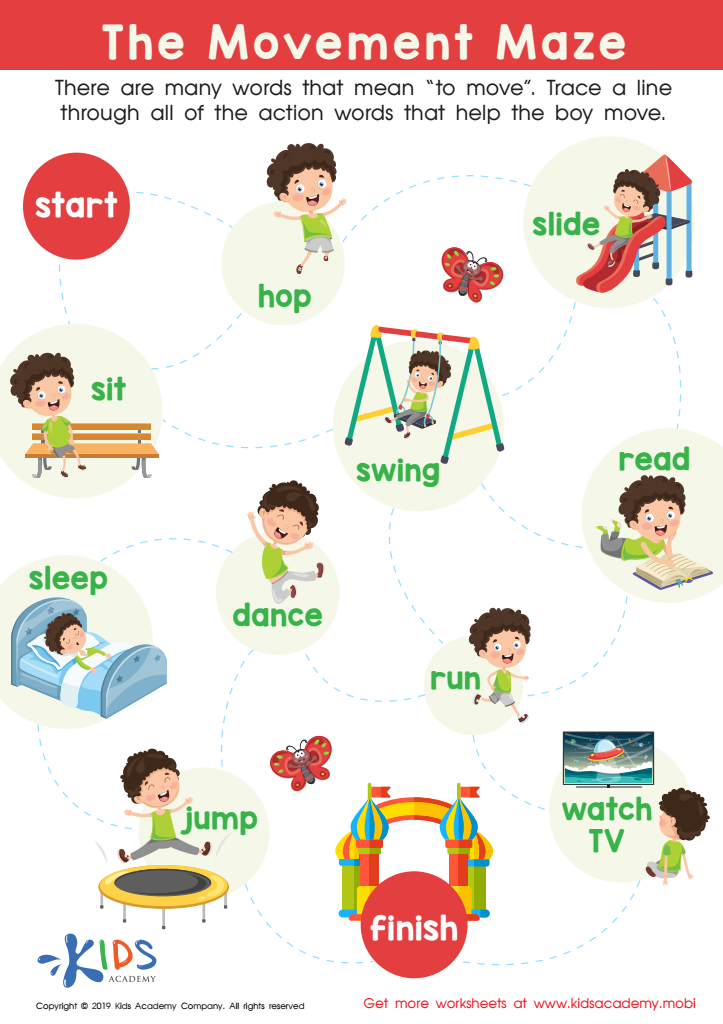
The Movement Maze Worksheet
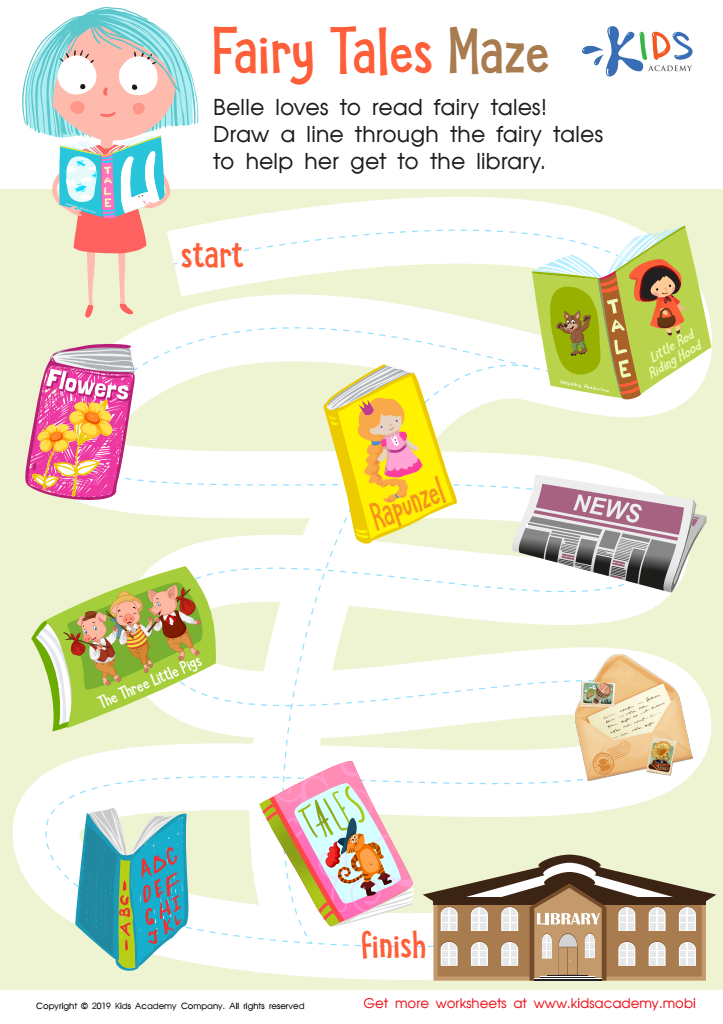
Fairy Tales Maze Worksheet






Parents and teachers should care about spatial awareness because it is crucial to children's overall development and learning. Spatial awareness refers to the ability to understand and interact with the space around us; it includes skills such as recognizing shapes, understanding distances, and navigating environments. This skill set is foundational for subjects like math, science, and even art, facilitating children's ability to grasp concepts like geometry and physics.
Strong spatial awareness aids in everyday activities, from reading maps to organizing their belongings. Moreover, children with well-developed spatial skills tend to excel in problem-solving and logical reasoning, enhancing their academic performance and confidence. For younger children, nurturing spatial awareness can improve fine motor skills and coordination, significantly impacting their physical development.
Furthermore, children's spatial awareness may connect to their future career options; fields like engineering, architecture, and design all require strong spatial skills. By recognizing the importance of spatial awareness, parents and teachers can implement activities and games that promote these critical skills—like puzzles, building blocks, or even outdoor play—ensuring that children grow into well-rounded, capable individuals who can navigate the complexities of their world. This investment fosters lifelong skills beneficial academically, socially, and professionally.








