Analytical skills Normal Reading Comprehension Worksheets
6 filtered results
-
From - To
Enhance your child's critical thinking and reading abilities with our Analytical Skills Reading Comprehension Worksheets. Designed for young learners, these worksheets help kids develop essential analytical skills, boosting their ability to understand and interpret complex texts. Each engaging activity is tailored to stimulate curiosity and improve comprehension through focused exercises that analyze text structure, context clues, and inferential questions. Perfect for mastering classroom standards and fostering a love for reading, our worksheets provide parents and educators with reliable resources to support children's academic growth. Visit Kids Academy to explore our extensive collection and watch your child's analytical skills flourish.
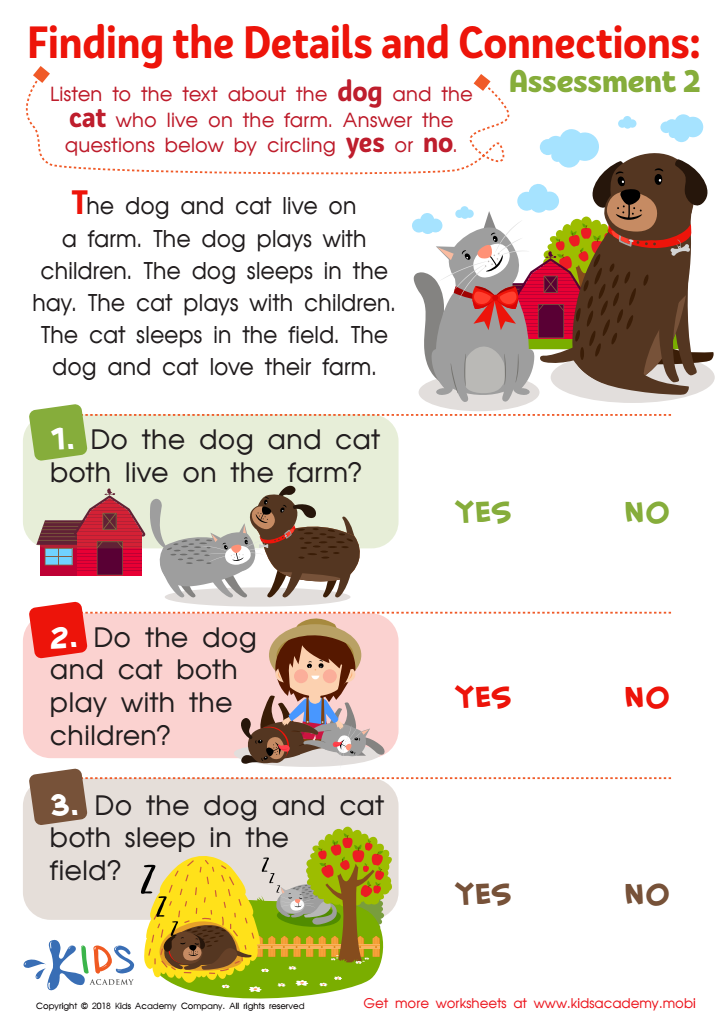
Finding the Details and Connections: Assessment 2 Worksheet
 Assign to My Students
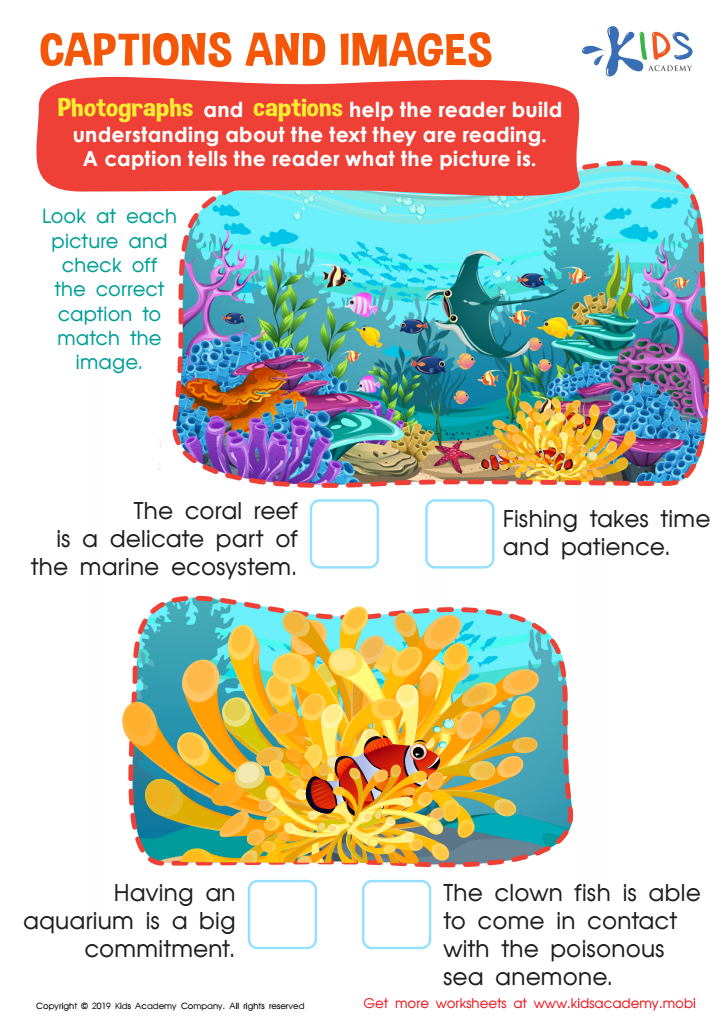
Captions and Images Worksheet
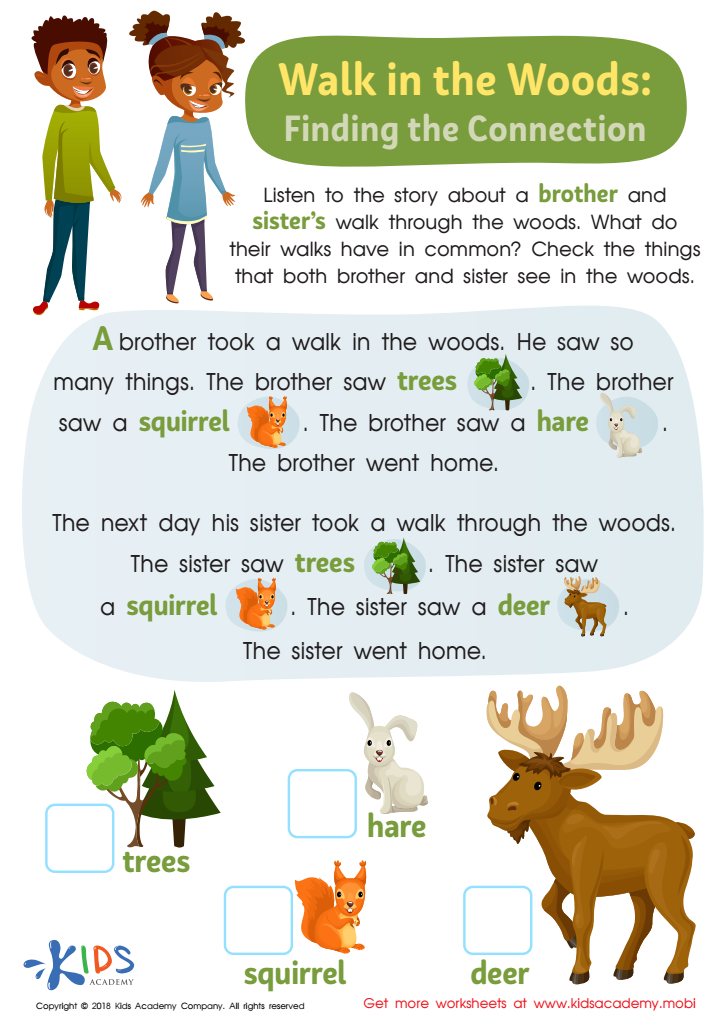
Walk In the Woods: Finding Connections Worksheet
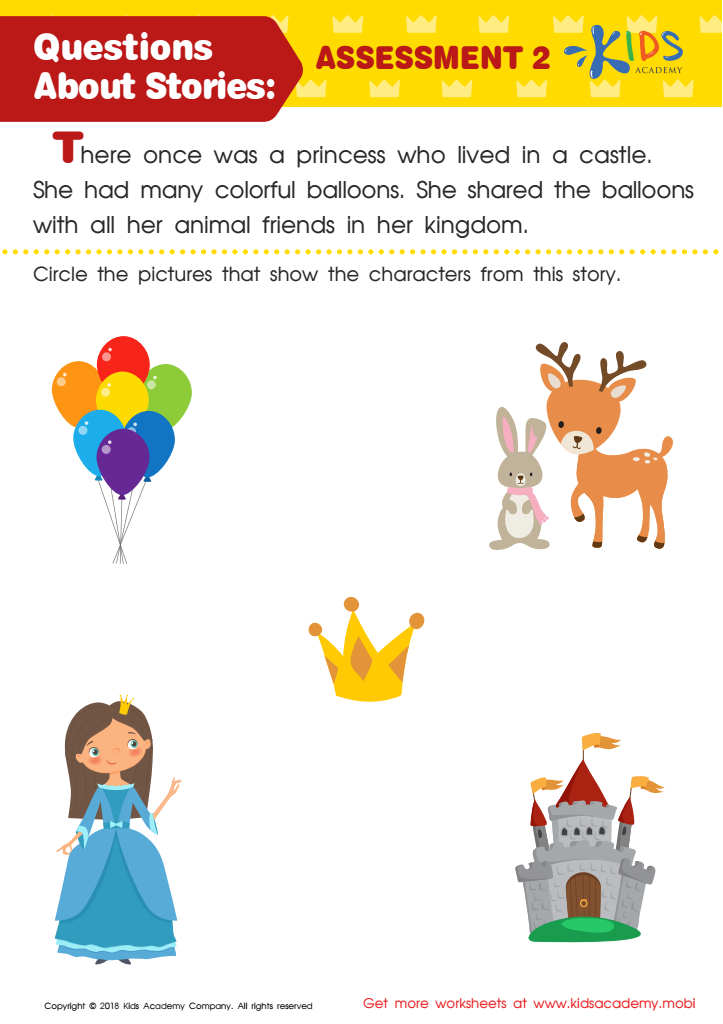
Questions About Stories: Assessment 2 Worksheet
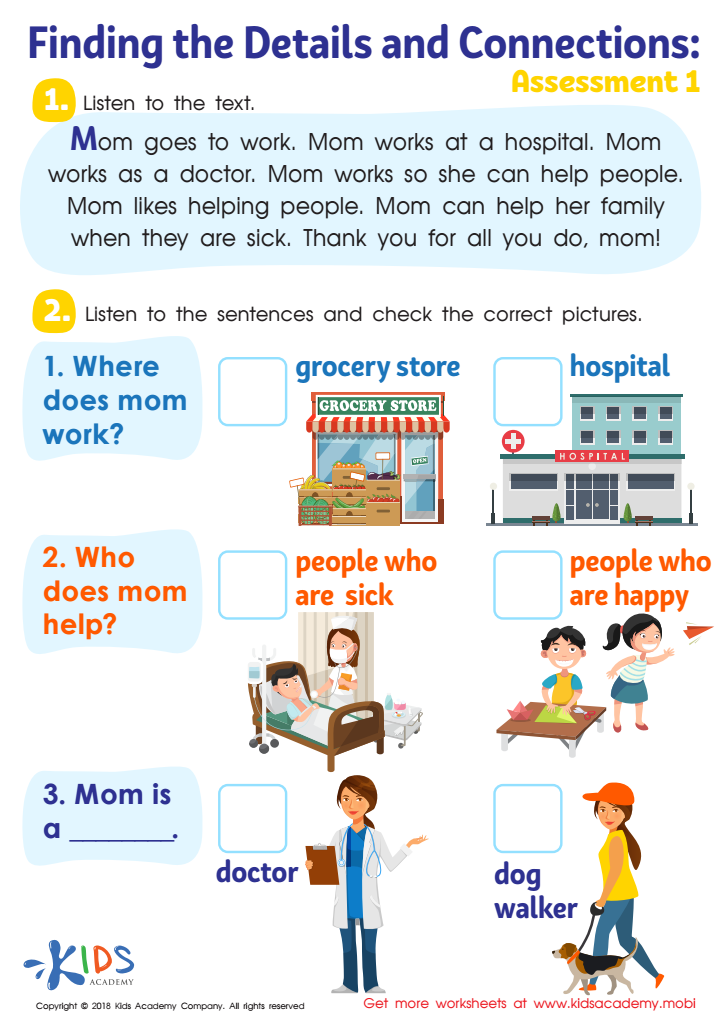
Finding the Details and Connections: Assessment 1 Worksheet
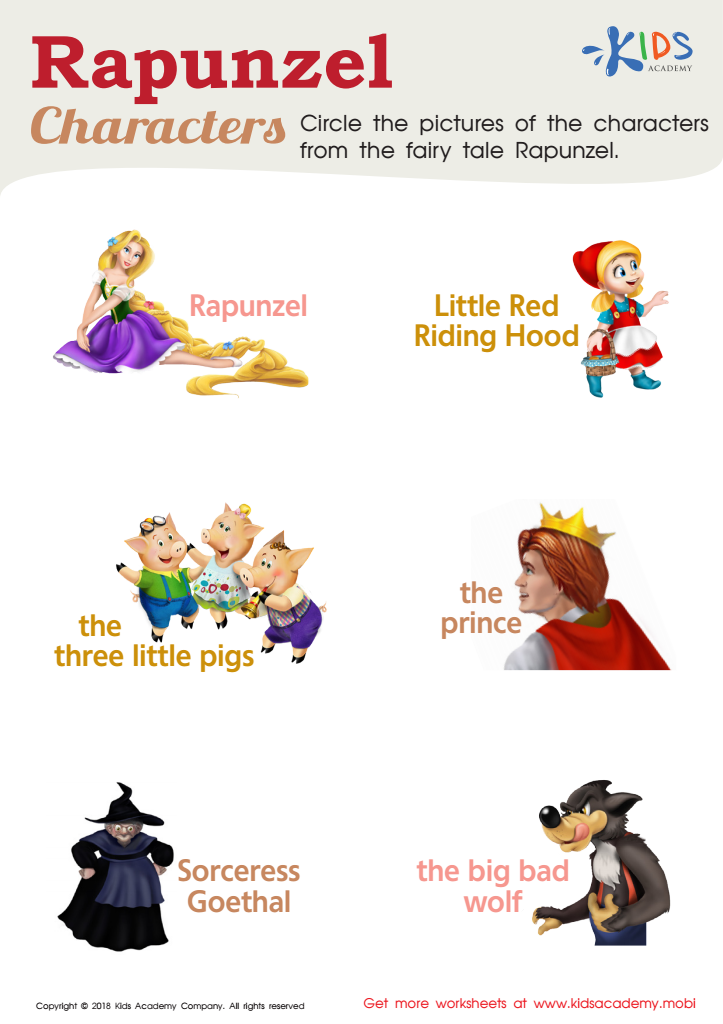
Rapunzel Characters Worksheet








Parents and teachers should emphasize the development of analytical skills in conjunction with normal reading comprehension in early education, as this dual focus equips children with essential tools for lifelong learning and problem-solving. While normal reading comprehension allows children to understand and recall text-based information, analytical skills facilitate deeper engagement by encouraging them to ask questions, draw inferences, and make connections between ideas.
For example, when children read a story, normal comprehension ensures they grasp the plot, characters, and basic sequence of events. However, analytical skills enable them to evaluate characters’ motivations, predict possible outcomes, and recognize underlying themes. This analytical approach fosters critical thinking, empowering children to dissect information, assess credibility, and formulate reasoned arguments.
Moreover, both sets of skills are crucial in abstract subjects like math and science, where analytical thinking helps analyze problems and opt for effective solutions. Encouraging these skills early on builds a strong cognitive foundation, supporting more advanced learning and comprehension in later years. In a world saturated with information, the combination of reading comprehension and analytical ability is invaluable, allowing children to navigate content with discernment and skill. Above all, these skills cultivate a love for learning, curiosity, and independence, shaping well-rounded, critical, and insightful individuals.








