Moral understanding Normal Reading Comprehension Worksheets
5 filtered results
-
From - To
Enhance your child's reading skills while exploring important life lessons with our Moral Understanding Normal Reading Comprehension Worksheets. Designed for early learners, these engaging worksheets focus on helping children decode narratives and derive moral lessons from stories. Kids will enjoy reading captivating passages that foster critical thinking, empathy, and ethical reasoning. Our carefully crafted questions encourage them to reflect on characters' choices and the consequences of actions. Perfect for classroom or home use, these resources not only improve reading comprehension but also build character and social awareness in young learners. Dive into meaningful stories that teach values today!
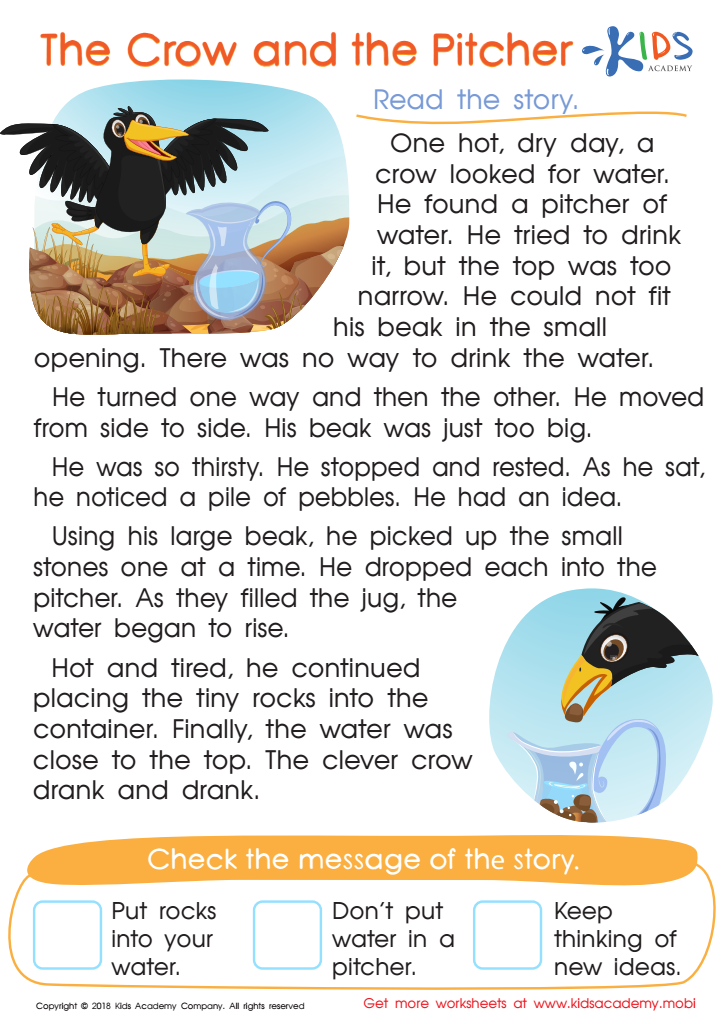
The Crow and the Pitcher Worksheet
 Assign to My Students
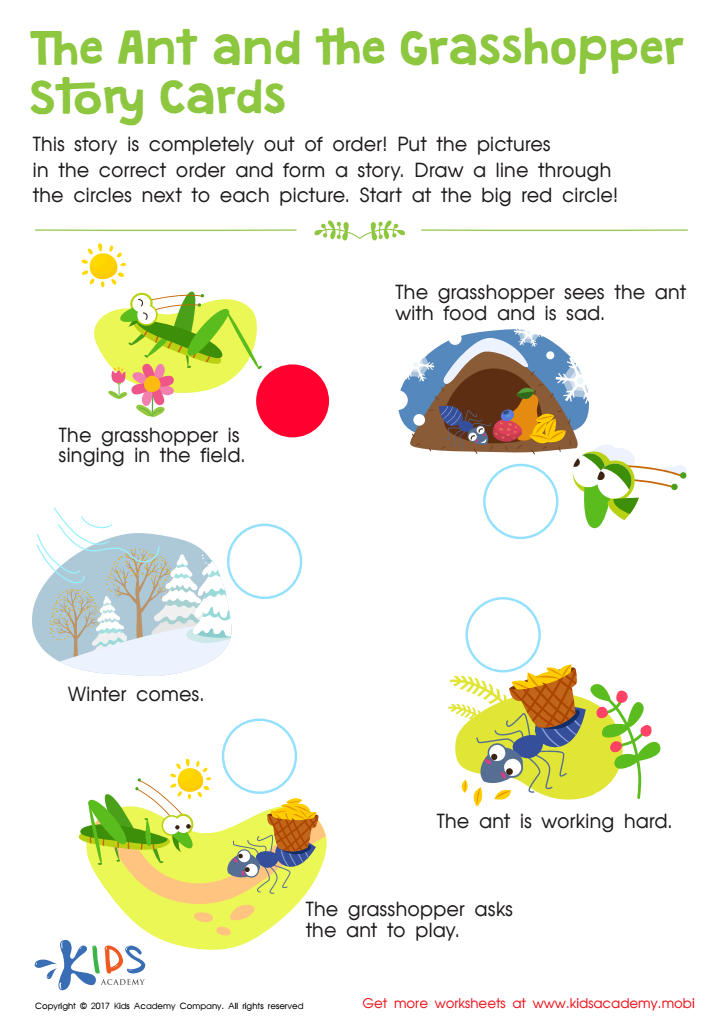
The Ant and The Grasshopper Worksheet
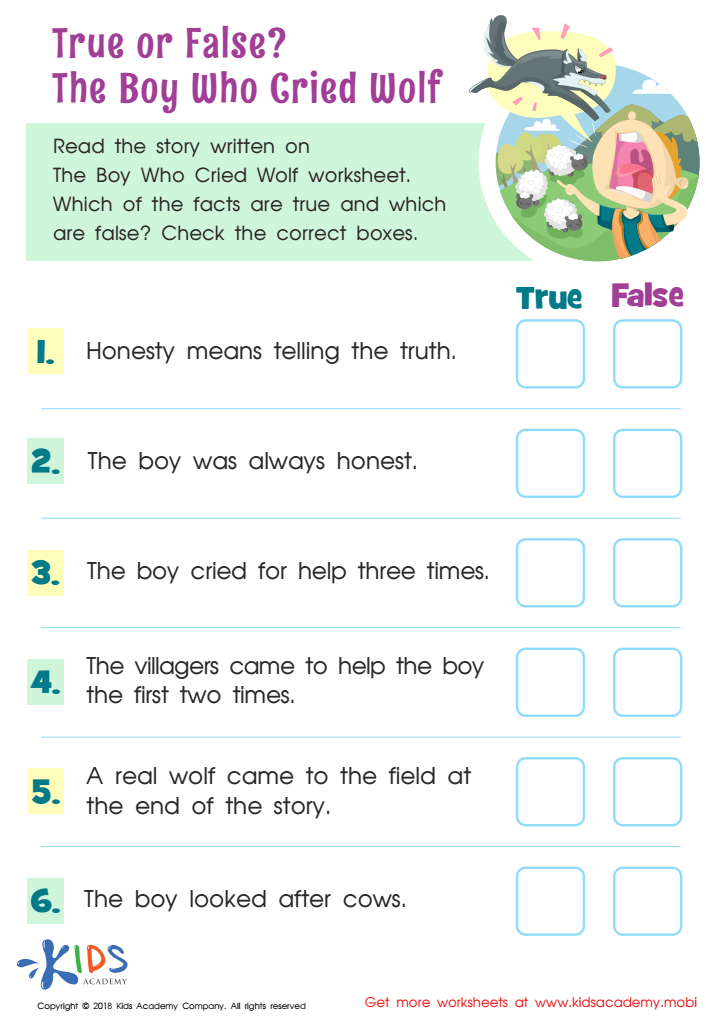
True or False? The Boy Who Cried Wolf Worksheet
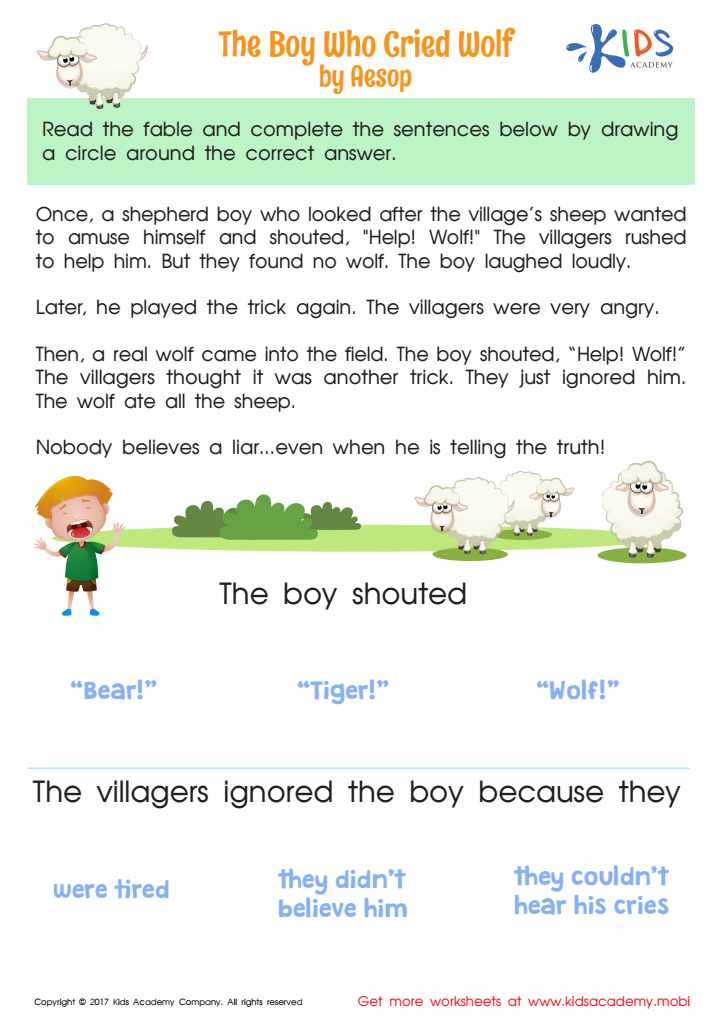
The Boy Who Cried Wolf Worksheet
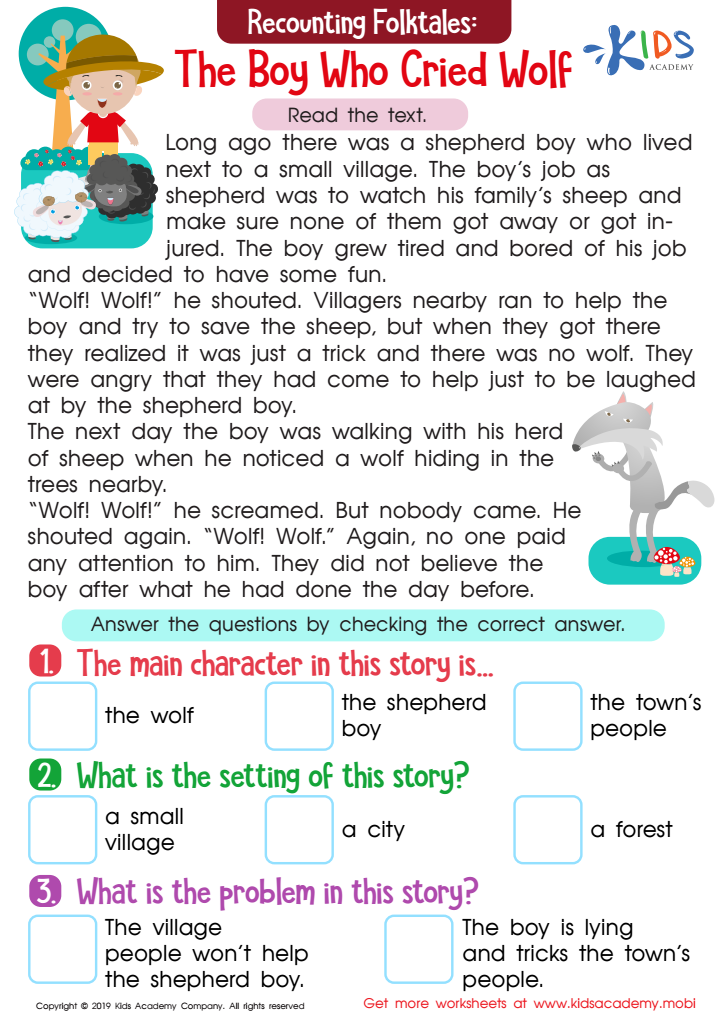
The Boy Who Cried Wolf Part 1 Worksheet








Parents and teachers should care about moral understanding and reading comprehension because both are foundational to a child's overall development. Moral understanding helps children to distinguish between right and wrong, fosters empathy, and guides them in their interactions with others. It cultivates a sense of responsibility, helping children to make ethical decisions as they navigate their social environments. This is crucial for building not only character but also emotional intelligence, which is essential for developing healthy relationships and contributing positively to society.
On the other hand, normal reading comprehension skills are essential for academic success. Proficient reading enables children to understand and engage with a wide variety of texts, thereby expanding their knowledge and critical thinking abilities. When children comprehend what they read, they can connect narratives and lessons to their personal experiences, reinforcing their moral understanding and ethical frameworks.
Both these skills—moral understanding and reading comprehension—are interlinked; as children read diverse stories, they encounter varied moral dilemmas and perspectives. Consequently, caregivers and educators have a unique opportunity to integrate these areas within the learning process, helping to produce well-rounded individuals who are not only academically proficient but also morally grounded. In doing so, they prepare children for a more empathetic and informed future.








