Analytical skills Normal Reading Fiction Worksheets
5 filtered results
-
From - To
Enhance your child's analytical skills with our engaging Normal Reading Fiction Worksheets! These thoughtfully designed worksheets cater to early grade students, promoting critical thinking and comprehension through fun and relatable stories. Each worksheet encourages children to analyze characters, themes, and plot structure, fostering a deeper understanding of the fiction they read. With activities that stimulate discussion and reflection, these resources are perfect for home or classroom use. Help your young learners develop essential reading strategies while igniting their passion for literature. Explore our collection and support your child’s growth in analytical thinking today!
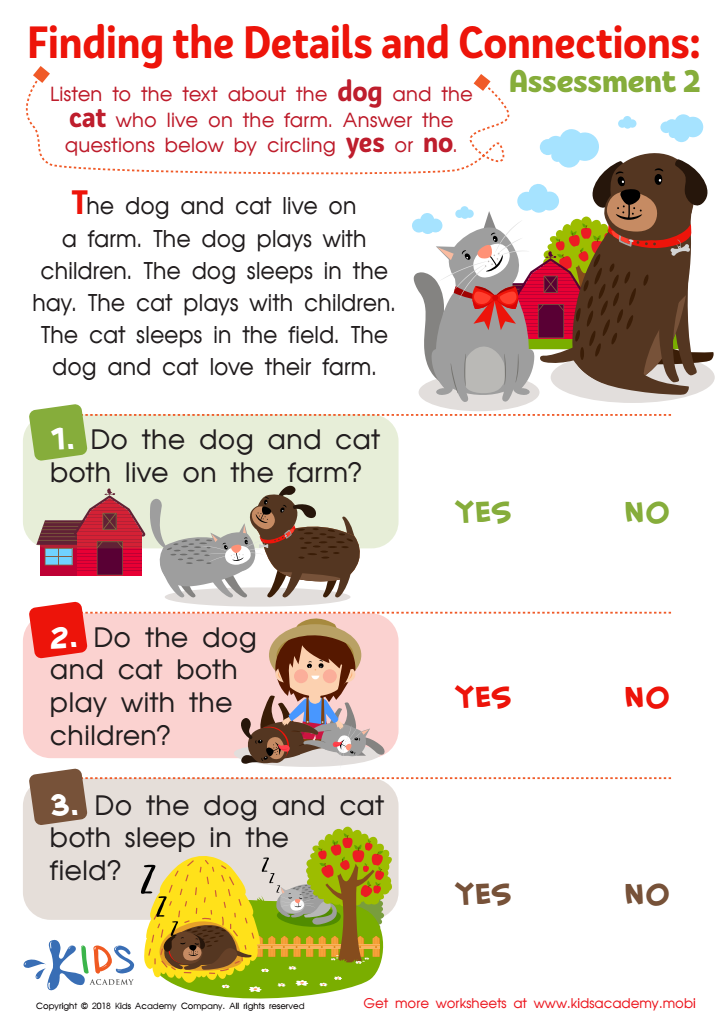
Finding the Details and Connections: Assessment 2 Worksheet
 Assign to My Students
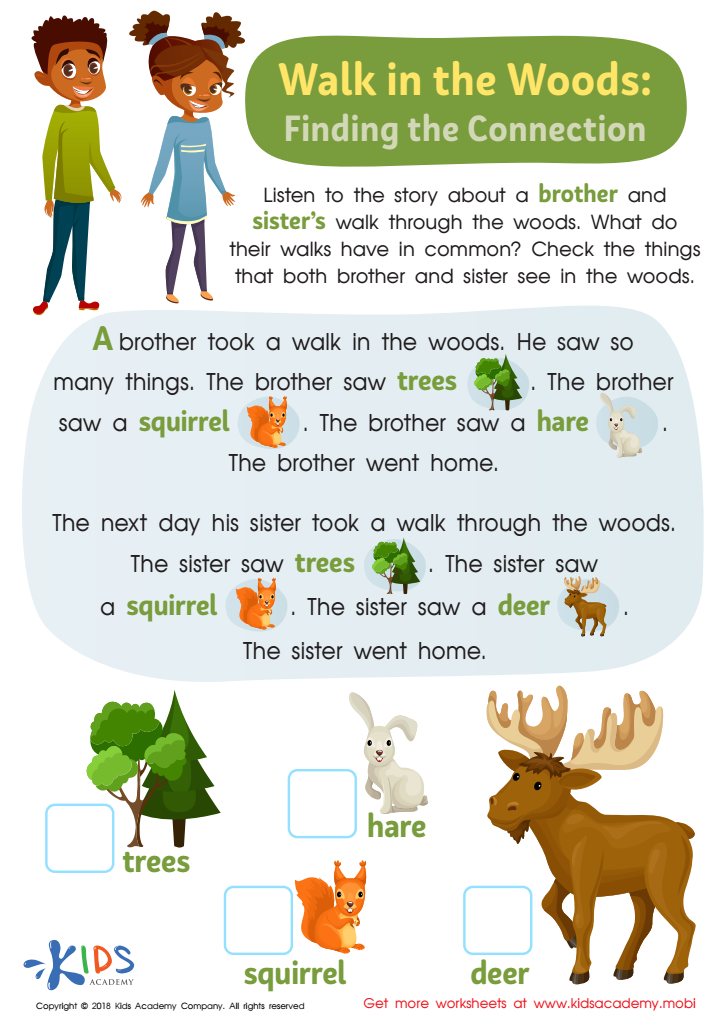
Walk In the Woods: Finding Connections Worksheet
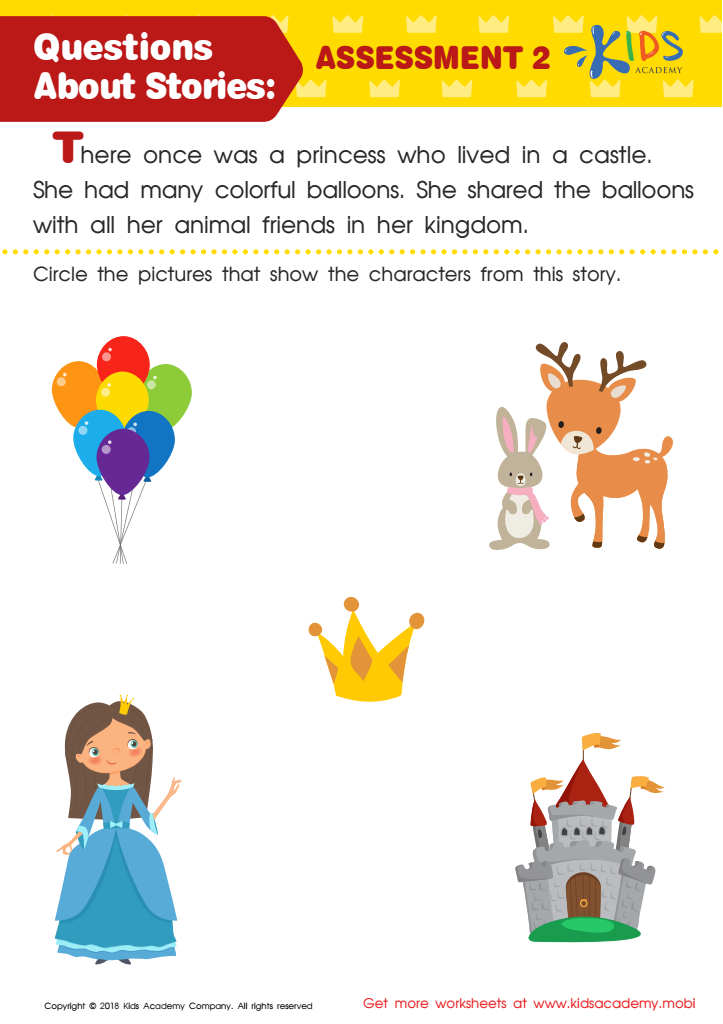
Questions About Stories: Assessment 2 Worksheet
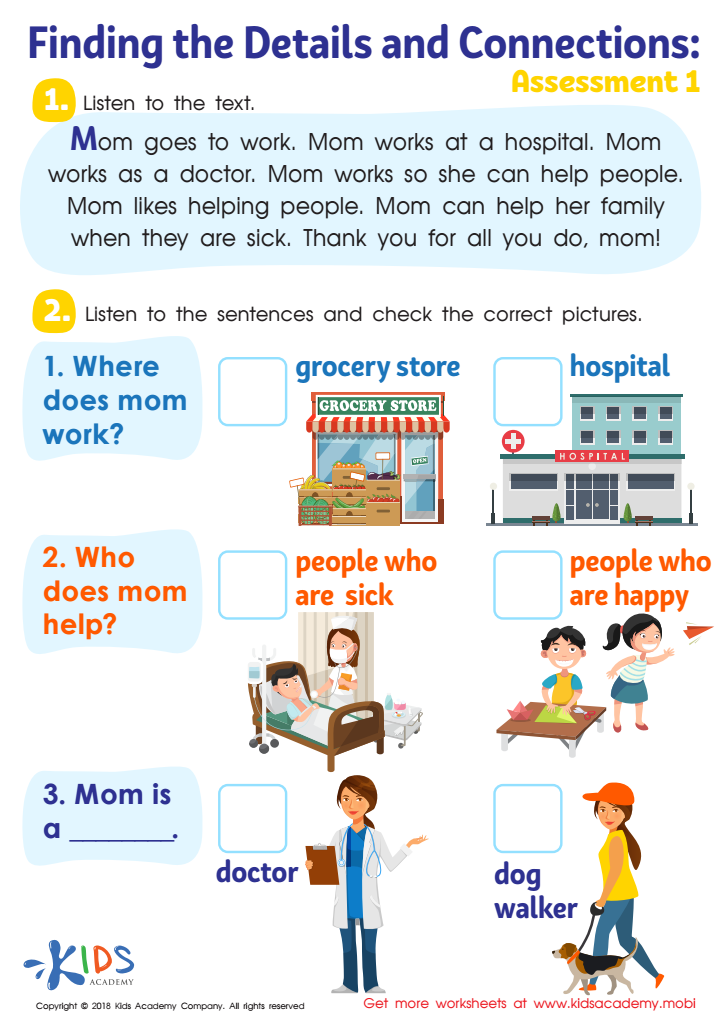
Finding the Details and Connections: Assessment 1 Worksheet
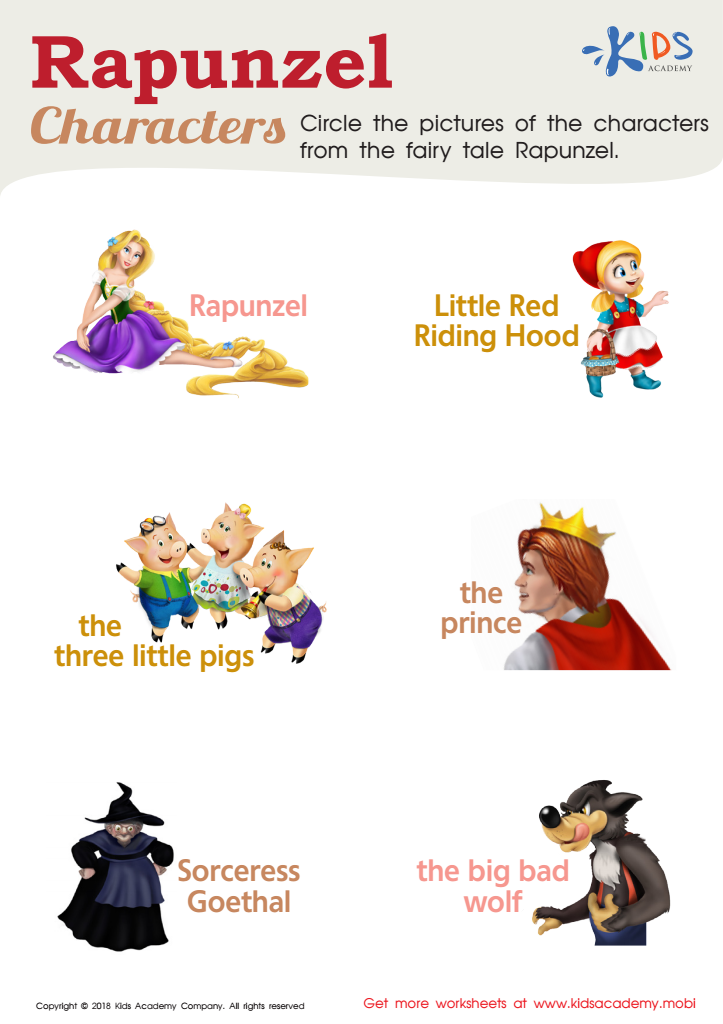
Rapunzel Characters Worksheet







Analytical skills are crucial for children's overall cognitive development, and encouraging these skills in the context of reading fiction can have a profound impact on their learning journey. For parents and teachers, fostering analytical skills through normal reading of fiction provides numerous benefits.
Fictional stories often present complex characters, plots, and themes that require readers to think critically and make connections. When children analyze characters’ motivations, anticipate plot developments, or explore the underlying messages of a story, they enhance their ability to synthesize information, a skill vital in academic and real-world scenarios.
Moreover, engaging with fiction allows children to practice empathy by understanding diverse perspectives, fostering emotional intelligence. As they analyze situations and conflicts within narratives, they learn to navigate real-life challenges.
Additionally, developing these skills prepares children for higher-level thinking required in future educational pursuits. Teachers can create a rich classroom environment where reading fiction sparks discussions, encouraging students to ask questions and express opinions critically. Parents can reinforce this understanding at home, leading to a collaborative approach in nurturing analytical capabilities.
Ultimately, prioritizing analytical skills in reading fiction promotes thoughtful, insightful, and adaptable learners equipped to succeed in an increasingly complex world.







