Identifying story elements Normal Reading Fiction Worksheets
3 filtered results
-
From - To
Welcome to our Identifying Story Elements Normal Reading Fiction Worksheets! These engaging resources are designed to enhance young learners' comprehension skills by helping them identify key elements of narratives, such as characters, setting, plot, conflict, and resolution. With a variety of fun and interactive activities, students will practice analyzing stories and understanding their structure. Perfect for early grade classrooms or homeschooling, these worksheets encourage critical thinking and foster a love for reading. Browse our collection and empower your students to become confident readers and storytellers today! Enrich your teaching experience with our easy-to-use and visually appealing worksheets!
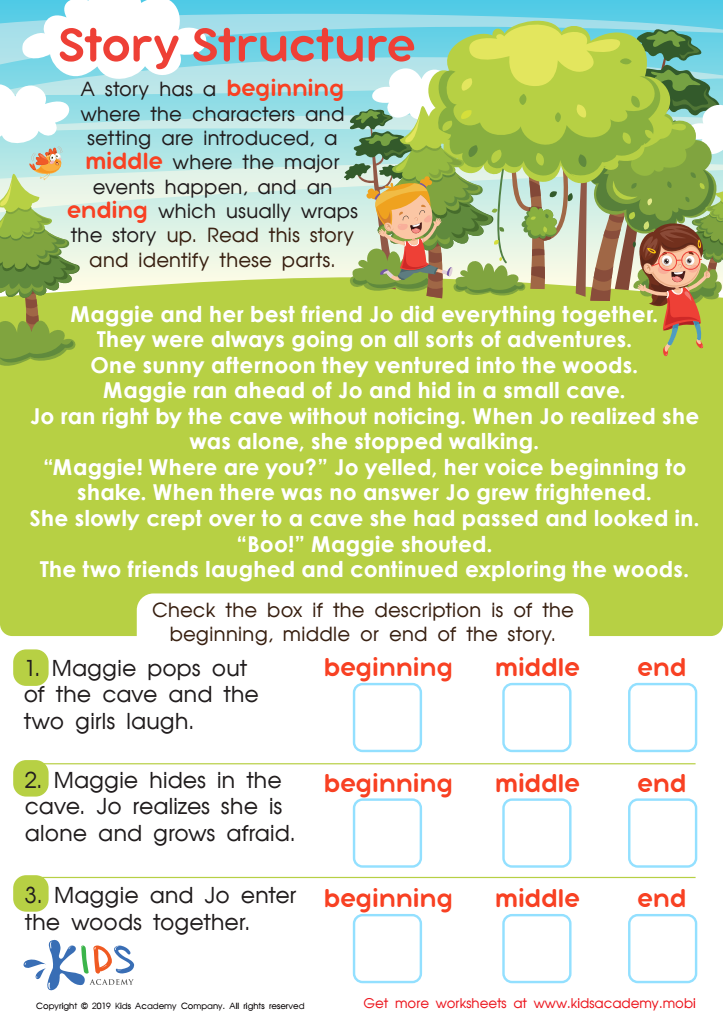
Story Structure Worksheet
 Assign to My Students
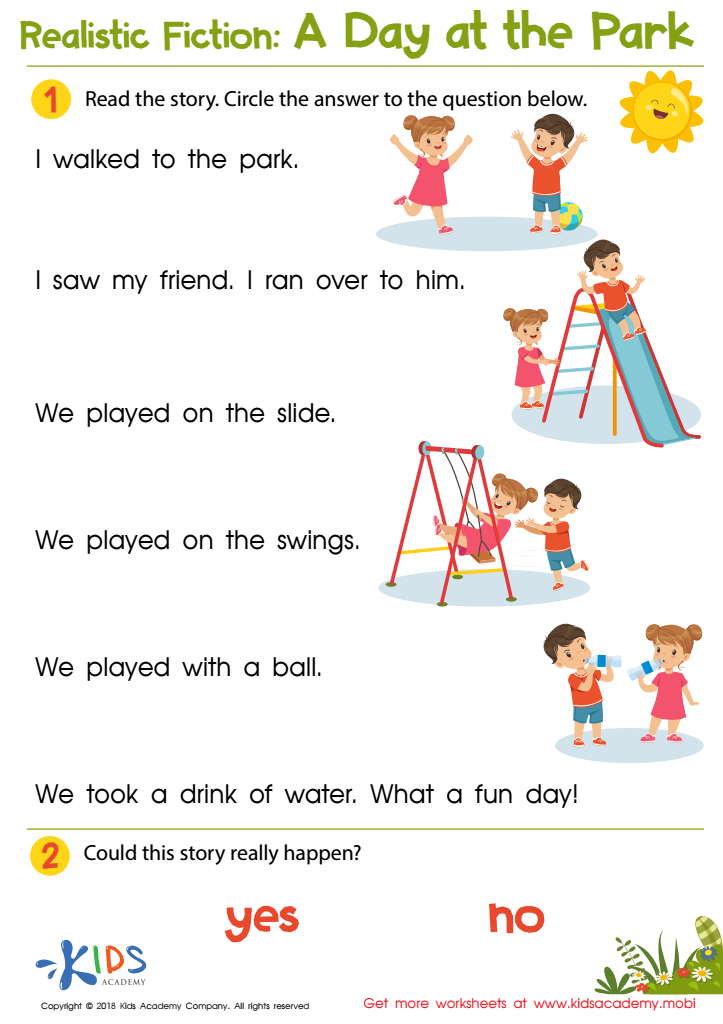
A Day at the Park Worksheet
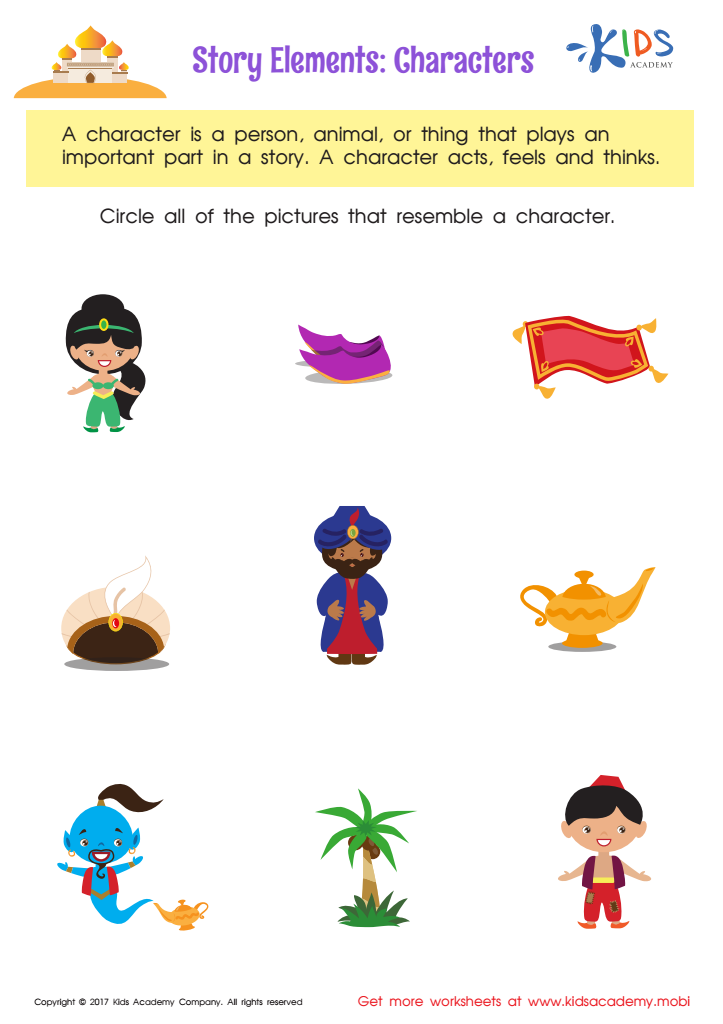
Story Elements Printable







.jpg)
Identifying story elements in fiction is crucial for both parents and teachers as it significantly enhances children's reading comprehension and critical thinking skills. Story elements include key components such as characters, setting, plot, conflict, and resolution. By understanding these elements, children can better grasp the narrative structure, making it easier for them to follow and engage with the story.
When adults emphasize these elements, they help cultivate a deeper appreciation for literature. This not only improves children's ability to summarize and recount events but also allows them to draw connections between different texts, fostering intertextual understanding. Additionally, discussing story elements promotes analytical skills, encouraging kids to think critically about motivations and outcomes.
Furthermore, identifying these elements supports vocabulary development and language skills by exposing children to diverse words and phrases that describe various aspects of storytelling. Parents and teachers can use relatable examples from children's lives to enhance understanding, making reading a richer, more interactive experience. Overall, focusing on story elements lays the groundwork for academic success and a lifelong love of reading, reinforcing the notion that literature is not just for academic purposes but also a source of enjoyment and personal connection.







