Logical Reasoning Normal Reading Fiction Worksheets
5 filtered results
-
From - To
Enhance your child's learning experience with our engaging Logical Reasoning Normal Reading Fiction Worksheets. Designed for early learners, these worksheets cultivate critical thinking skills while improving reading comprehension through fun and relatable stories. Children will be challenged to analyze text, make inferences, and draw conclusions, fostering a deeper understanding of narrative structures. Our printable worksheets are perfect for classroom use or home practice, ensuring that kids not only enjoy reading but also hone their logical reasoning abilities. Each worksheet encourages thoughtful engagement and discussion, creating a comprehensive approach to developing literacy skills. Empower your young learners with tools to succeed!
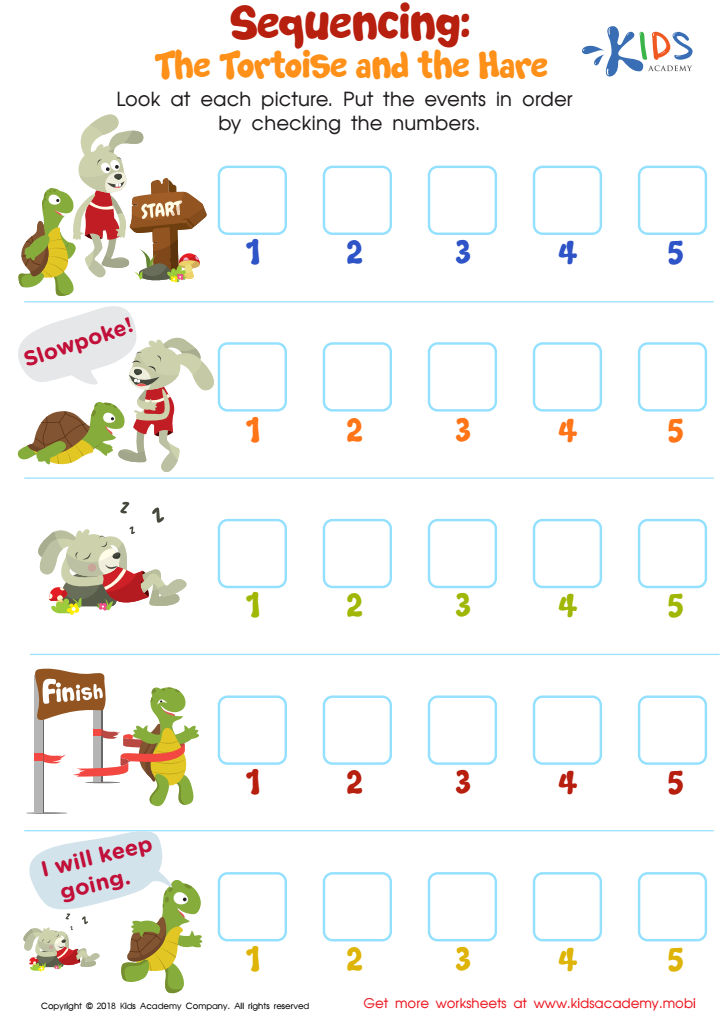
Sequencing: The Tortoise and the Hare Worksheet
 Assign to My Students
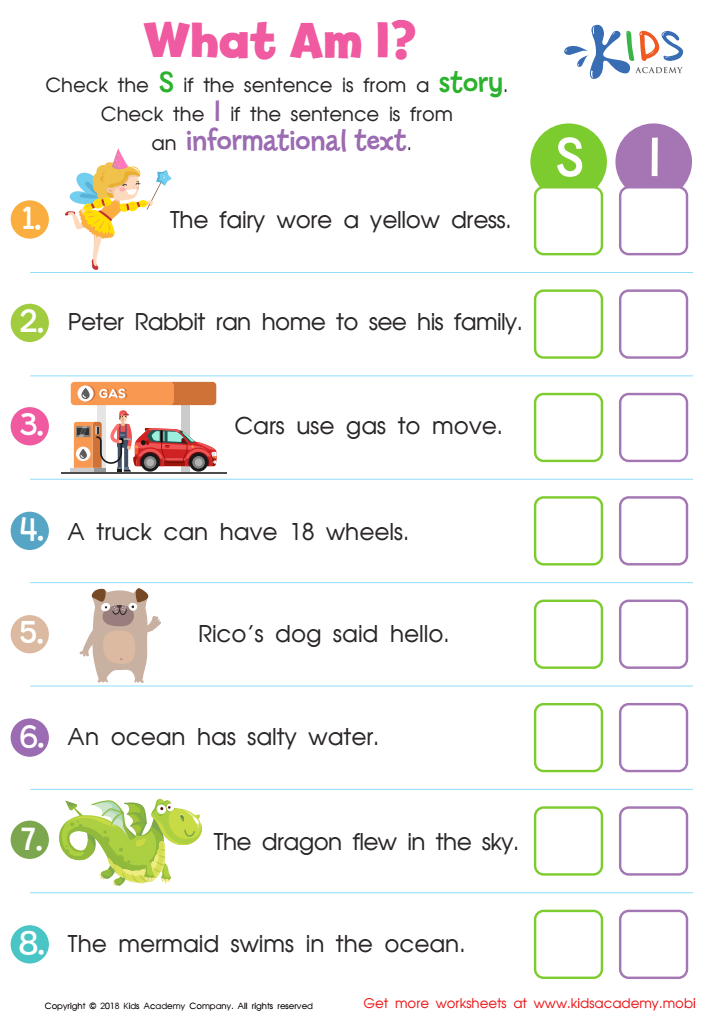
What Am I? Worksheet
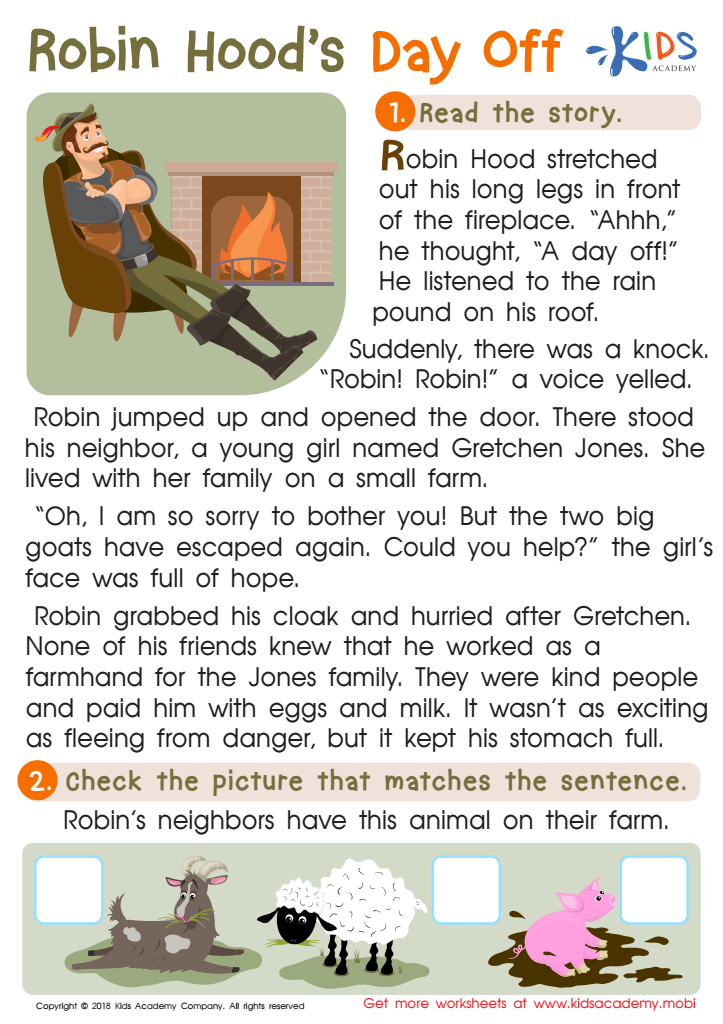
Robin Hood's Day Off Worksheet
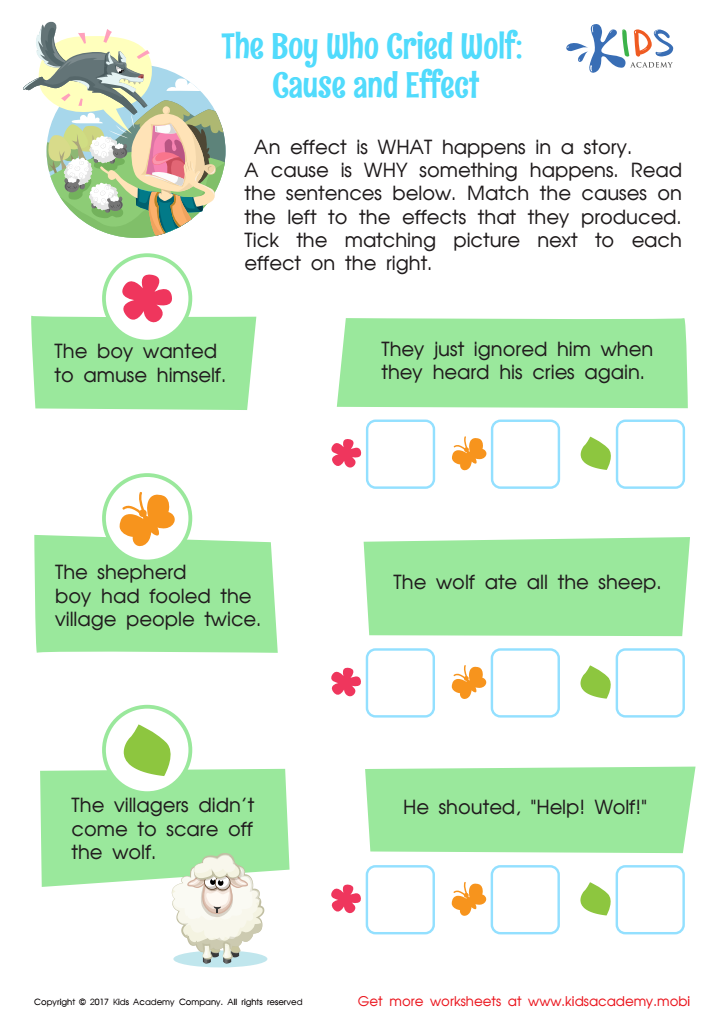
The Boy Who Cried Wolf: Cause and Effect Worksheet
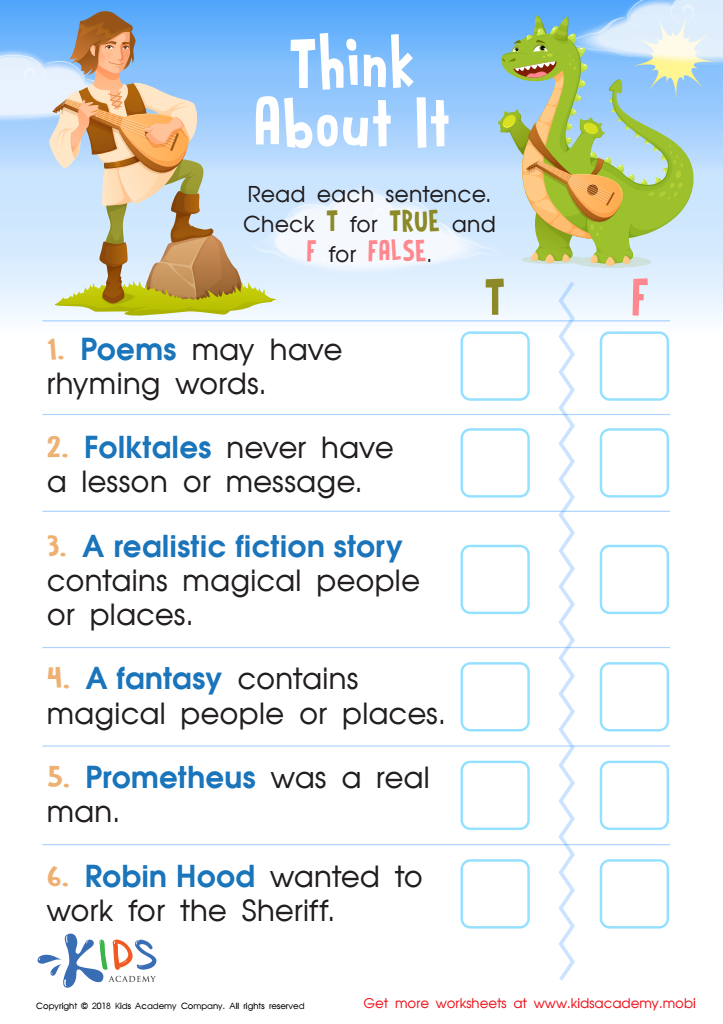
Think About It: Assessment Worksheet








Logical reasoning and reading fiction are crucial aspects of early childhood education that parents and teachers should prioritize. Logical reasoning equips children with problem-solving skills, allowing them to analyze situations, draw conclusions, and make informed decisions. These skills are essential for navigating everyday challenges, from simple puzzles to complex real-life scenarios. Encouraging logical reasoning in young learners fosters critical thinking, which is vital for academic achievement and lifelong learning.
On the other hand, reading fiction plays an equally important role in a child's development. It not only enhances vocabulary and comprehension skills but also ignites imagination and creativity. Fictional stories introduce children to diverse perspectives, cultures, and emotions, helping them develop empathy and social awareness. Through the characters' journeys, children learn to articulate their feelings and reflect on their values and moral dilemmas.
When combined, logical reasoning and fiction provide a powerful foundation for cognitive and emotional development. Parents and teachers should care about integrating these elements into learning experiences, as they contribute to well-rounded individuals capable of thoughtful analysis and compassionate understanding in an increasingly complex world. Early exposure to these skills promotes confidence and prepares children for future challenges in education and beyond.







