Understanding perspectives Normal Reading Fiction Worksheets
3 filtered results
-
From - To
Understanding perspectives is a crucial skill in developing strong reading comprehension. Kids Academy's "Understanding Perspectives Fiction Worksheets" offers a series of engaging exercises designed to help young readers identify and appreciate different viewpoints within fictional stories. By exploring characters' motivations, emotions, and viewpoints, these worksheets enhance critical thinking and empathy. Perfect for early graders, each exercise includes relatable scenarios and interactive questions to deepen student understanding. Ideal for classroom learning or home practice, these worksheets support educators and parents in fostering insightful and compassionate readers, well-prepared to tackle a variety of texts and perspectives with confidence.
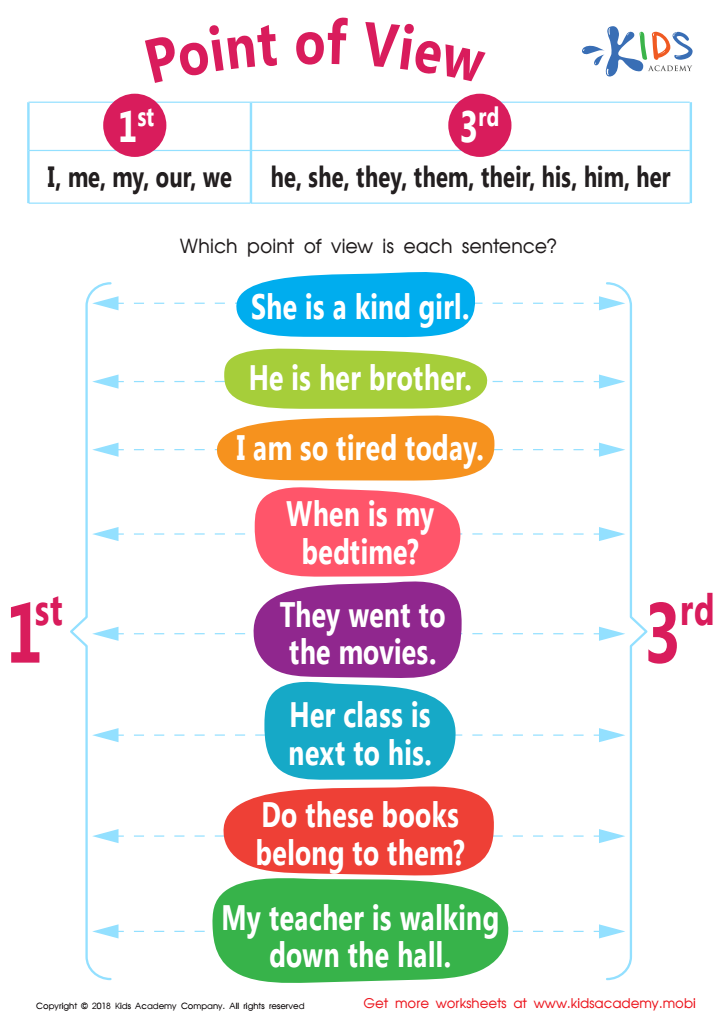
Point of View Worksheet
 Assign to My Students
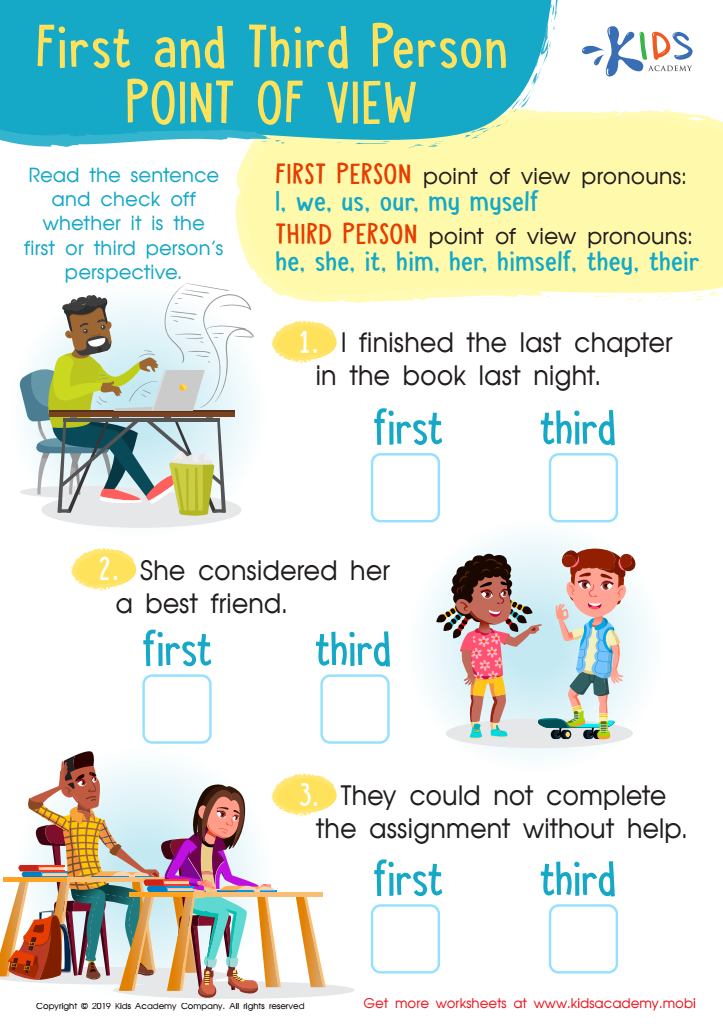
First and Third Person Point of View Worksheet
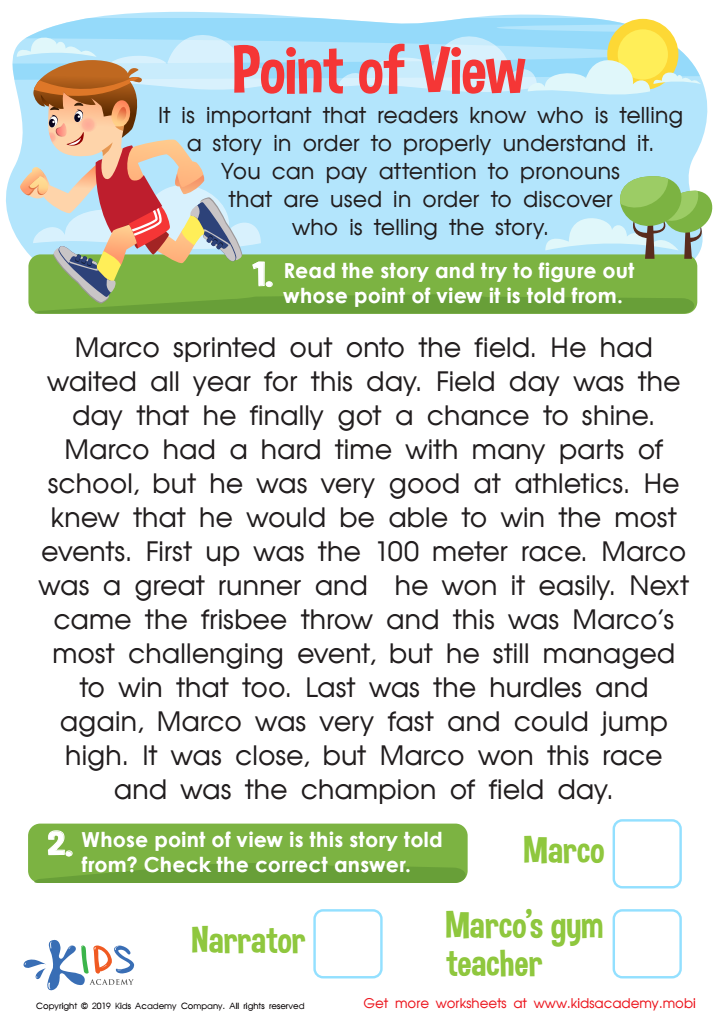
Point of View Worksheet








Understanding perspectives—recognizing that others may see and interpret the world differently— is crucial for children’s social and emotional development, and reading fiction plays a significant role in fostering this skill. When parents and teachers prioritize normal reading of fiction, they not only enhance children's literacy skills but also cultivate empathy and critical thinking.
Fiction introduces children to diverse characters, cultures, and situations. Encountering characters with varied backgrounds and experiences helps children grasp different viewpoints and understand complex emotions. This awareness of multiple perspectives can be invaluable for building interpersonal skills. Empathy, the ability to share and understand another’s feelings, is strengthened as children put themselves in the shoes of characters and navigate their journeys.
Moreover, understanding perspectives nurtures open-mindedness. Through the challenges and triumphs of fictional characters, children learn that there are often multiple solutions to a problem and that adopting a different viewpoint can offer new insights. This flexibility in thinking is a building block for creativity and problem-solving skills.
Finally, normal reading routines create consistent opportunities for children to engage with these ideas, reinforcing lessons about perspective-taking in a natural and enjoyable way. By encouraging regular fiction reading, parents and teachers lay the groundwork for well-rounded, empathetic, and critical thinkers who are prepared to interact harmoniously in a diverse world.







