Understanding forces Normal Science Worksheets
6 filtered results
-
From - To
Explore the "Understanding Forces" normal science worksheets to help young learners grasp fundamental concepts of forces and motion. These engaging and interactive worksheets are designed for early-grade students and focus on topics such as push and pull, gravity, and friction. With a variety of fun activities, including coloring, matching, and simple problem-solving, these resources make learning about forces an enjoyable experience. Teachers and parents can easily incorporate them into lesson plans or at-home learning, fostering curiosity and understanding in young minds. Enhance problem-solving skills and spark interest in science with relatable content that's perfect for early education.
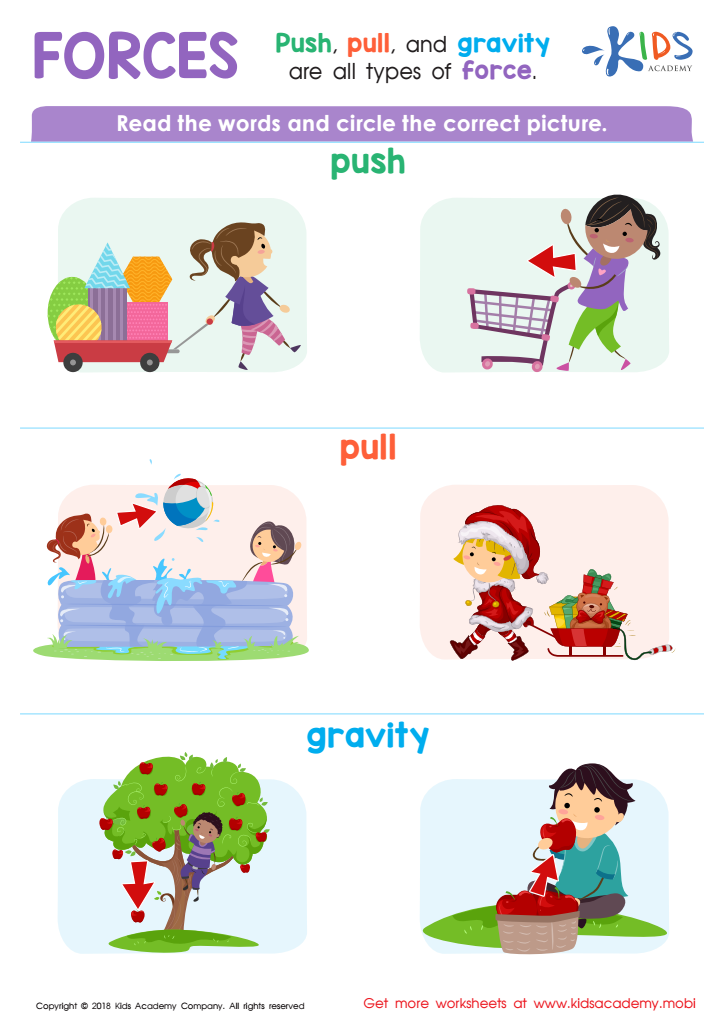
Forces Worksheet
 Assign to My Students
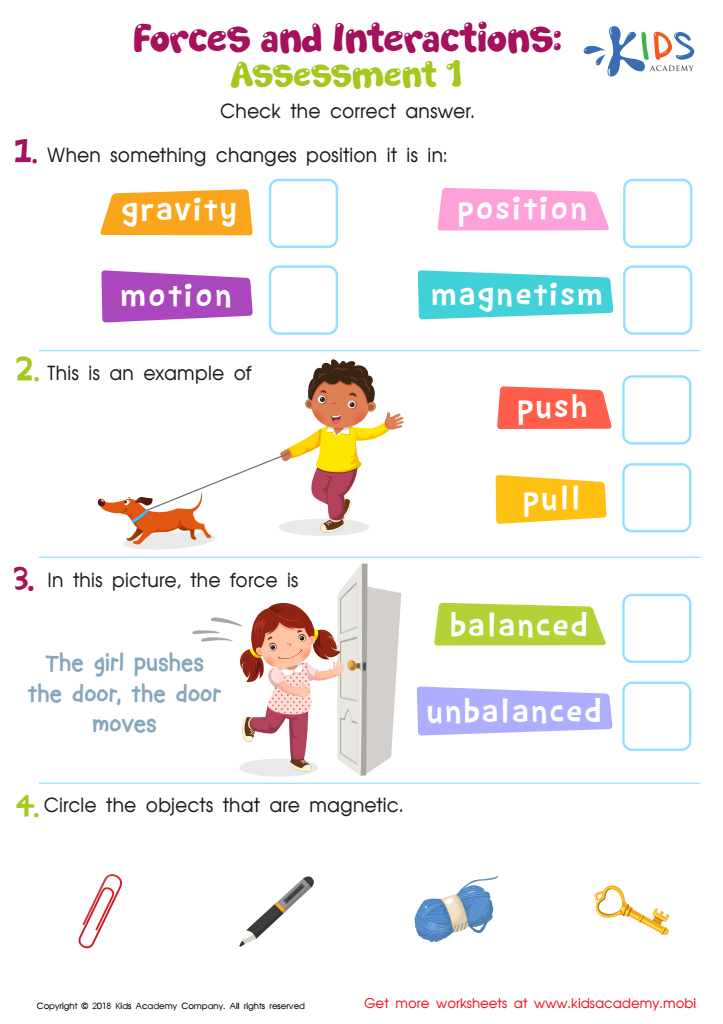
Forces and Interactions Printable
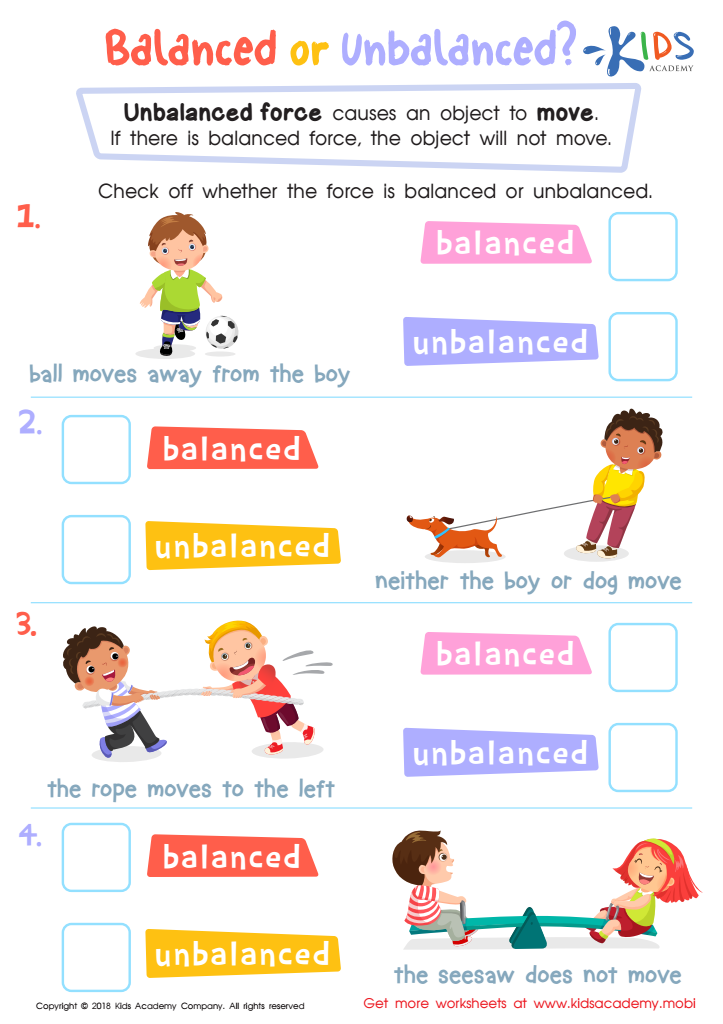
Balanced or Unbalanced Science Worksheet
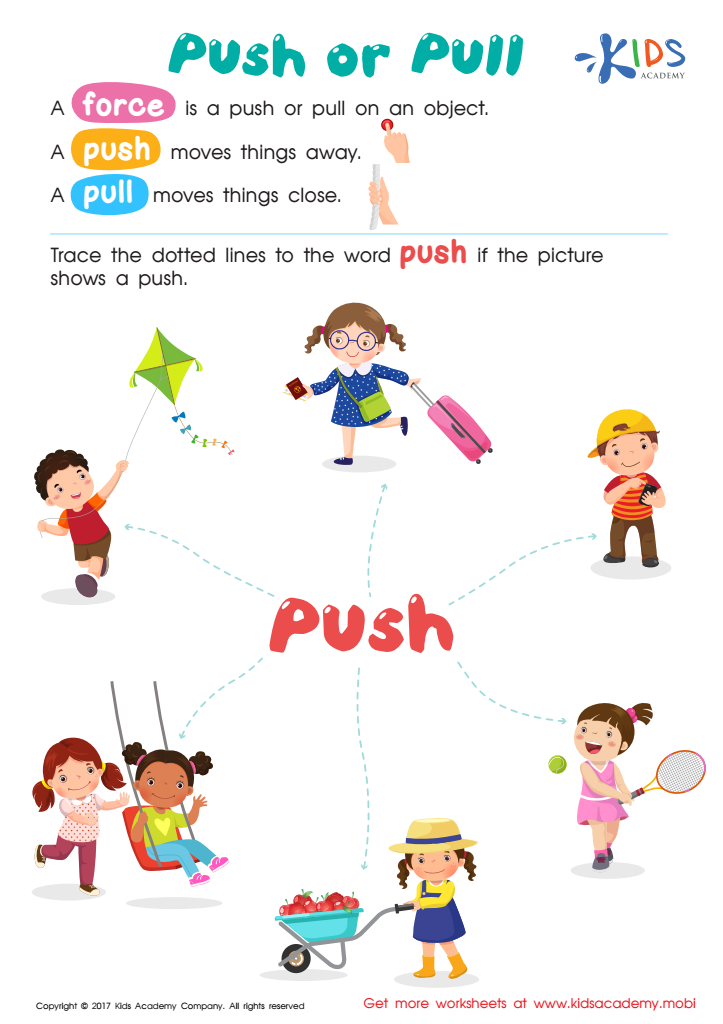
Push or Pull Worksheet
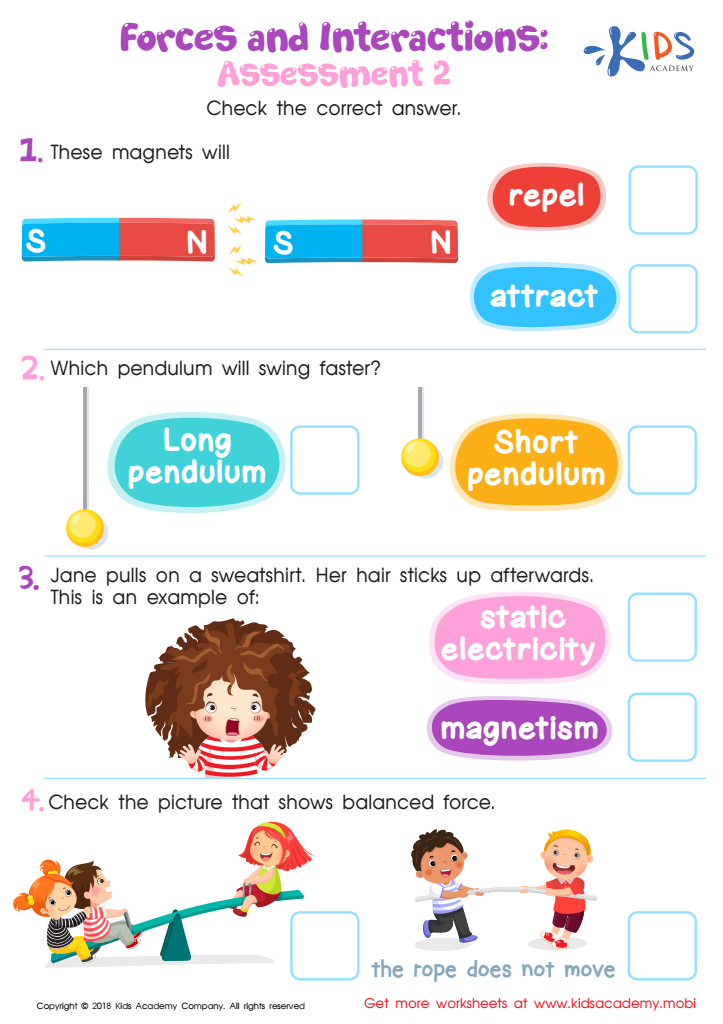
Forces and Interactions Worksheet For 3rd Grade
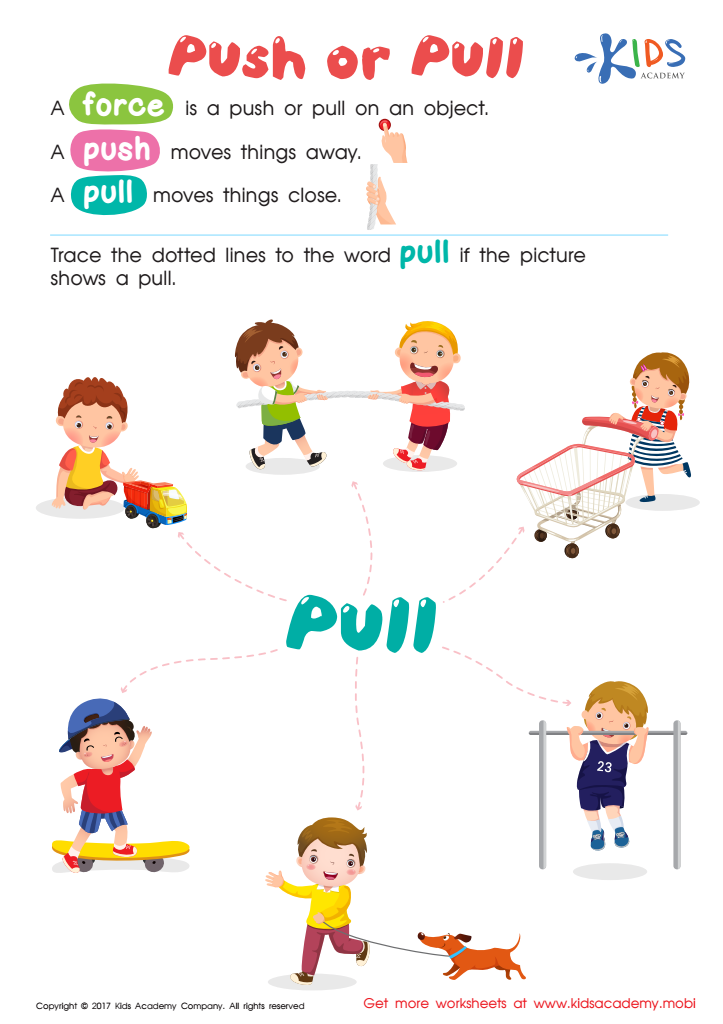
Pull or Push Worksheet







Understanding forces is crucial for parents and teachers because it lays the foundation for critical thinking and problem-solving skills. In Early Childhood Education, introducing concepts of forces—such as push and pull, gravity, and friction—encourages children to explore and engage with the world around them. This hands-on engagement fosters curiosity and creativity, which are vital for a child’s cognitive development.
Furthermore, knowledge of forces enhances children's understanding of everyday phenomena, from why objects fall to how vehicles move. It helps them contextualize scientific concepts in real-life situations, bridging the gap between theory and practice. By equipping children with this understanding, parents and teachers promote a sense of inquiry and evidence-based reasoning.
Additionally, a foundational grasp of forces is essential for future learning in science, technology, engineering, and mathematics (STEM). Encouraging children to ask questions and experiment with forces cultivates a growth mindset, instilling perseverance and resilience. Consequently, being aware of the significance of forces in both everyday life and advanced scientific concepts will not only aid academic performance but also prepare children for a rapidly evolving world. Ultimately, nurturing these understandings supports the development of informed, engaged, and scientifically literate citizens.







