
Understanding landforms Normal Our Planet and Environment Worksheets
3 filtered results
Difficulty Level
Grade
Age
-
From - To
Subject
Activity
Standards
Explore the fascinating world of landforms with our "Understanding Landforms" worksheets, designed to engage early learners in mastering essential concepts about our planet's diverse landscapes. These interactive, printable resources provide fun and informative activities, helping students recognize various types of landforms, their characteristics, and their significance in the environment. Tailored for young learners, each worksheet includes vibrant illustrations and simplified explanations, making complex ideas accessible and enjoyable. Enhance your science curriculum and ignite curiosity about geography and natural science with these invaluable tools that encourage exploration and discovery. Dive into the study of earth’s surface and watch your students thrive!
Favorites
With answer key
Interactive
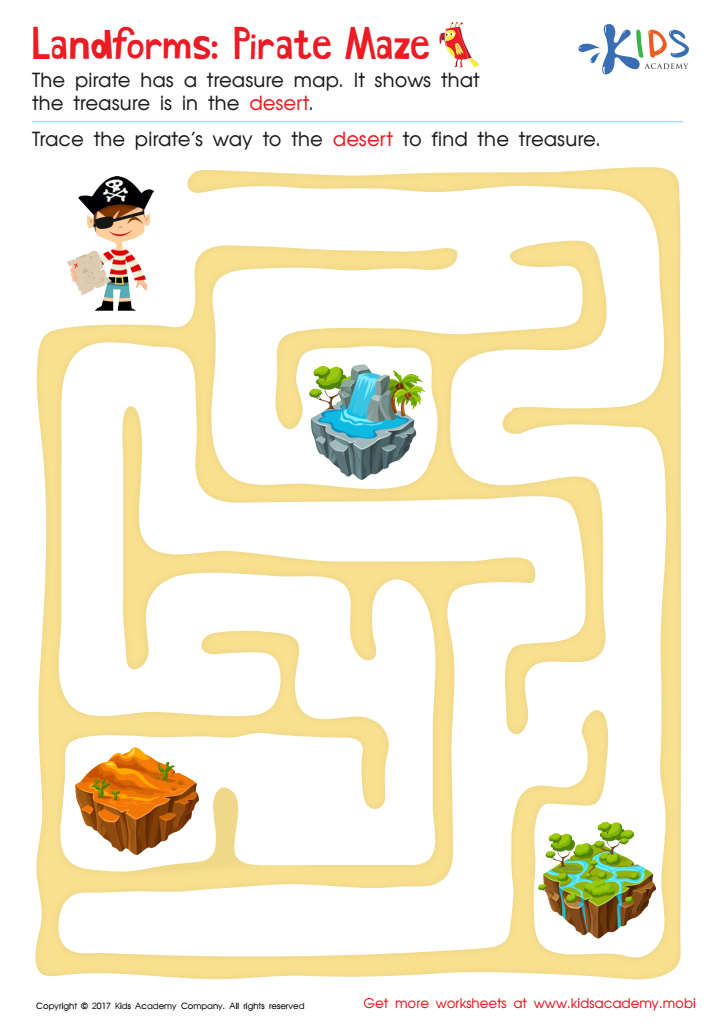
Landforms: Pirate Maze Printable
Help your pirate reach the hidden treasure. Worksheet included.
Join the swashbuckling pirate's quest for hidden treasure! Your child will identify desert landforms in this tricky maze, learning about different types of landforms in the process. Worksheet included. Let's get that treasure!
 Assign to My Students
Landforms: Pirate Maze Printable
Worksheet
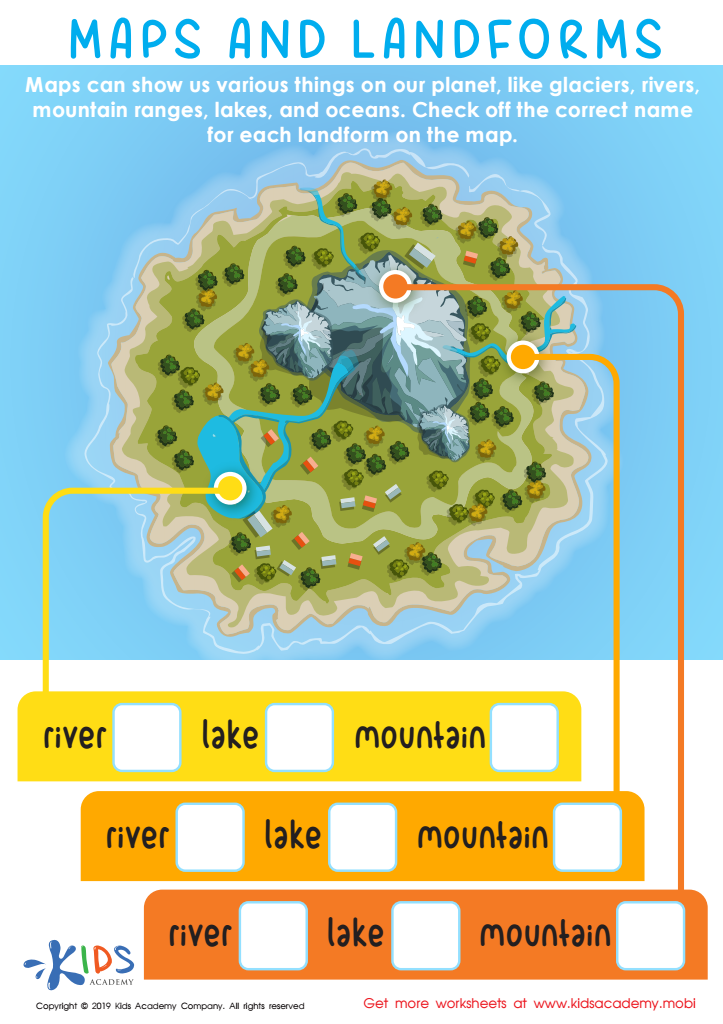
Maps and Landforms Worksheet
We can educate our kids on the world and its landforms by showing them a map. Point out mountains, rivers, and oceans, and help them identify each correctly. With this knowledge, they will better understand our planet.
Maps and Landforms Worksheet
Worksheet
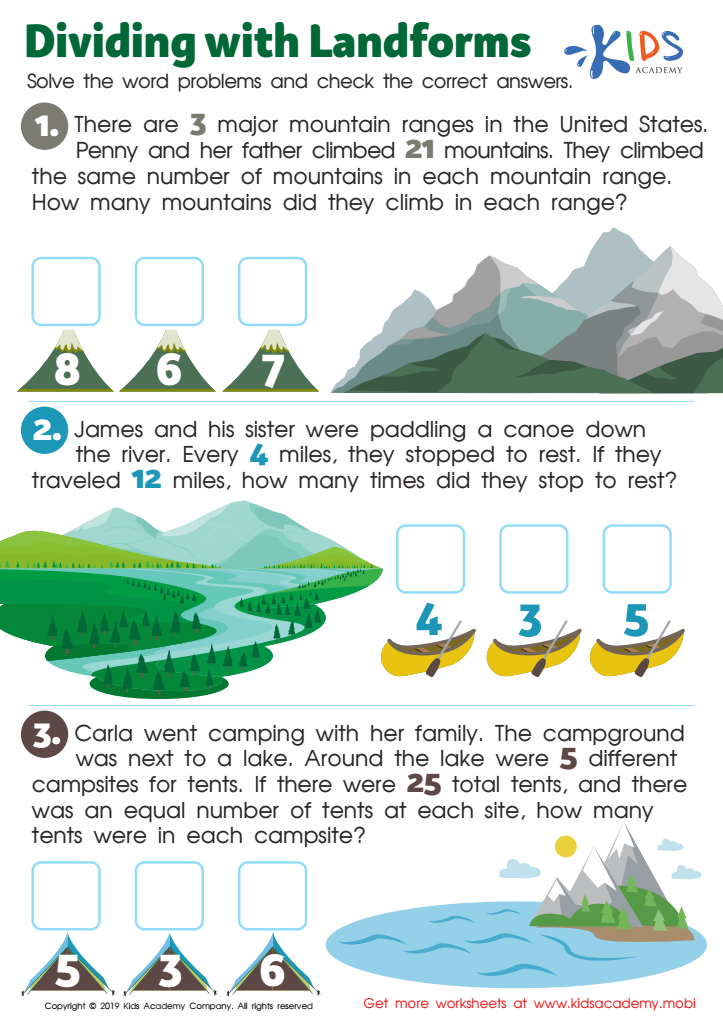
Dividing with Landforms
Mixing subjects to help your child learn is always nice. This worksheet combines landforms, problem-solving and division. The PDF highlights numbers, uses bold colors and provides pictures to help your child understand the questions and answer choices, making them feel empowered, not intimidated.
Dividing with Landforms
Worksheet
Join Kids Academy for Free
Who is primarily going to use this learning content?





Understanding landforms is crucial for both parents and teachers as it plays a significant role in a child's education about the planet and environment. First and foremost, knowledge of landforms—such as mountains, valleys, plateaus, and plains—helps children comprehend the Earth's diversity and the physical processes that shape the world around them. This understanding fosters a sense of connection to their environment and nurtures curiosity about geological and environmental science, paving the way for empathetic, informed future citizens.
Moreover, landforms affect human activities and societies. Teaching children about these natural features will help them understand how geography impacts climate, agriculture, urban planning, and even cultural identities. This knowledge is vital for developing critical thinking skills as children learn to analyze the interactions between people and their environments.
In today’s rapidly changing world—due in large part to climate change and natural disasters—education about landforms can promote environmental stewardship. Children with an understanding of how landforms influence ecosystems are more likely to engage in sustainable practices and advocate for responsible environmental policies.
By supporting the study of landforms, parents and teachers empower children not only to appreciate their world but also to become informed, proactive individuals committed to protecting it.







