Observational skills Normal Physical Science Worksheets
4 filtered results
-
From - To
Discover our engaging "Observational Skills Normal Physical Science Worksheets" designed to ignite curiosity and enhance scientific understanding in young learners. Each worksheet focuses on developing keen observational skills, encouraging students to explore the physical world around them. Activities include identifying properties, comparing objects, and drawing conclusions based on observations. These worksheets are perfect for early grade students, providing a classroom-friendly introduction to foundational science concepts. Boost your child's critical thinking and analytical skills while making learning fun and interactive. Visit Kids Academy to unlock a world of scientific discovery with our expertly crafted resources.
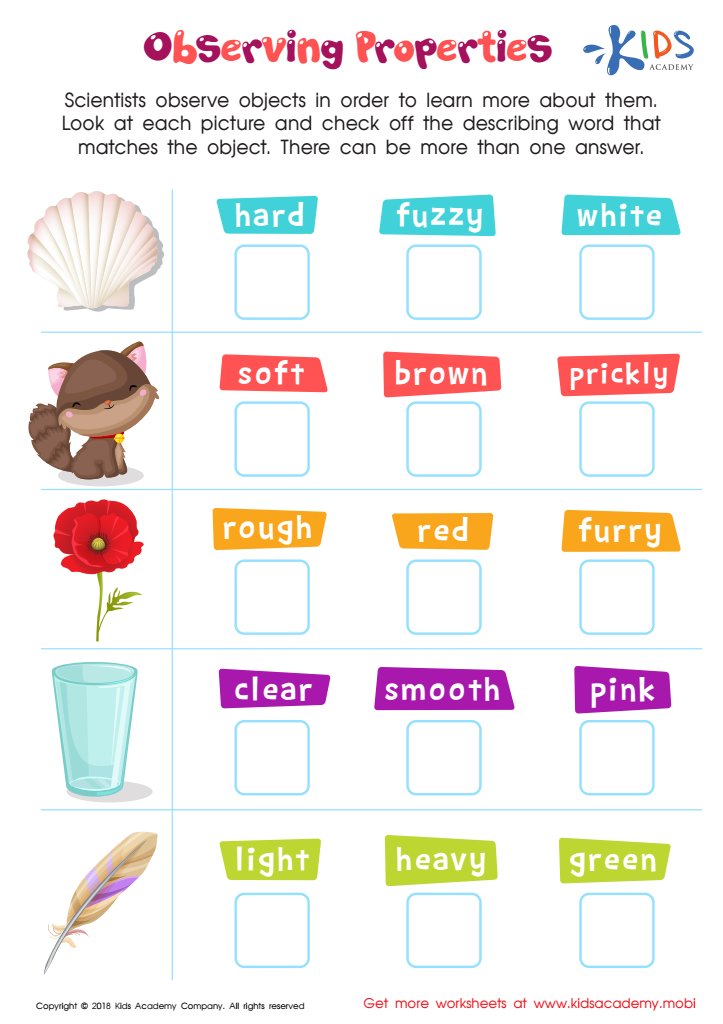
Observing Properties Worksheet
 Assign to My Students
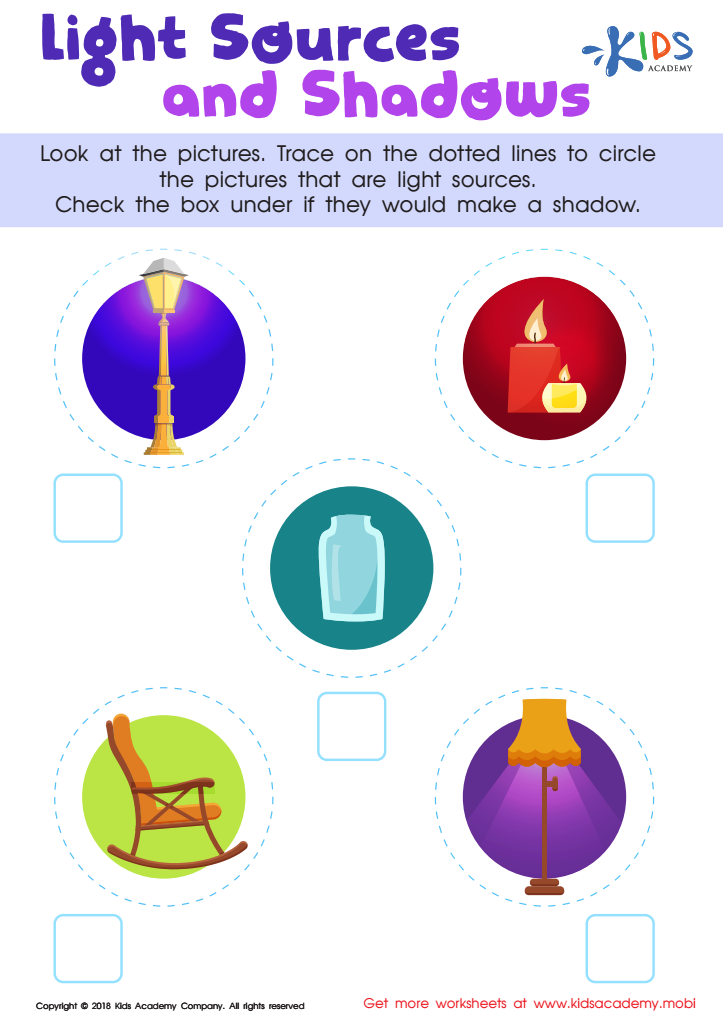
Light Sources and Shadows Worksheet
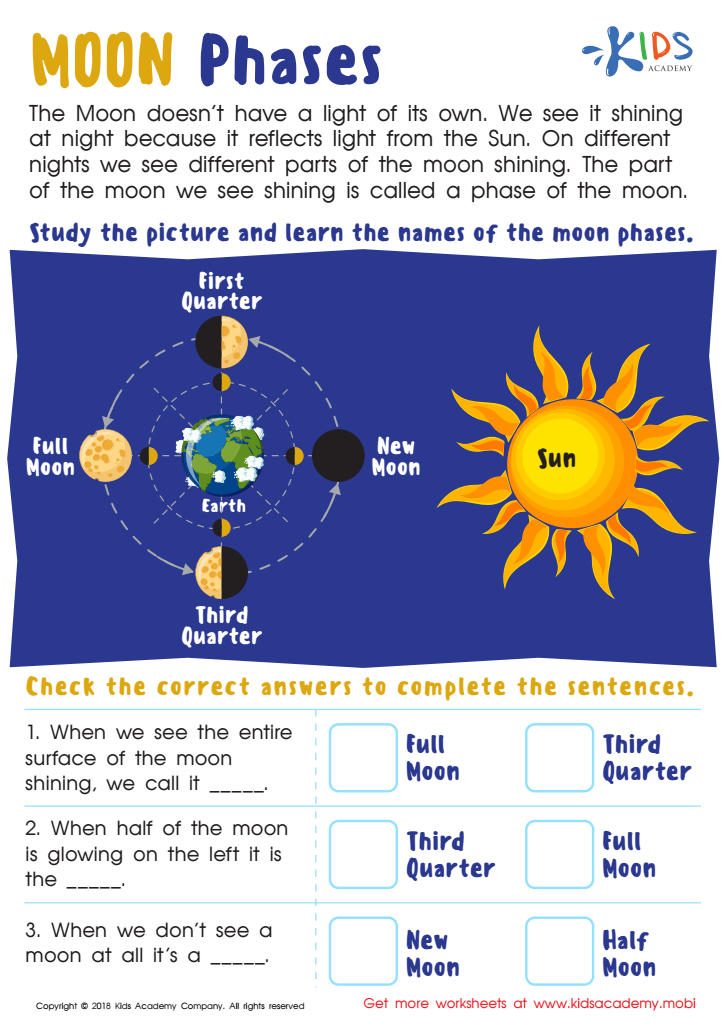
Moon Phases Worksheet
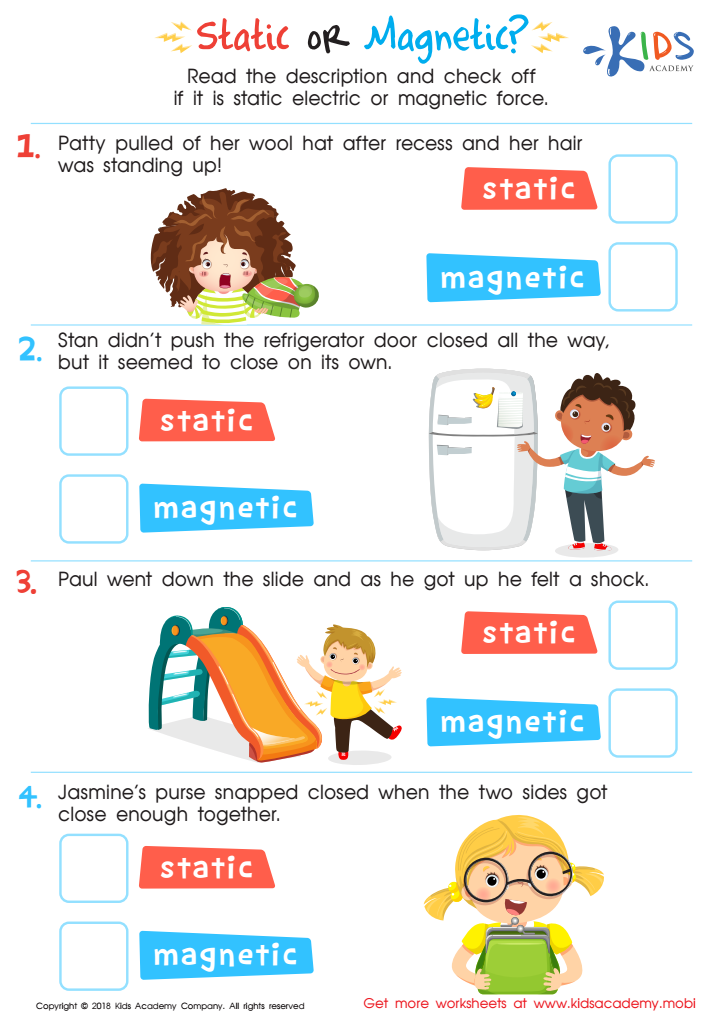
Static or Magnetic Printable Worksheet








Observational skills in the context of normal physical science are crucial for young learners as they form the backbone of scientific understanding and critical thinking. Parents and teachers should prioritize these skills because they empower children to engage deeply with the world around them. By observing, children learn to notice details, recognize patterns, make predictions, and draw conclusions, which are foundational to the scientific method.
Encouraging children to hone their observational skills fosters curiosity and creativity, inspiring them to ask questions and seek answers. Such skills are not confined to science alone; they translate into better problem-solving abilities in everyday life, as children learn to assess situations thoroughly before acting.
Moreover, observational skills starting at an early age help build patience and attention to detail, qualities that are valuable in academic and real-life situations. They help nurture a sense of wonder and appreciation for the natural world, promoting lifelong learning and a deeper understanding of environmental stewardship.
In summary, parents and teachers should care about developing observational skills in normal physical science because these skills provide the tools for critical thinking, problem-solving, and a profound appreciation of the world. They lay a solid foundation for future learning across disciplines and equip children with essential life skills.







