Vocabulary Building Normal Grade 2 Alphabet Worksheets
5 filtered results
Difficulty Level
Grade
Age
-
From - To
Subject
Activity
Standards
Explore our engaging Vocabulary Building Normal Grade 2 Alphabet Worksheets, designed to enhance young learners' language skills. Tailored specifically for second graders, these worksheets focus on enriching vocabulary through fun activities that introduce new words and reinforce essential reading and writing skills. Each worksheet encourages creativity and critical thinking, making learning enjoyable and effective. Students will engage with various exercises, from matching words to pictures to filling in the blanks, all aimed at solidifying their understanding of the alphabet and its usage in everyday language. Perfect for classroom or at-home use, these resources foster a love for learning and vocabulary development!
Favorites
With answer key
Interactive
Reading: Long O Digraphs Worksheet
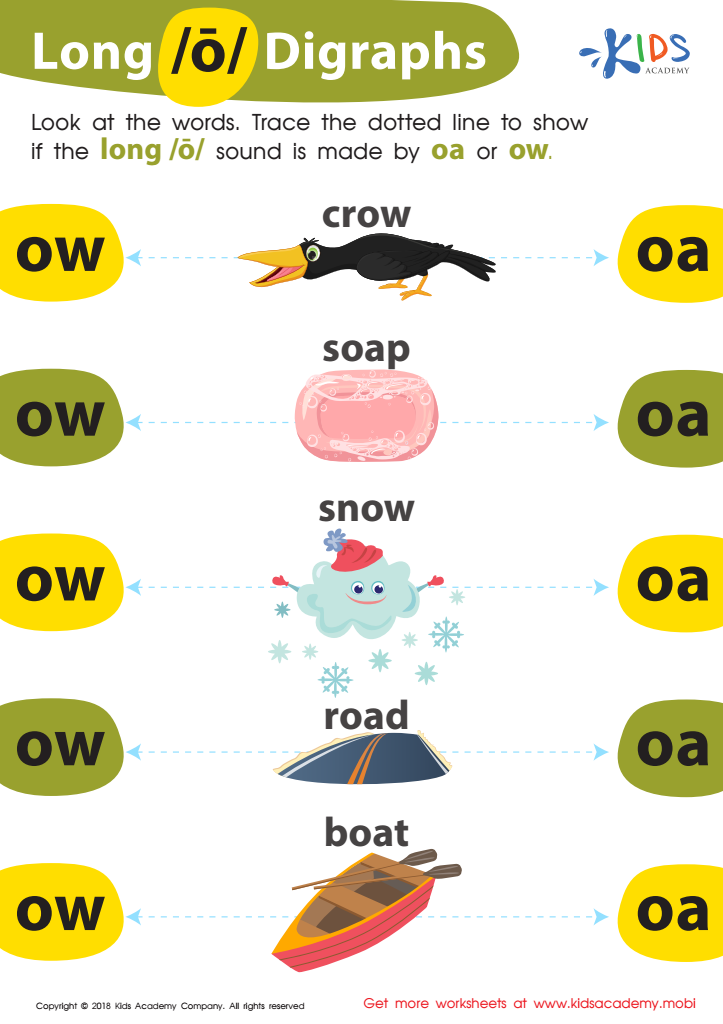
Reading and decoding words can be complex for learners when they start studying digraphs, two letters that make one sound. This worksheet focuses on the long O sound, /oa/ and /ow/. With the understanding of digraphs, students can decode more words and build their reading confidence.
Reading: Long O Digraphs Worksheet
Worksheet
Enough Is Enough (ough) Worksheet
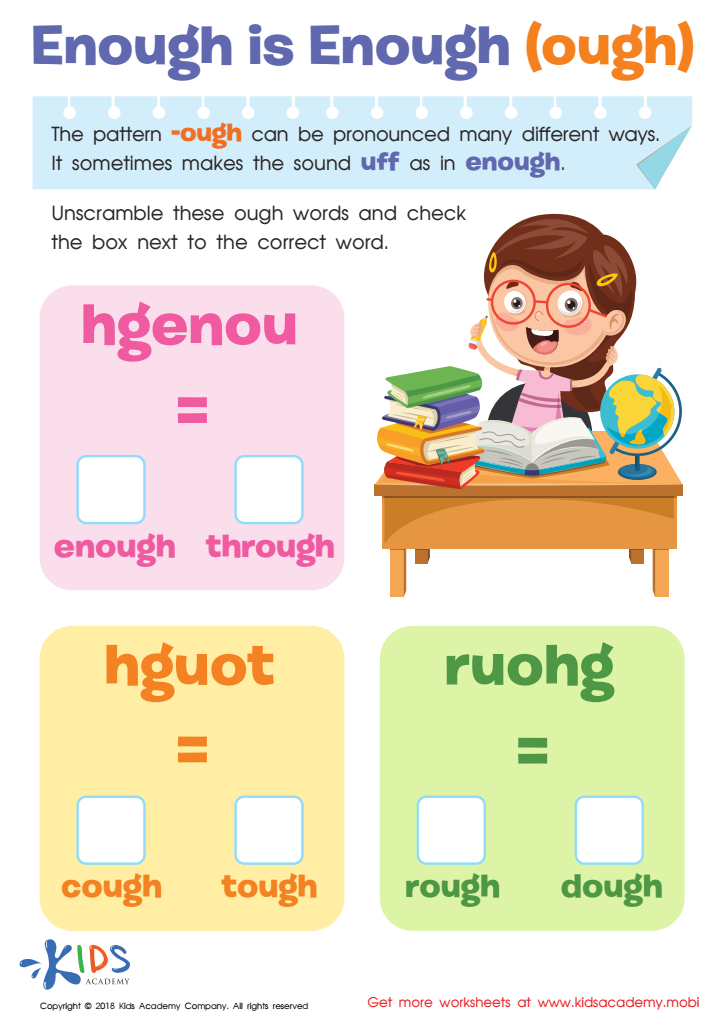
As your students learn more about reading and pronouncing words, they can explore how some word patterns can be said differently. The 'ough' pattern, for instance, can be pronounced several ways. 'Enough' has the 'uff' sound. Provide your students with examples of words pronounced similarly and help them unscramble 'ough' words on this worksheet, ticking the box for the correct word.
Enough Is Enough (ough) Worksheet
Worksheet
Reading: Find the Prefixes Worksheet
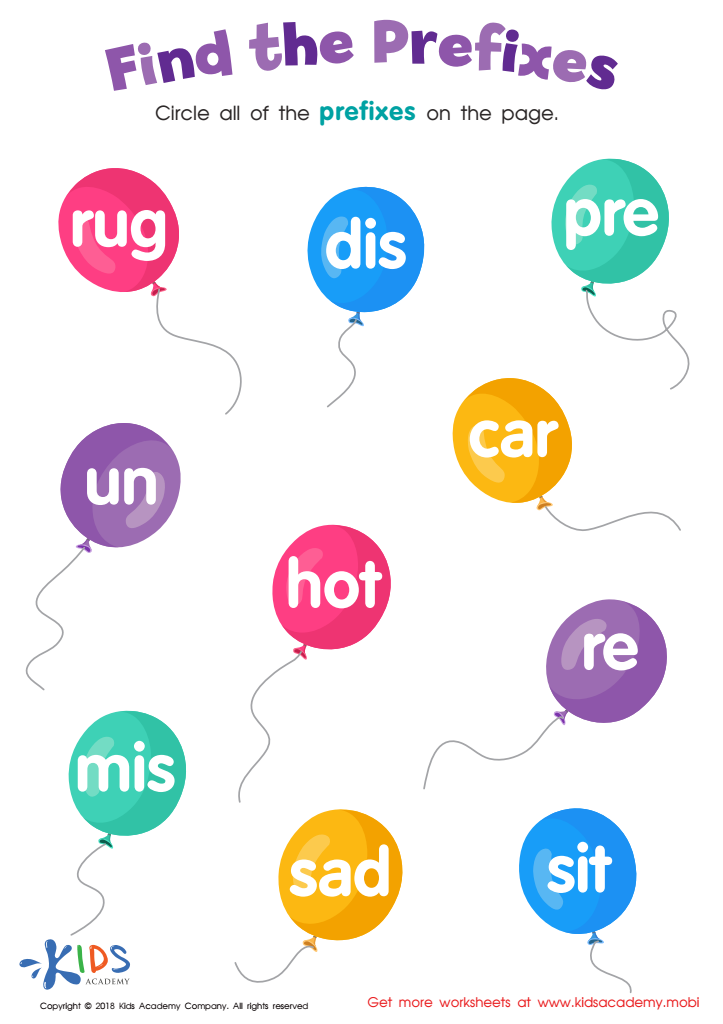
Students are asked to circle all prefixes on this worksheet and brainstorm a list of words that have them. It's a great tool for teaching vocabulary and helps students understand new and unfamiliar words by recognizing how prefixes change meaning.
Reading: Find the Prefixes Worksheet
Worksheet
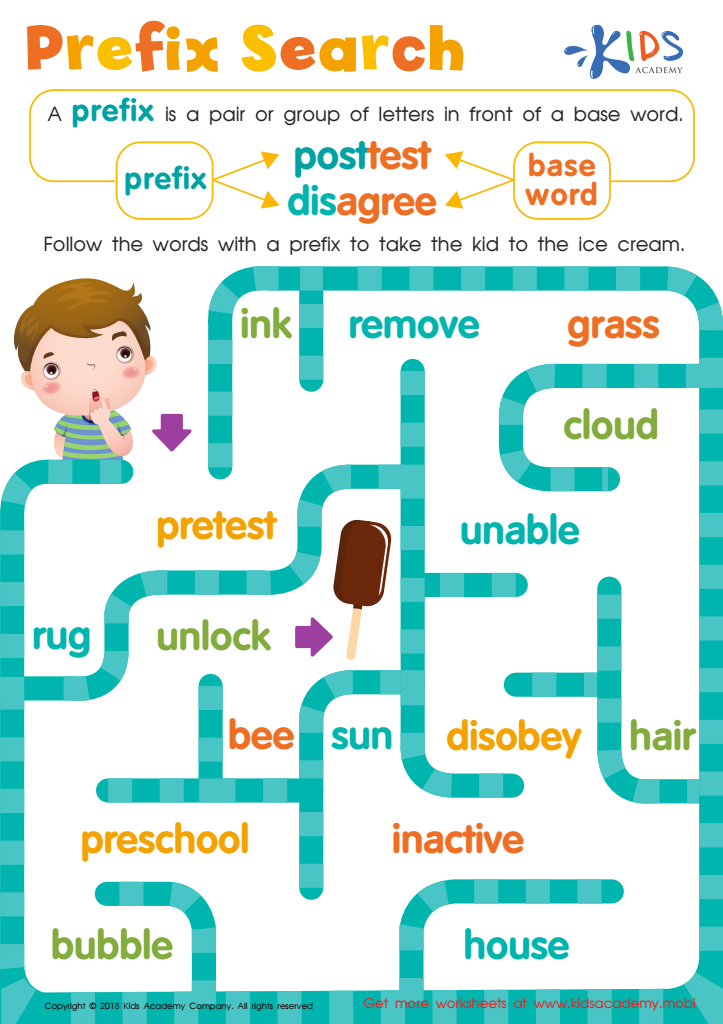
Reading: Prefix Search Worksheet
Maze your way through prefixes! This worksheet helps students practice reading new words with a prefix and figuring out the base word. An understanding of prefixes gives students the skills to comprehend new words. A fun and useful activity for the reading classroom!
Reading: Prefix Search Worksheet
Worksheet
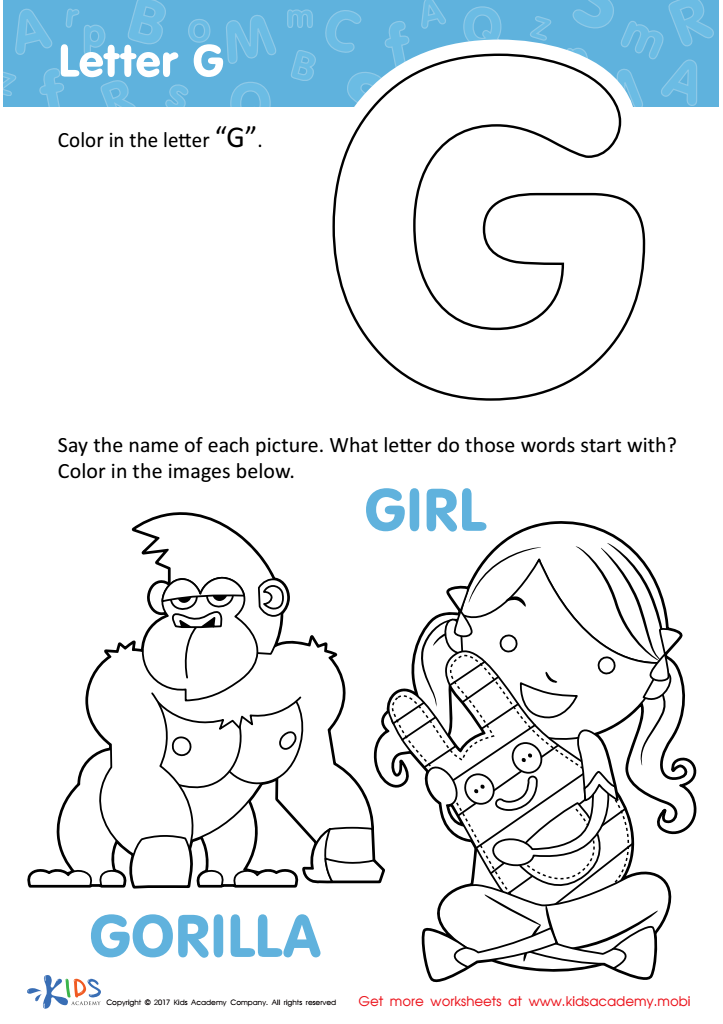
Letter G Coloring Sheet
This "G" coloring page encourages creativity and teaches kids the letter "G" sound. With its fun visuals and familiar words, it's sure to excite your child. Plus, you can talk about the letter’s sound with the pictures given.
Download (PDF)
 Assign to My Students
Assign to My Students
Letter G Coloring Sheet
Worksheet
Join Kids Academy for Free
Who is primarily going to use this learning content?








Vocabulary building is essential in Grade 2 as it lays the groundwork for literacy and communication skills. During this developmental stage, children are curious and ready to explore new words, making it an ideal time for facilitating vocabulary growth. Parents and teachers should care about this crucial aspect of language acquisition for several reasons.
Firstly, a robust vocabulary enhances reading comprehension. When children understand more words, they can better grasp the meaning of what they read, leading to improved academic performance. Additionally, a rich vocabulary allows them to express their thoughts and feelings clearly, fostering confidence in their spoken and written communication.
Moreover, vocabulary building supports cognitive development. Engaging with new words helps children think critically and connect ideas, laying the foundation for problem-solving skills. Furthermore, a diverse vocabulary promotes inclusivity and social skills, as children learn to communicate effectively with peers and adults from different backgrounds.
Incorporating fun, interactive activities—such as games, storytelling, and word challenges—can encourage vocabulary development. By focusing on vocabulary building during Grade 2, parents and teachers equip children with essential tools for lifelong learning and effective communication. Ultimately, this investment in language development will carry lasting benefits throughout their educational journey and beyond.