Vocabulary expansion Normal Grade 2 Two Vowels Together Worksheets
3 filtered results
-
From - To
Boost your second grader's language skills with our engaging "Vocabulary Expansion: Two Vowels Together Worksheets." Designed for Normal Grade 2 students, these fun, interactive worksheets help young learners understand and practice vowel pairs like "ea," "ai," and "oa." Each activity aims to enhance reading fluency, pronunciation, and comprehension, making complex words more approachable. Perfect for classroom or at-home learning, these resources offer a solid foundation in phonics while stimulating curiosity and confidence in reading. Start expanding your child's vocabulary today with these effective and enjoyable tools!
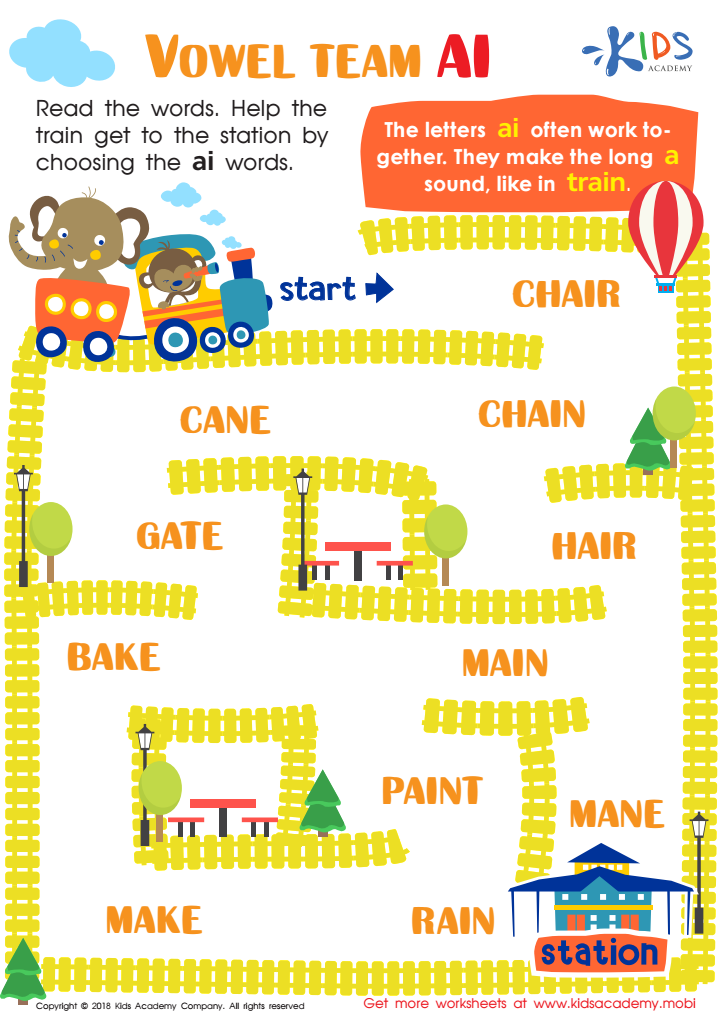
Vowel team ai Worksheet
 Assign to My Students
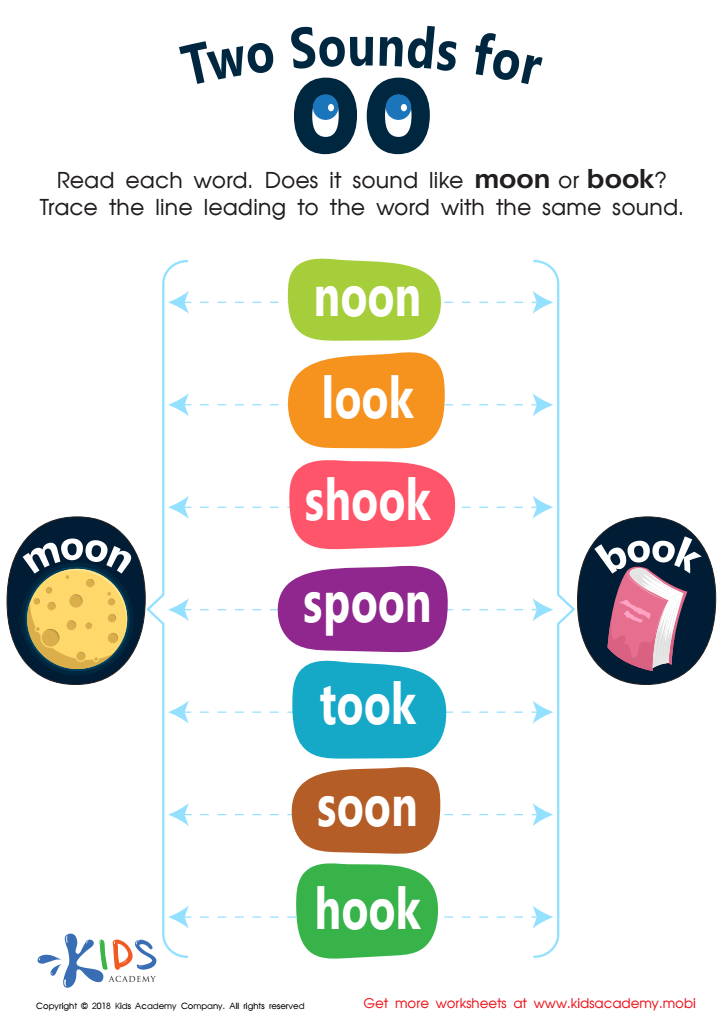
Two Sounds for OO Worksheet
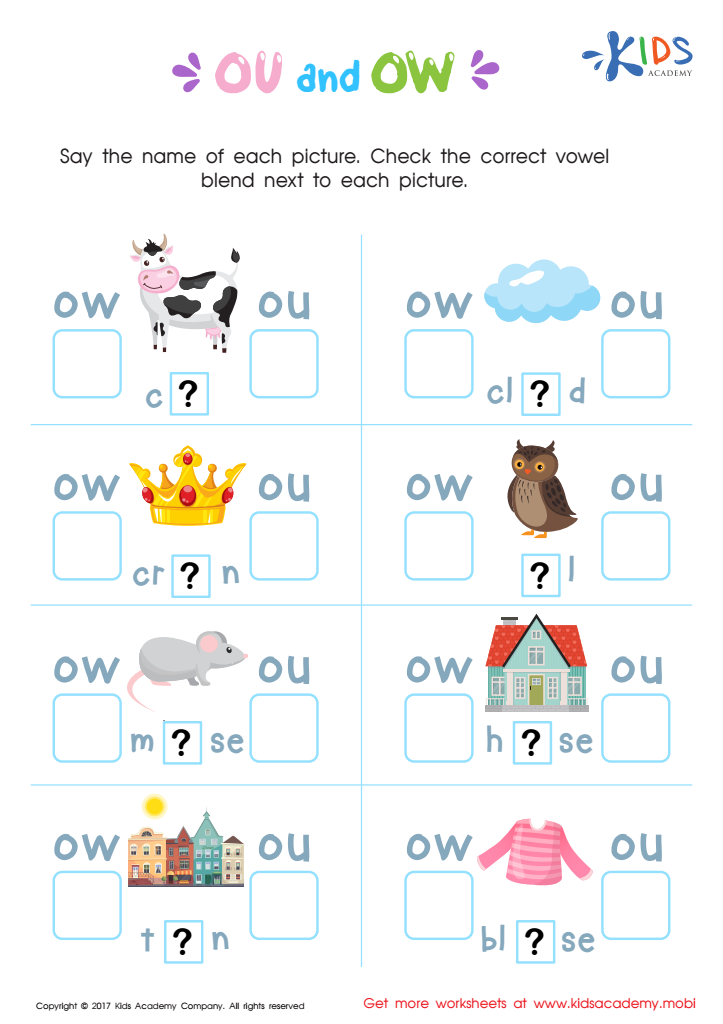
OU and OW Words Worksheet


Vocabulary expansion is crucial for Grade 2 students, particularly when it comes to learning about 'two vowels together' (like 'ea' in 'seat' or 'ai' in 'rain'). This concept is foundational to effective reading and language development.
Firstly, understanding vowel combinations helps children decode words more efficiently. When students encounter new words, recognizing these common patterns enables them to pronounce and spell words correctly. This building block of phonics promotes smoother reading experiences, enhancing comprehension because the child’s attention isn’t disrupted by struggling to sound out words.
Secondly, having a broader vocabulary directly influences a child’s academic success across all subjects. Whether understanding a math problem or following a science experiment’s instructions, a rich vocabulary allows students to grasp complex concepts more readily.
For parents and teachers, supporting vocabulary expansion means nurturing communication skills too. Children equipped with a diverse vocabulary distinguish and express their thoughts, feelings, and ideas more clearly, leading to better social interactions and emotional expression.
Engaging in activities like reading books, playing word games, and discussing new words, benefits cognitive development and instills a lifelong love of learning. Focusing on vocabulary at this early stage lays the groundwork for confident, competent communication and academic achievement.