Problem-Solving Skills Normal Grade 2 Addition Worksheets
5 filtered results
-
From - To
Our "Problem-Solving Skills Normal Grade 2 Addition Worksheets" are designed to enhance your child's analytical and mathematical capabilities. Specifically tailored for second graders, these worksheets make addition practice engaging and fun by incorporating unique problems that stimulate young minds. Each activity encourages logical thinking, number fluency, and strategic reasoning. From simple sums to slightly challenging scenarios, students will gain confidence as they find solutions to various addition problems. Perfect for both classroom and at-home learning, these worksheets are a fantastic resource to lay a strong foundation in math and support academic growth. Download now and see your child thrive!
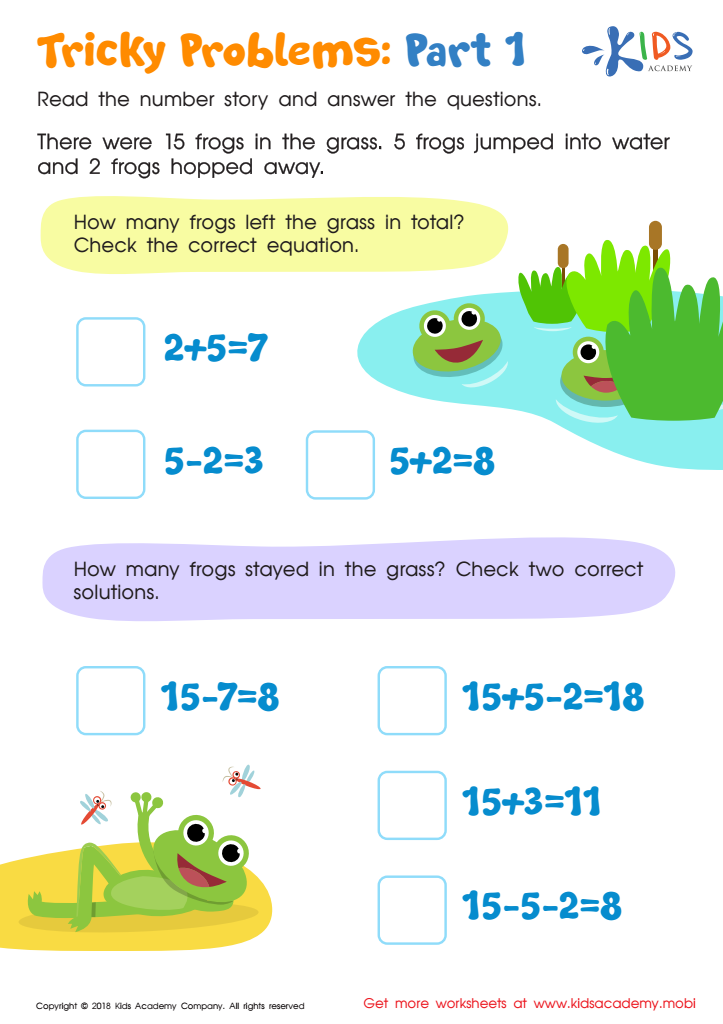
Tricky Problems Worksheet: Part 1
 Assign to My Students
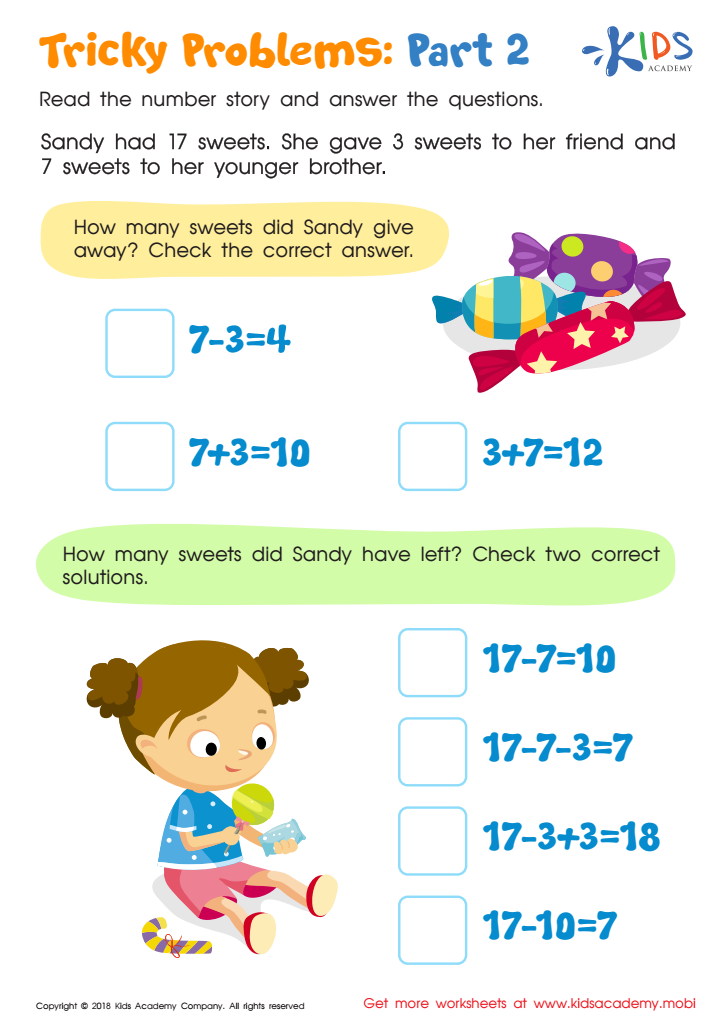
Tricky Problems Worksheet: Part 2
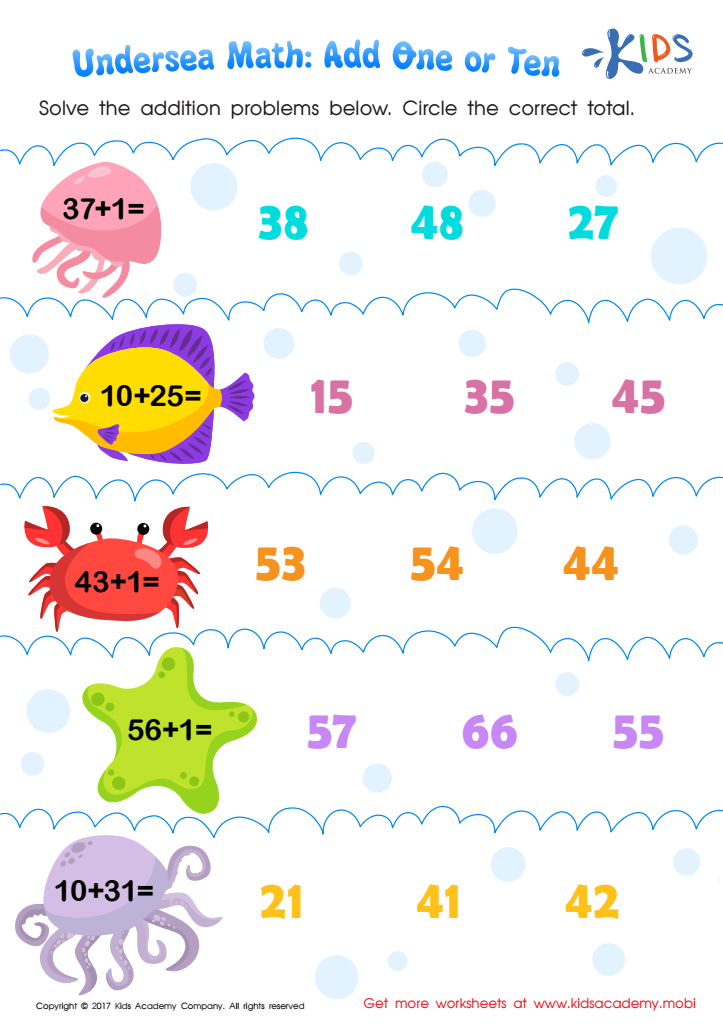
Undersea Math Worksheet
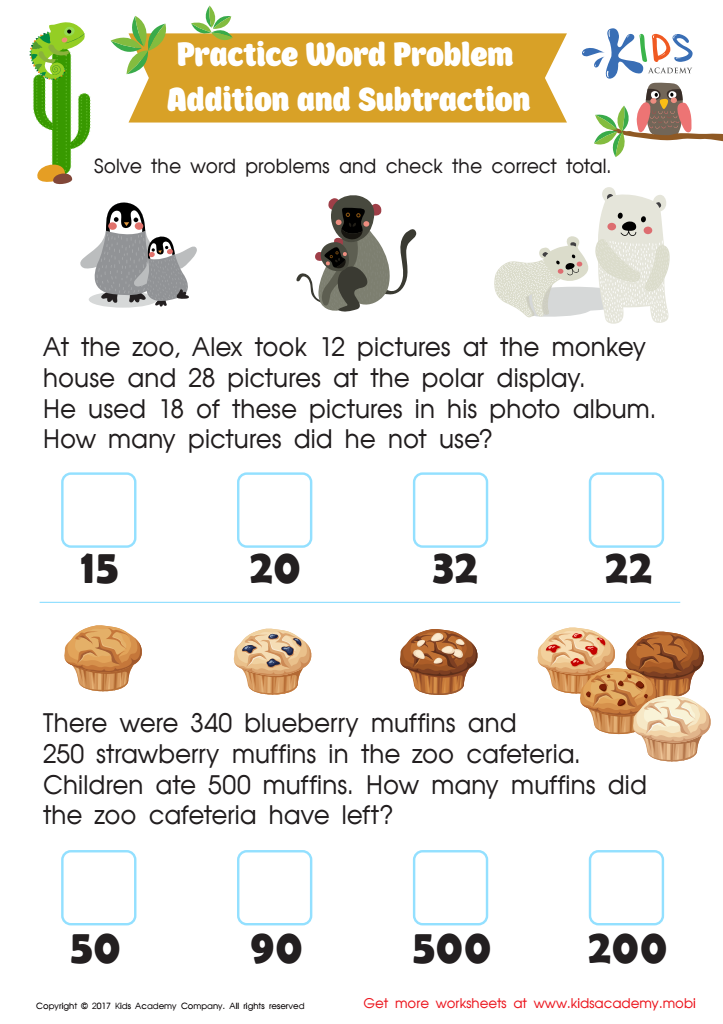
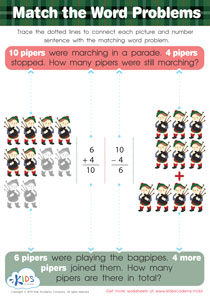
Addition and Subtraction: Word Problems Worksheet
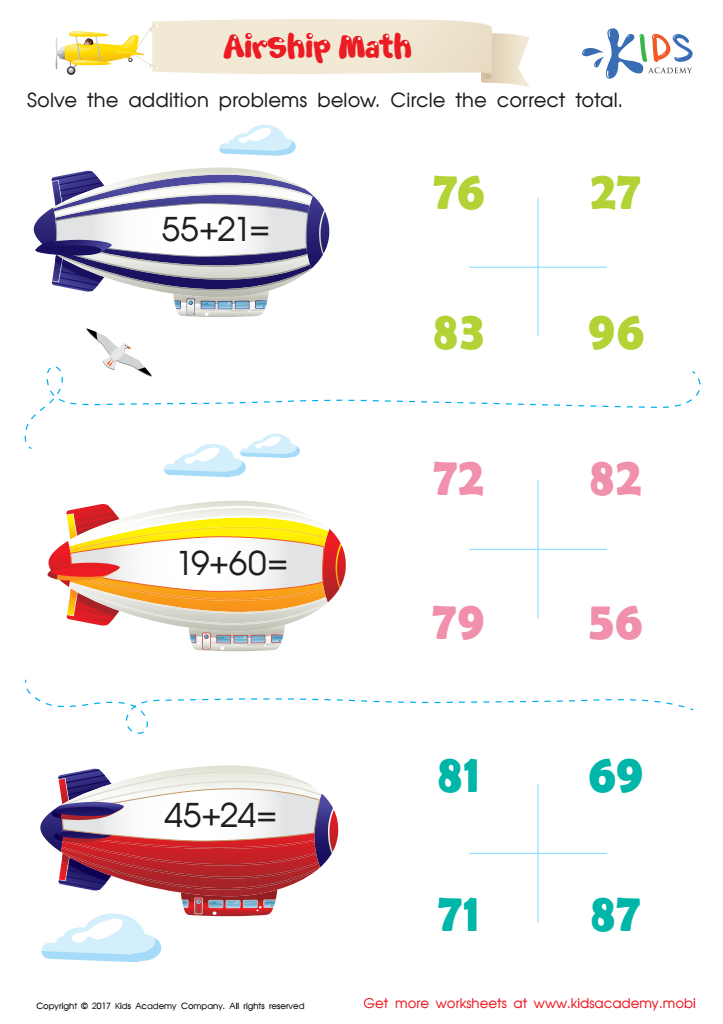
Airship Math Addition Printable







Parents and teachers should highly value developing problem-solving skills associated with Grade 2 addition, as these skills play a critical role in a child's academic and everyday life. Learning how to add numbers isn't simply about mastering arithmetic; it's a foundational step in nurturing logical thinking, reasoning, and analytical abilities. At this developmental stage, children begin to grasp how to approach problems systematically, break them down into manageable parts, and find solutions.
Moreover, problem-solving in math encourages perseverance and patience. When children work through addition problems, they learn the importance of effort and resilience—qualities that will benefit them well beyond the classroom. These experiences build confidence, enabling students to face more complex challenges in the future.
In a broader sense, problem-solving skills in early math also lay the groundwork for success in other subjects, such as science and reading. Understanding addition helps children better appreciate patterns, measurements, and data—all of which are fundamental concepts in various academic disciplines.
Furthermore, many life skills hinge on basic mathematical problem-solving, from shopping and cooking to planning and budgeting. By guiding children to excel in Grade 2 addition, parents and teachers prepare them for real-world situations where math is an everyday necessity. Ultimately, fostering these skills promotes a well-rounded, competent, and confident individual.