Map reading skills Normal Grade 2 Social Studies Worksheets
4 filtered results
Difficulty Level
Grade
Age
-
From - To
Subject
Activity
Standards
Enhance your second grader's geographical understanding with our "Map Reading Skills" worksheets! Designed for Normal Grade 2 Social Studies, these engaging activities help young learners grasp essential map concepts. Students will discover how to interpret symbols, scales, directions, and legends, building their confidence in navigating various maps. Each worksheet is crafted to align with grade-level standards, making learning both fun and educational. With vibrant illustrations and clear instructions, your child will enjoy developing practical skills that promote spatial awareness. Transform your classroom or home learning experience as they embark on a journey across maps and cultures with our comprehensive resources!
Favorites
With answer key
Interactive
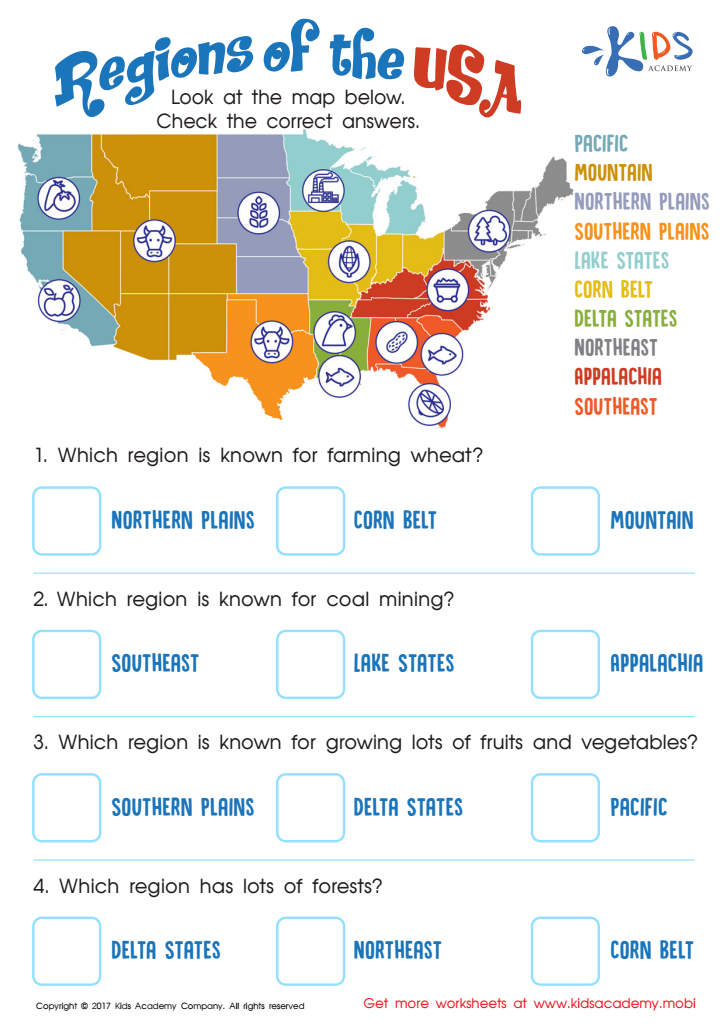
Regions of the USA Worksheet
Help your child explore the US with this regions of the United States worksheet! They'll learn about the diverse cultures, climates and purposes of each region. Make geography and US history fun with this educational exercise!
 Assign to My Students
Regions of the USA Worksheet
Worksheet
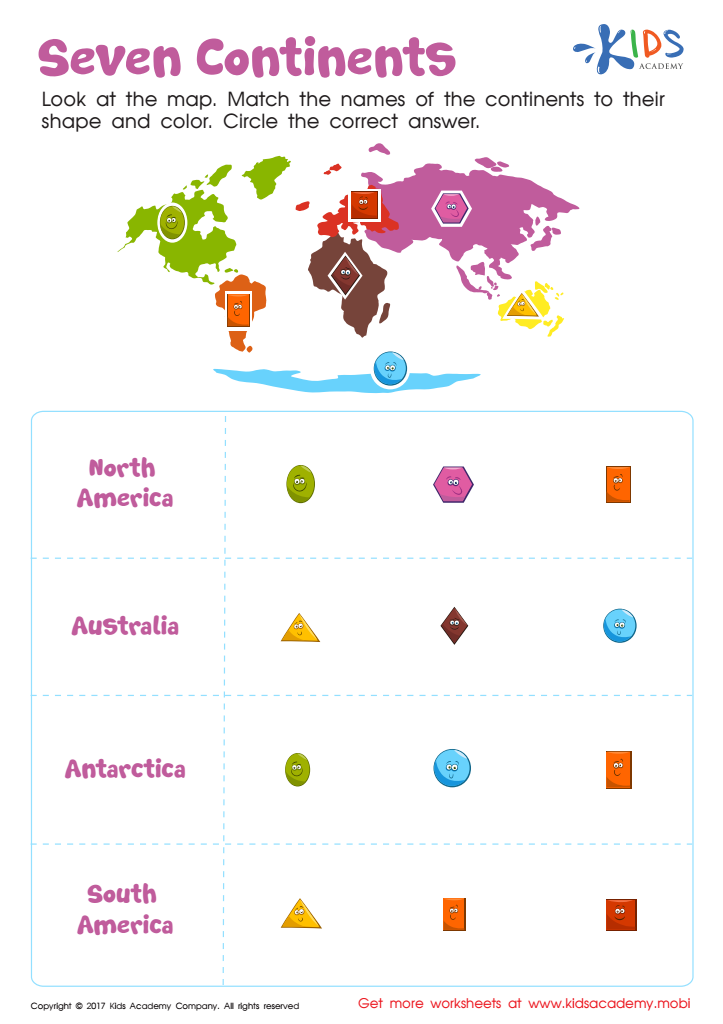
Seven Continents Worksheet
Geography teaches kids about the world! Encourage exploration with a seven continents worksheet - it'll help your child identify each continent using fun shapes.
Seven Continents Worksheet
Worksheet
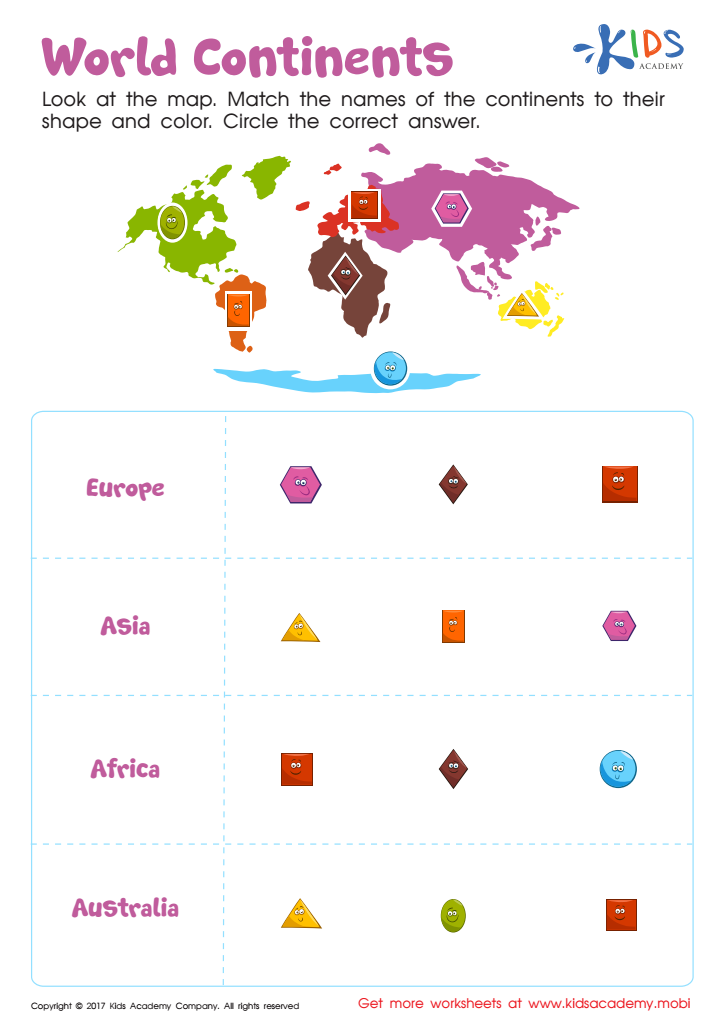
World Continents Worksheet
Help expand your child's knowledge of the world with this fun worksheet! It features goofy shapes to identify each continent, making learning the seven continents fun and memorable.
World Continents Worksheet
Worksheet
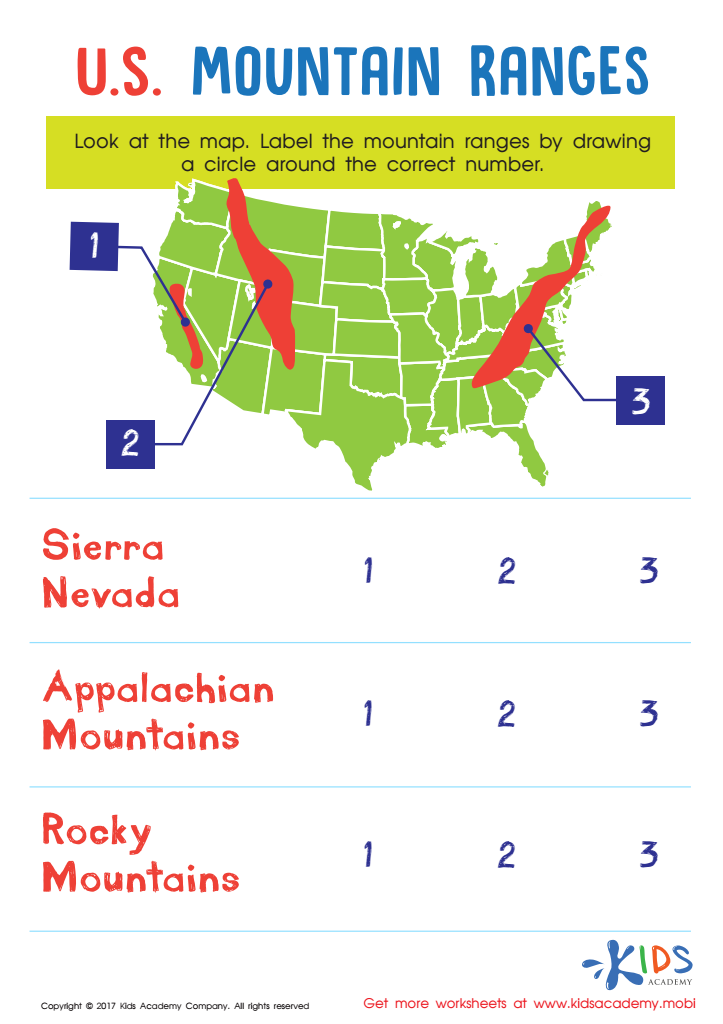
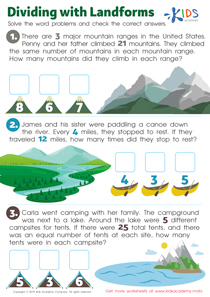
US Mountain Ranges Worksheet
Introduce your little one to the U.S. with this Mountain Ranges worksheet! It'll help them recognize the major ranges and locate them on a map, sharpening their map skills.
US Mountain Ranges Worksheet
Worksheet
Join Kids Academy for Free
Who is primarily going to use this learning content?





Map reading skills are essential for Grade 2 students as they lay the foundation for spatial awareness and critical thinking. First and foremost, understanding maps fosters a sense of direction and helps children navigate their environment. This skill enhances their ability to interpret visual information, a vital component in today's increasingly visual society.
In social studies, map reading enriches students' understanding of geography, cultures, and global connections. It introduces them to concepts such as scale, symbols, and geographic features, promoting curiosity about the world around them. By learning to read maps, children can relate to their community and appreciate the diverse landscapes and regions beyond their immediate surroundings.
Moreover, map reading encourages problem-solving and analytical thinking as students learn to discuss routes, scales, and distances. It provides opportunities for teamwork through group activities, enhancing communication skills and collaboration.
Lastly, fostering map reading skills can ignite a lifelong interest in travel, exploration, and environmental stewardship. Parents and teachers should prioritize these skills to prepare students for future learning experiences while instilling a sense of global citizenship. By emphasizing map reading, they can equip young learners with practical skills that extend far beyond the classroom.