Spatial awareness Normal Grade 2 Social Studies Worksheets
3 filtered results
-
From - To
Our Spatial Awareness Grade 2 Social Studies Worksheets are expertly designed to develop essential visual-spatial skills in young learners. These engaging activities help students understand positional concepts, navigate maps, and grasp the layout of familiar environments. Through fun exercises, children enhance their ability to interpret and create spatial representations, fostering skills crucial for academic success. Ideal for second graders, these worksheets align with standard educational practices, ensuring a balance of learning and enjoyment. Empower your child’s development and confidence in spatial awareness with these thoughtfully crafted resources, paving the way for a strong foundation in social studies.
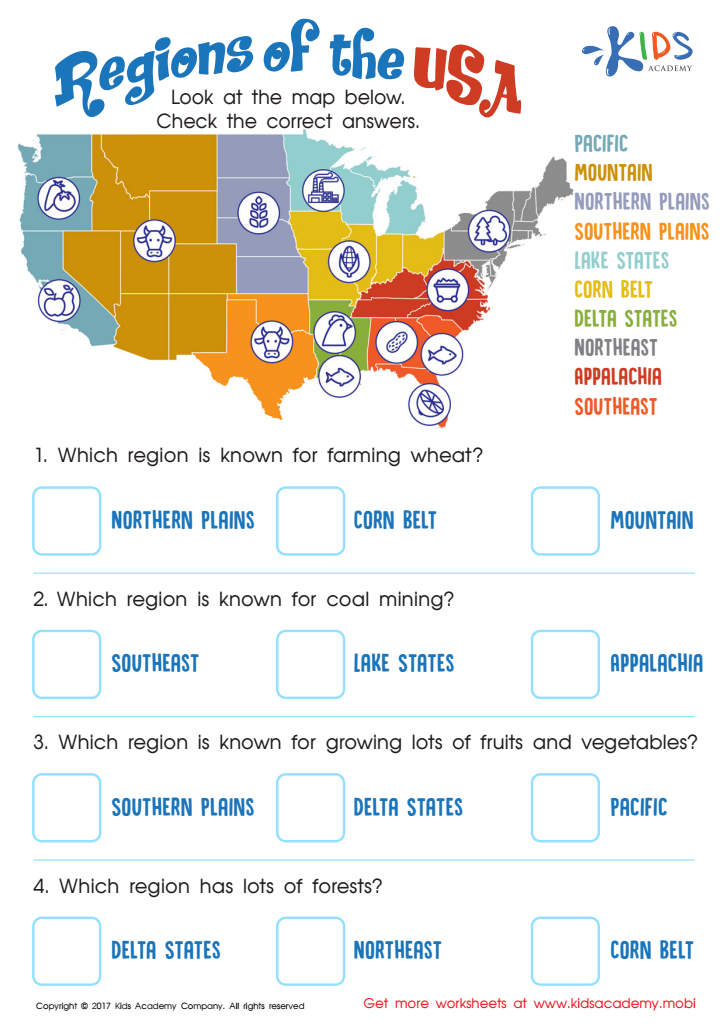
Regions of the USA Worksheet
 Assign to My Students
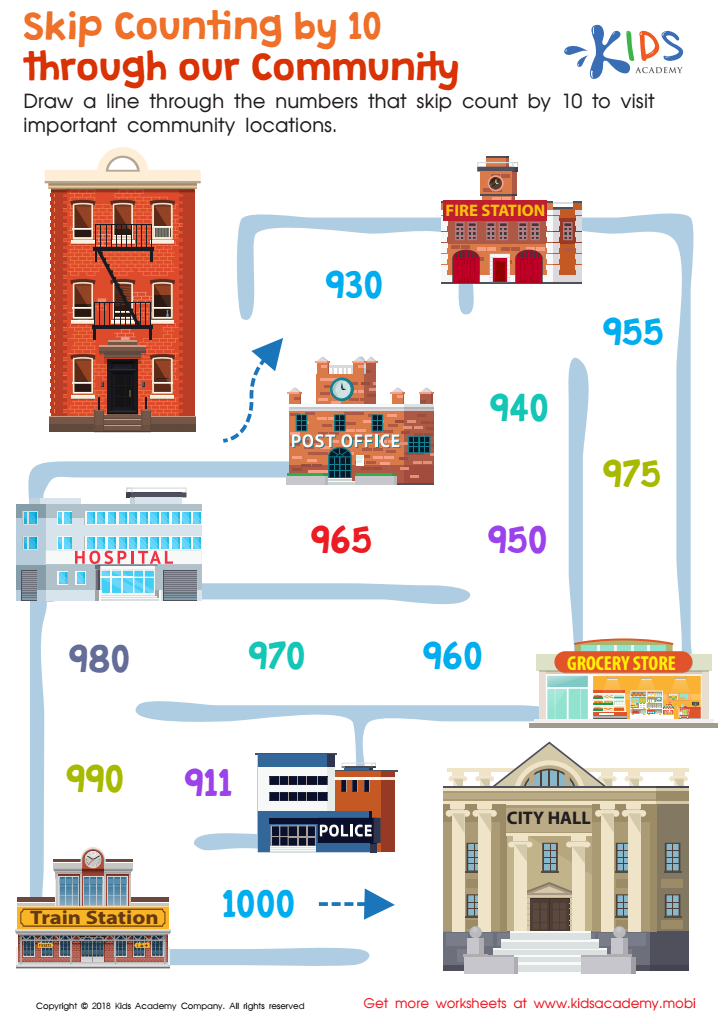
Skip Counting by 10 Through Our Community Worksheet
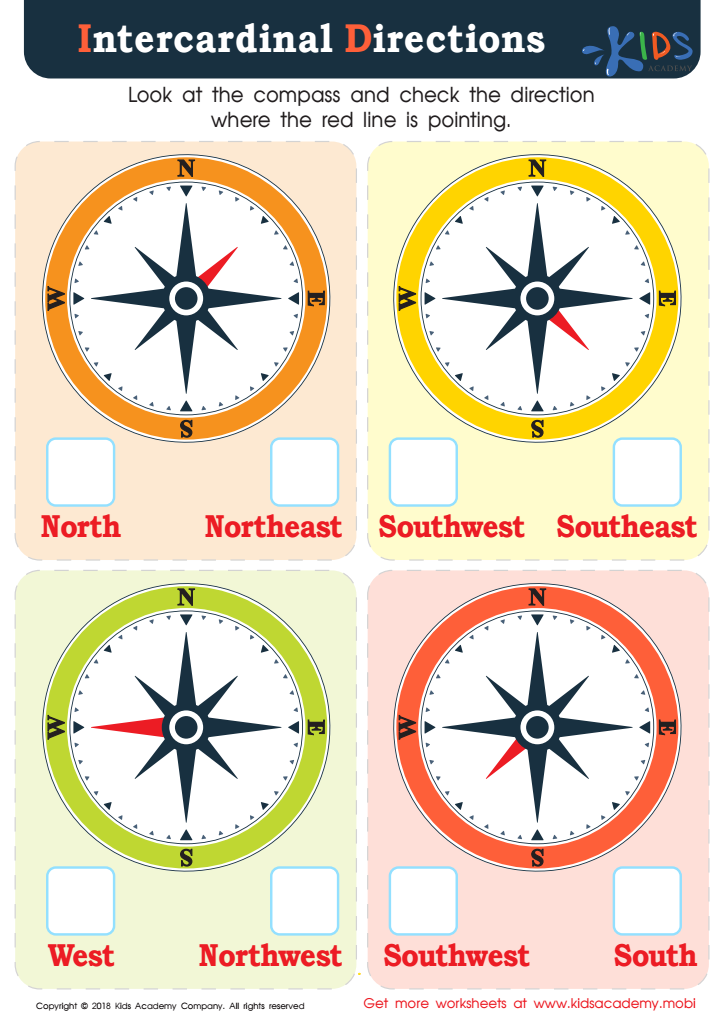
Intercardinal Directions Worksheet







Parents and teachers should prioritize spatial awareness in Grade 2 Social Studies as it lays the foundation for crucial cognitive and functional skills. Spatial awareness, or the ability to understand and navigate the environment and the positions of objects within it, significantly influences a child's learning and daily interactions. For young students, this skill enhances their understanding of geographical concepts, such as maps and the orientation of objects and places in space, enabling more engaging and effective learning experiences.
Incorporating spatial awareness into social studies curriculum helps develop critical thinking and problem-solving abilities. For example, when children learn to read maps, they practice recognizing relationships between different locations, distances, and directions, which promotes logical reasoning and a deeper understanding of their world.
Furthermore, spatial skills are directly linked to success in STEM (Science, Technology, Engineering, Mathematics) fields. By nurturing these skills early, educators and parents can provide children with a head start in these areas, increasing their confidence and competence in tackling complex, real-world problems later in life.
Overall, integrating spatial awareness into Grade 2 Social Studies enriches educational experiences, fosters multifaceted cognitive growth, and prepares children for future academic and personal success, making it imperative for parent and teacher support.