Vocabulary Building Normal Community Worksheets
4 filtered results
-
From - To
Enhance your child's vocabulary and understanding of the community with our Vocabulary Building Normal Community Worksheets. Perfect for early learners, these engaging worksheets introduce essential community-themed words and concepts, aiding in language development and reading comprehension. Kids will enjoy activities that help distinguish various roles and places within a community, fostering important social studies skills. Our printable exercises are designed to be both educational and fun, making learning an interactive and enjoyable process. Discover a range of worksheets tailored to improve vocabulary while deepening knowledge about community structures and services. Encourage developmental growth with these valuable, easy-to-use resources.
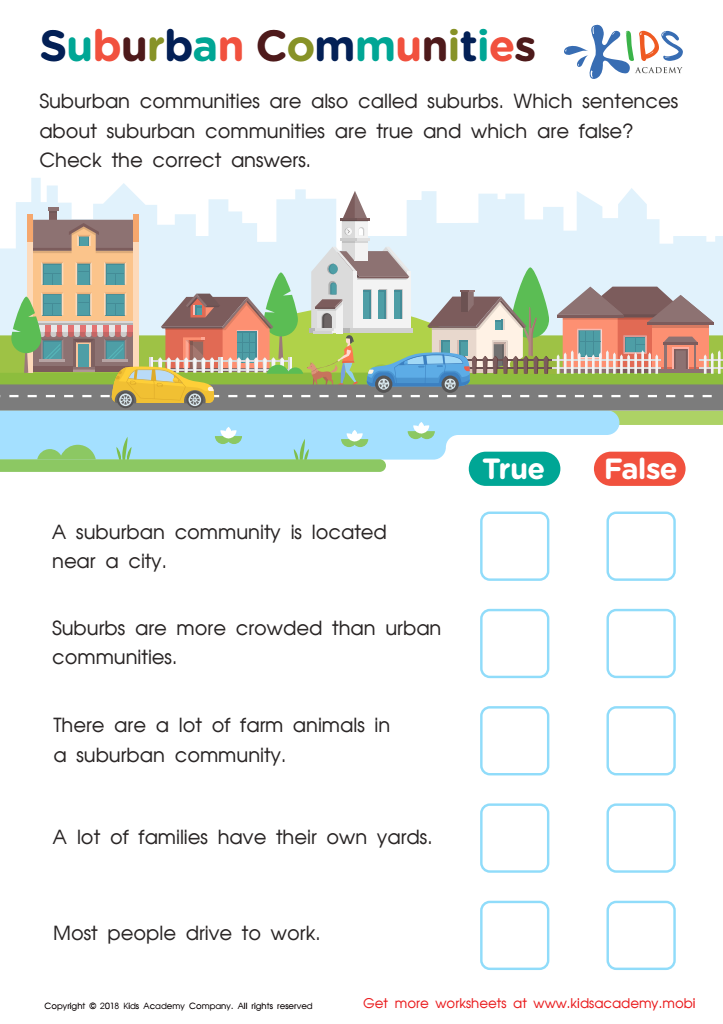
Suburban Communities Worksheet
 Assign to My Students
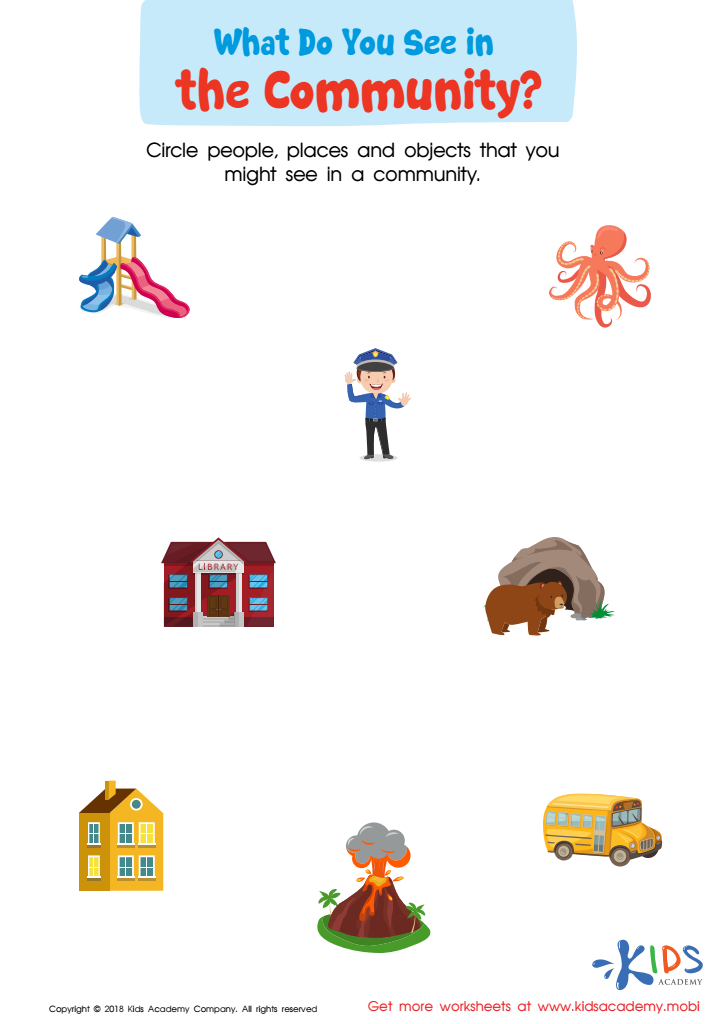
What Do You See in the Community Worksheet
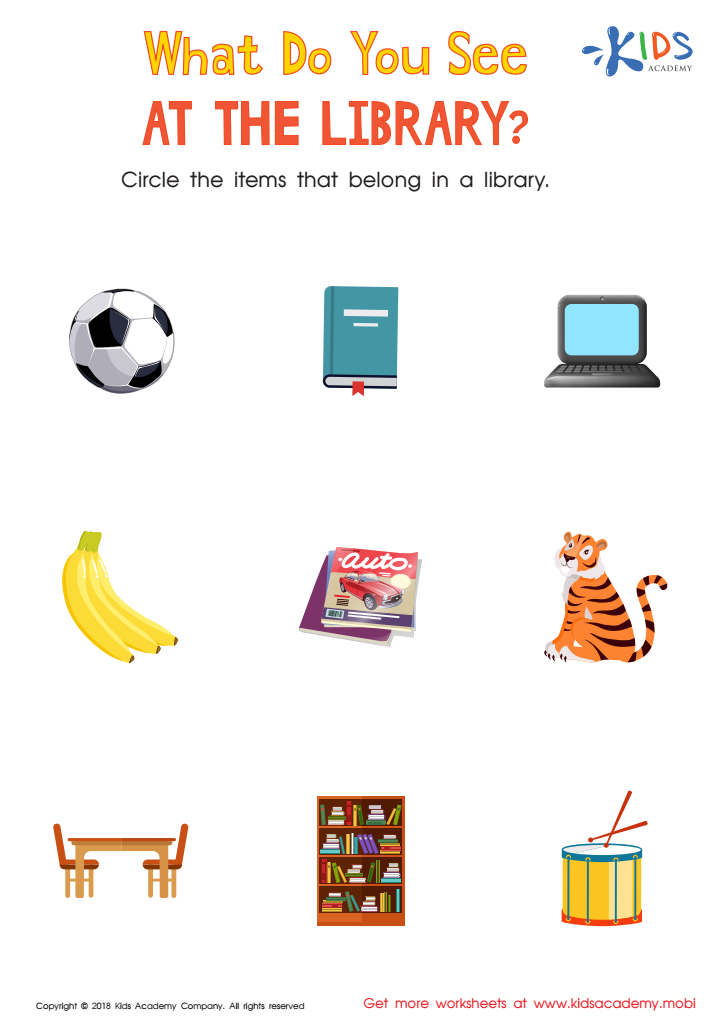
What Do you See at the Library? Worksheet
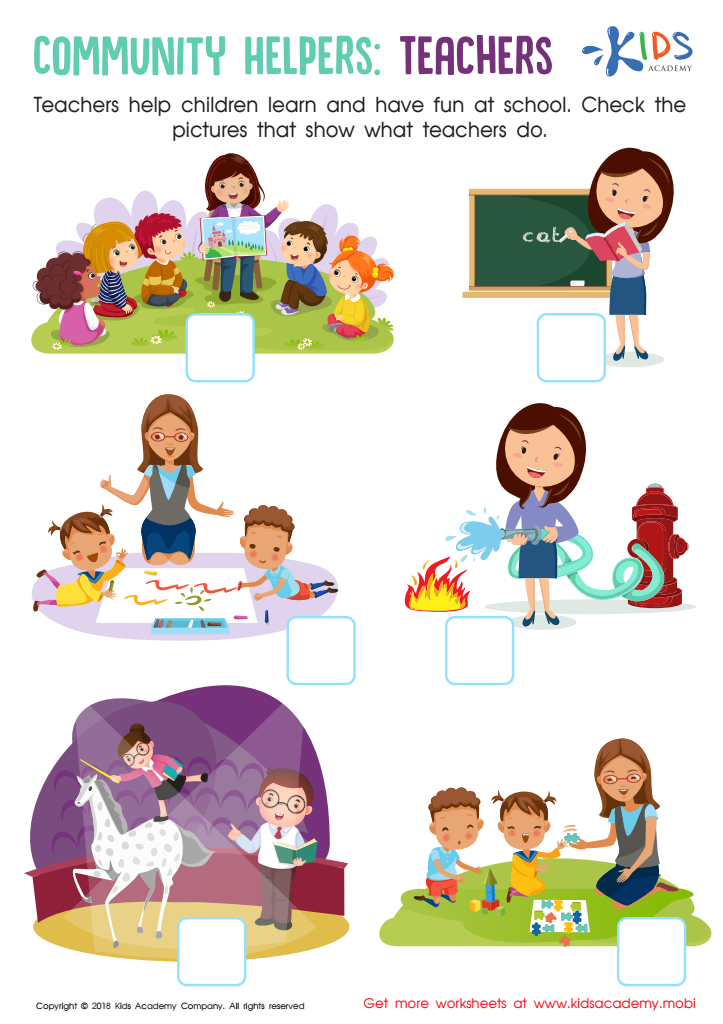
Teachers Community Helpers Worksheet








Parents and teachers should care immensely about vocabulary building within a normal community because it forms the foundational basis for effective communication, academic success, and future career readiness. A robust vocabulary is critical in comprehending reading materials, which in turn, drives academic success. By expanding a child's word bank, we empower them to understand and engage more deeply with their studies. This advantage doesn't stop at just language arts but extends to all subject areas where instructions, questions, and concepts often carry domain-specific vocabulary.
Moreover, vocabulary proficiency impacts critical thinking and cognitive growth. When children encounter and integrate new words, they build neural connections in the brain, enhancing their ability to think abstractly and critically. Interaction with a broadened linguistic repertoire enriches their capacity to articulate thoughts and emotions more precisely, fostering both intellectual and emotional intelligence.
Socially, a well-developed vocabulary streamlines interactions and promotes confidence. Children who can express themselves clearly are more likely to participate in discussions, share ideas, and collaborate effectively. For educators and parents, placing a high priority on vocabulary building means equipping children not just with language skills but with the overall tools necessary for lifelong learning, problem-solving, and personal growth. In essence, it's about setting the cornerstone for a well-rounded, educated, and capable individual.