Critical Thinking Normal Social Studies Worksheets - Page 2
25 filtered results
-
From - To
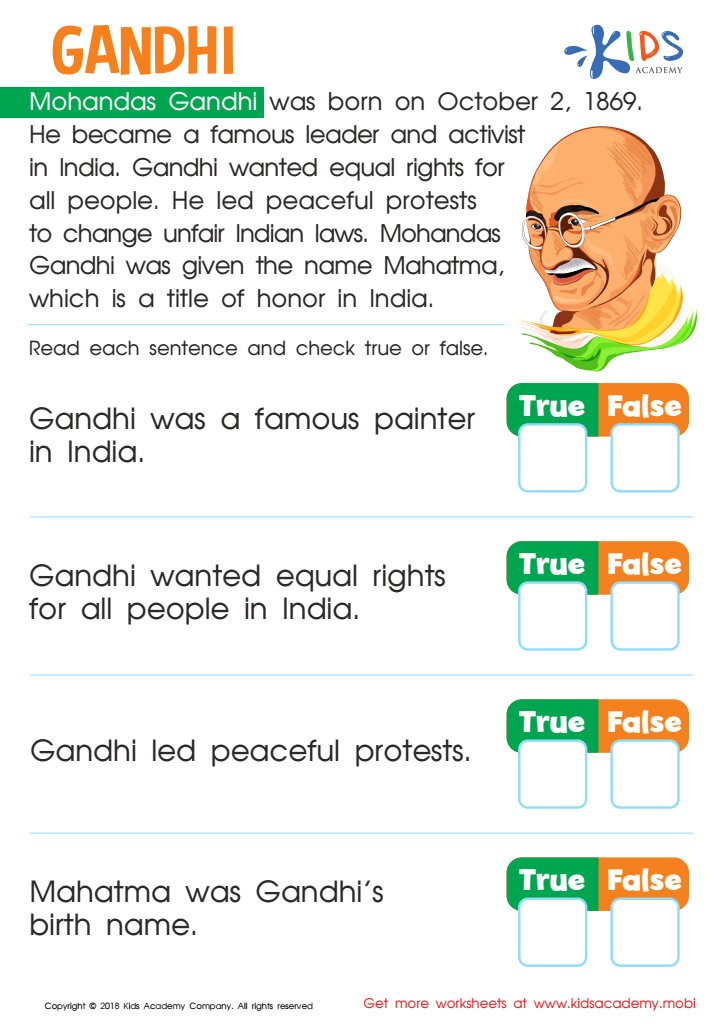
Gandhi Worksheet
 Assign to My Students








Parents and teachers should prioritize critical thinking within social studies for several compelling reasons. First, critical thinking equips students with the ability to analyze complex social issues, fostering a deeper understanding of their world. By engaging with history, geography, and civic studies critically, students learn to evaluate evidence, assess different perspectives, and form reasoned opinions, which is essential in today’s information-rich society.
Furthermore, critical thinking nurtures essential life skills such as problem-solving, decision-making, and effective communication. These skills are vital not just in academic settings, but also in personal and professional contexts, preparing students for future challenges in an increasingly complex global environment.
Additionally, constructing a framework for ethical reasoning—by examining historical actions and societal structures—helps students make informed choices and develop empathy, leading to responsible citizenship. It empowers them to voice their opinions and advocate for social change.
Lastly, fostering critical thinking in social studies encourages a culture of inquiry, curiosity, and lifelong learning, enhancing student engagement and preparedness for higher education. By focusing on these skills, parents and teachers play a crucial role in cultivating informed, thoughtful, and active members of society.