Spelling practice Normal Grade 3 Alphabet Worksheets
4 filtered results
Difficulty Level
Grade
Age
-
From - To
Subject
Activity
Standards
Discover our engaging Spelling Practice Normal Grade 3 Alphabet Worksheets, designed to enhance young learners' spelling skills. These printable worksheets provide a variety of fun activities that reinforce letter recognition and sound association. Aligned with Grade 3 curriculum standards, each worksheet helps children master spelling through interactive exercises focused on the alphabet. Your students will enjoy tracing, matching, and filling in the blanks as they strengthen their vocabulary and spelling abilities. Perfect for in-class activities or at-home practice, these worksheets are an essential resource for early education teachers and parents aiming to support their child's literacy development effectively. Enhance their learning today!
Favorites
With answer key
Interactive
Medals: Al Spelling Worksheet
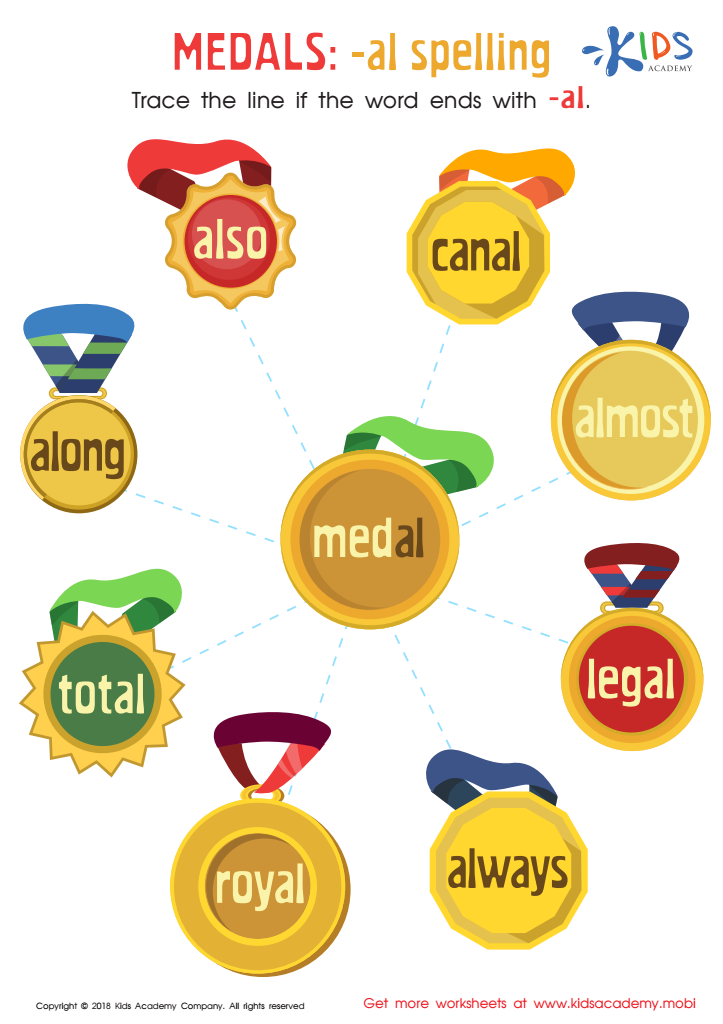
Have your students list common words ending with -al. See how many they can give and spell. Give examples of your own, assisting with spelling. Now review the words in the worksheet. Guide students to trace the line for each word ending with -al. 80 words
Medals: Al Spelling Worksheet
Worksheet
Long I Vowel Team Coloring Worksheet
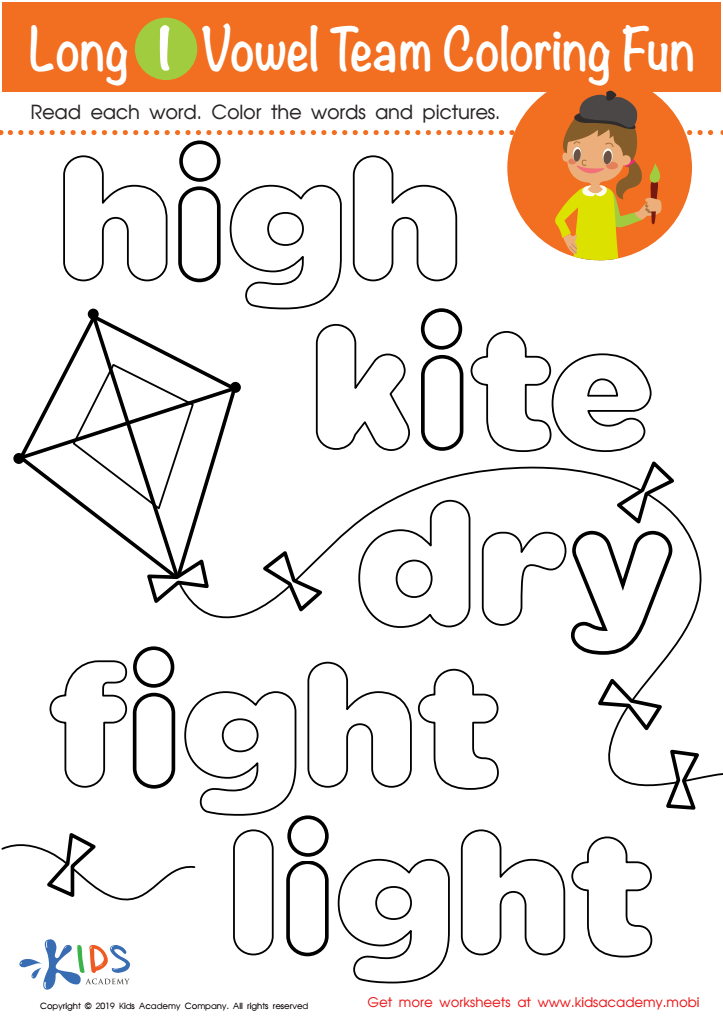
This worksheet provides practice with letter combinations that make the long "i" sound while enhancing creativity and motor skills with a fun coloring activity. Unknowingly, new readers learn key phonics skills while having fun!
Download (PDF)
 Assign to My Students
Assign to My Students
Long I Vowel Team Coloring Worksheet
Worksheet
Homophones: Crayons Worksheet
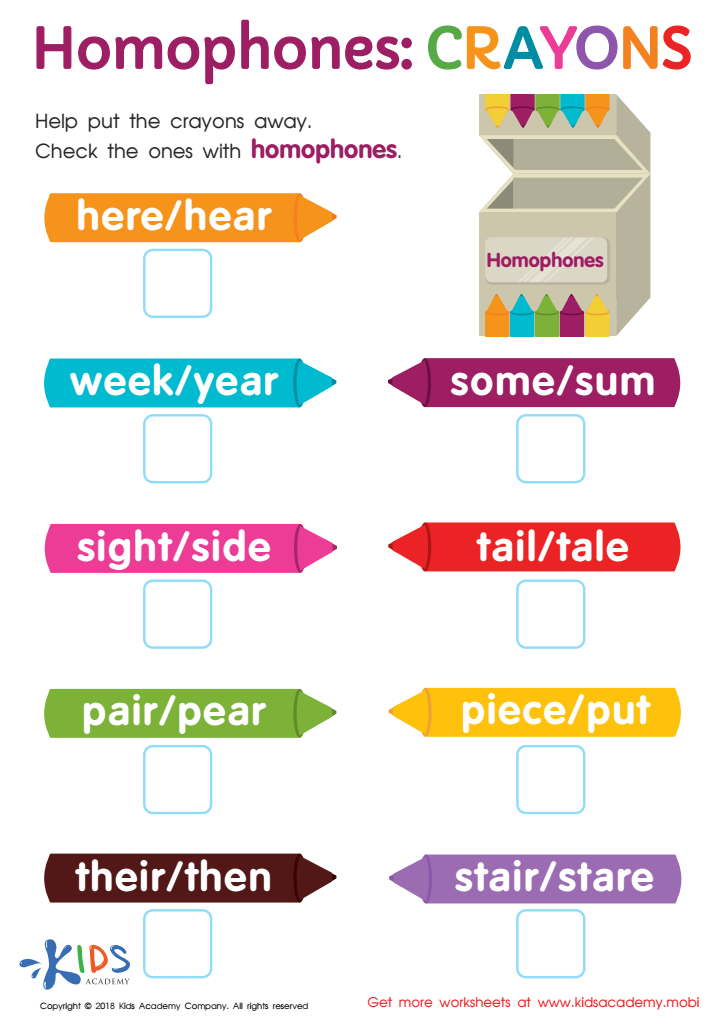
Ask your kids: "What are homophones?" Explain that homophones are words that sound alike but have different meanings, like 'dare' and 'deer'. Ask them to identify homophones by putting the crayons in this printout away according to the words.
Homophones: Crayons Worksheet
Worksheet
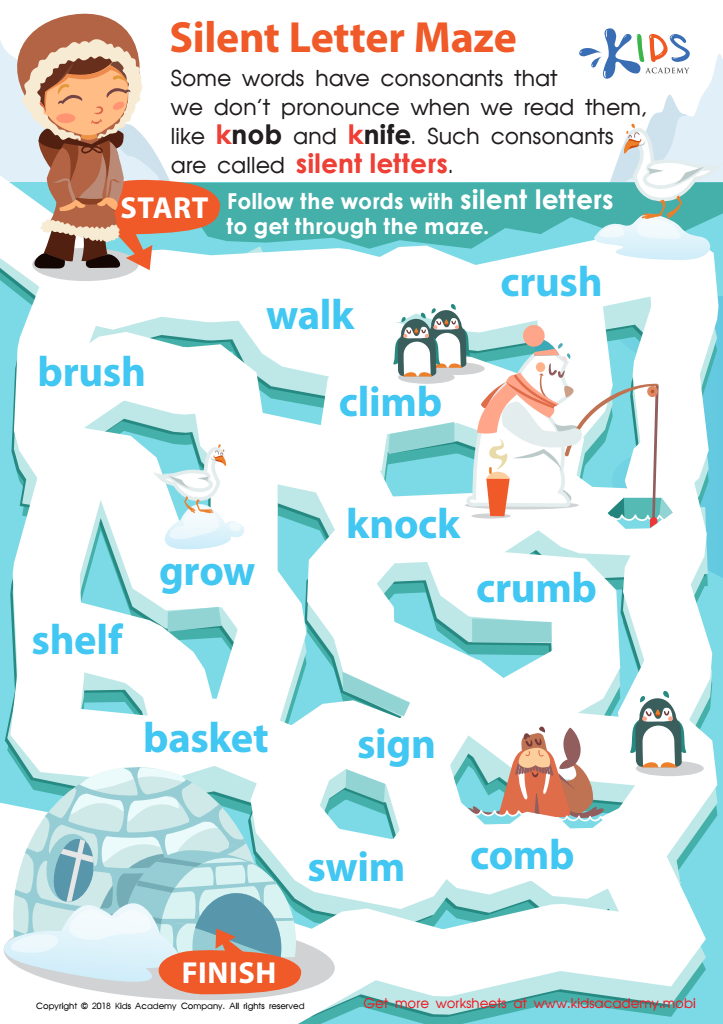
Silent Letter Maze Worksheet
Learning to read can be tricky, especially with words with irregular pronunciations. Explain to your child that some words have consonants we do not pronounce when reading. Ask them for examples like 'knife' and 'knob'. These consonants are called silent letters. Download this pdf to practice words with silent letters and complete the maze.
Silent Letter Maze Worksheet
Worksheet
Join Kids Academy for Free
Who is primarily going to use this learning content?








Spelling practice in Grade 3 is crucial as it serves as a foundation for effective communication and literacy. At this stage, children are transitioning from learning to read to reading to learn, making their ability to spell correctly increasingly important. Engaging in regular spelling practice not only enhances children's vocabulary but also improves their reading comprehension. When they understand how words are formed, it aids in decoding unfamiliar words.
Furthermore, spelling skills contribute to children's confidence in writing. Poor spelling can hinder their ability to express thoughts clearly and may discourage them from sharing ideas. By reinforcing spelling, teachers and parents provide students with the tools to convey their messages accurately and expressively.
Additionally, spelling practice fosters better cognitive skills, enhancing memory and attention to detail. It creates a sense of accomplishment when children grasp new words, which can lead to greater enthusiasm for learning.
Finally, consistent spelling practice builds a strong educational foundation, paving the way for future academic success. By emphasizing spelling, parents and educators can help students develop critical skills necessary for effective communication, paving the way for lifelong learning and success in various pursuits. Investing time in spelling now will yield substantial long-term benefits.