Mental arithmetic skills Normal Grade 3 Worksheets
3 filtered results
-
From - To
Boost your child's math confidence with our "Mental Arithmetic Skills Normal Grade 3 Worksheets". Designed for 3rd graders, these engaging worksheets enhance quick thinking and problem-solving abilities. They feature a variety of exercises, from basic addition and subtraction to multiplication and division. Each carefully crafted worksheet aims to build mental calculation speed while reinforcing essential math concepts, helping students excel in their studies. Accessible and fun, our worksheets are perfect for both classroom and home use. Encourage your child's love for math and watch their skills grow with our expertly designed materials!
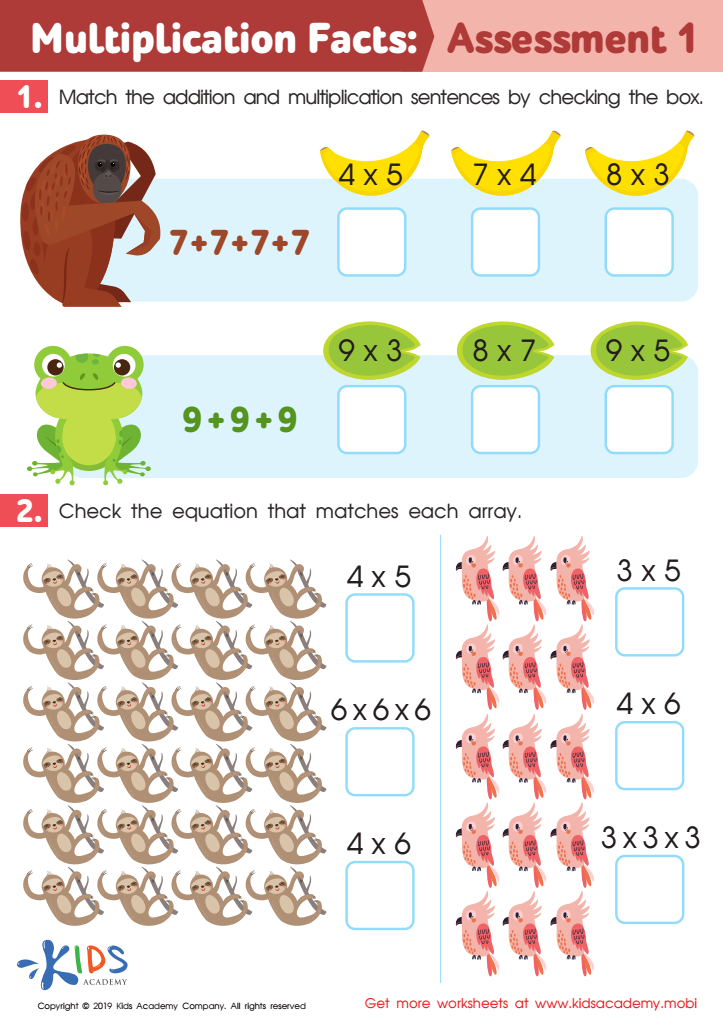
Multiplication Facts: Assessment 1 Worksheet
 Assign to My Students
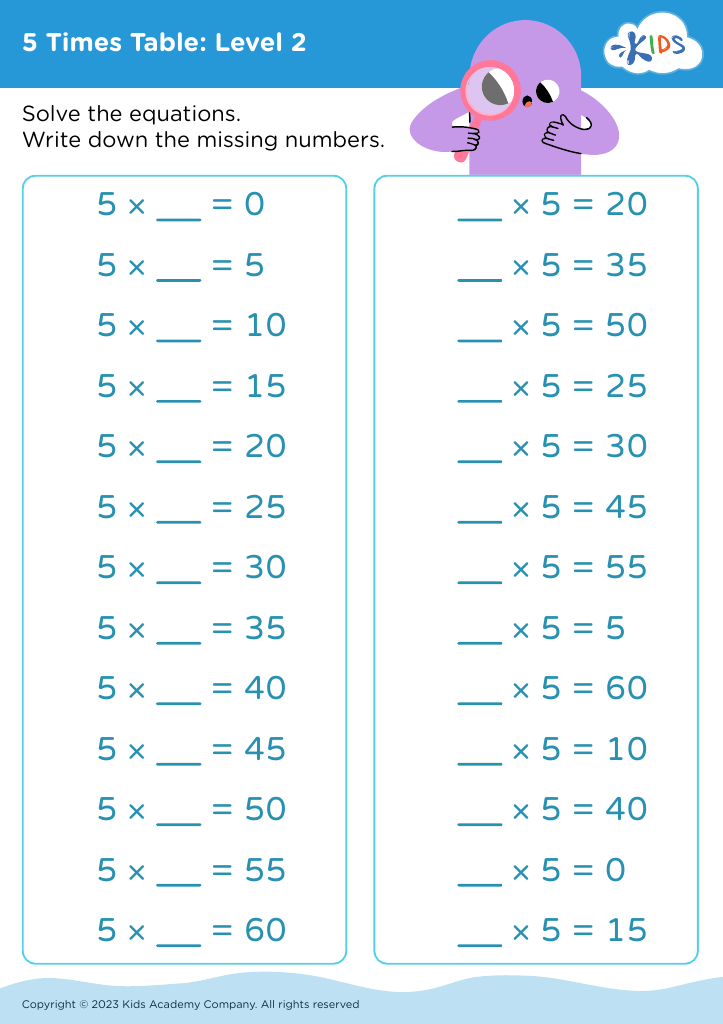
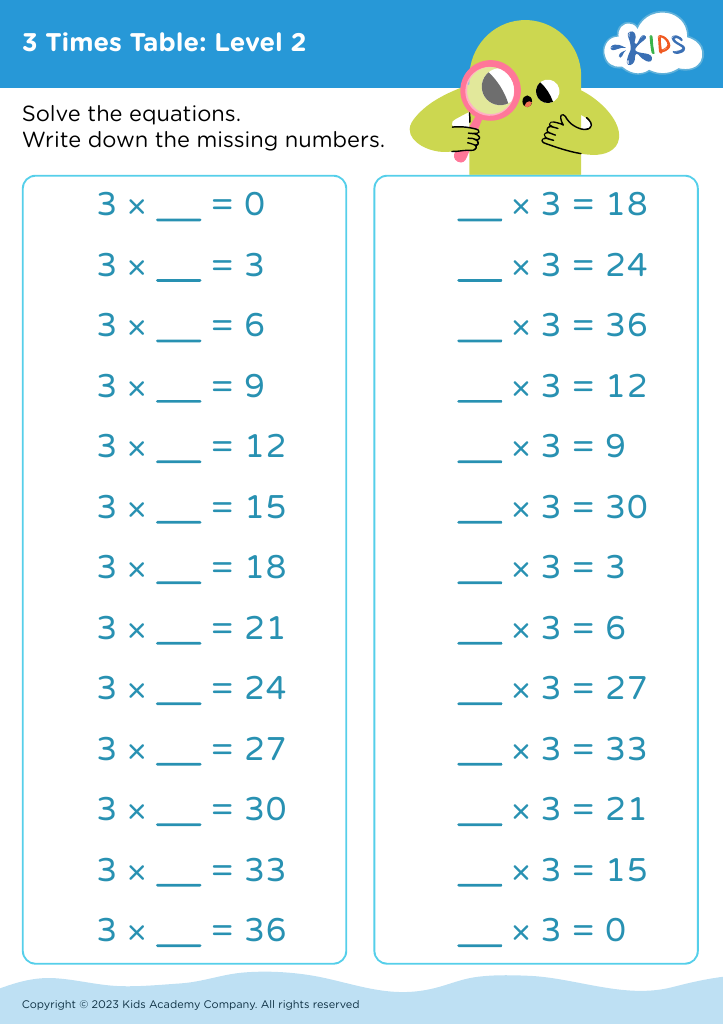








Parents and teachers should care about the development of mental arithmetic skills in Grade 3 students because it plays a foundational role in their overall cognitive development. At this stage, children are beginning to move from concrete to more abstract thinking—essential for tackling more complex mathematical concepts later on. Mental arithmetic enhances a child’s ability to recognize number patterns, understand relationships between numbers, and develop problem-solving skills.
Moreover, these skills boost confidence and encourage a positive attitude toward mathematics. When children can perform basic mental calculations quickly and accurately, they build a solid basis for future learning, enabling them to tackle more advanced subjects in later grades with ease. Mental arithmetic also translates to real-world applications like handling money, measuring ingredients in a recipe, or estimating time, thus fostering practical life skills.
Additionally, engaging in mental arithmetic exercises improves memory, concentration, and cognitive flexibility. Regular practice can help in enhancing overall brain development, leading to better performance not just in mathematics, but across various academic subjects.
For these reasons, prioritizing mental arithmetic skills ensures a well-rounded educational foundation, setting the stage for a lifetime of cognitive aptitude and academic achievement.