Understanding adjectives Normal Grade 3 Worksheets
3 filtered results
Difficulty Level
Grade
Age
-
From - To
Subject
Activity
Standards
Unlock the world of adjectives with our "Understanding Adjectives Normal Grade 3 Worksheets!" Specifically designed for third graders, these engaging worksheets help young learners master the use of descriptive words. With vibrant illustrations and clear explanations, kids can easily grasp how adjectives enhance their writing. Our collection offers a variety of fun activities to improve vocabulary, sentence structure, and comprehension. Perfect for classroom use or at-home learning, these worksheets support educational standards and make learning enjoyable. Empower your third grader's language arts skills today with our comprehensive, printable resources. Bring adjectives to life and watch creativity flourish!
Favorites
With answer key
Interactive
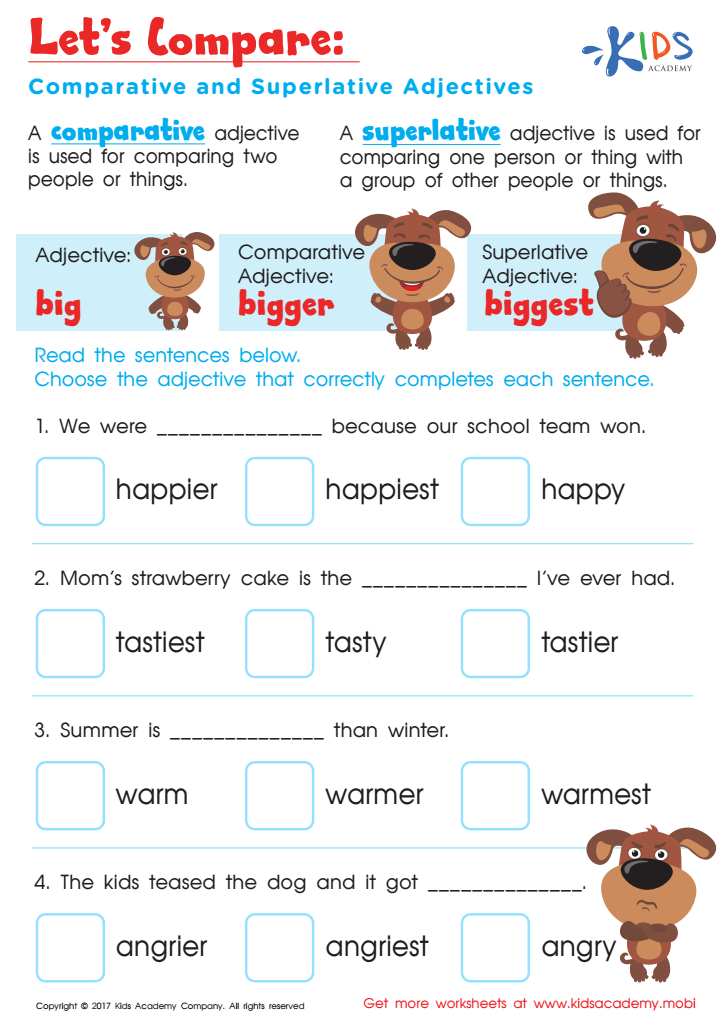
Comparative and Superlative Worksheet
Kids can discover the difference between comparative and superlative adjectives and practice using them correctly - is it big, bigger, or biggest? Perfect for grade 3.
 Assign to My Students
Comparative and Superlative Worksheet
Worksheet
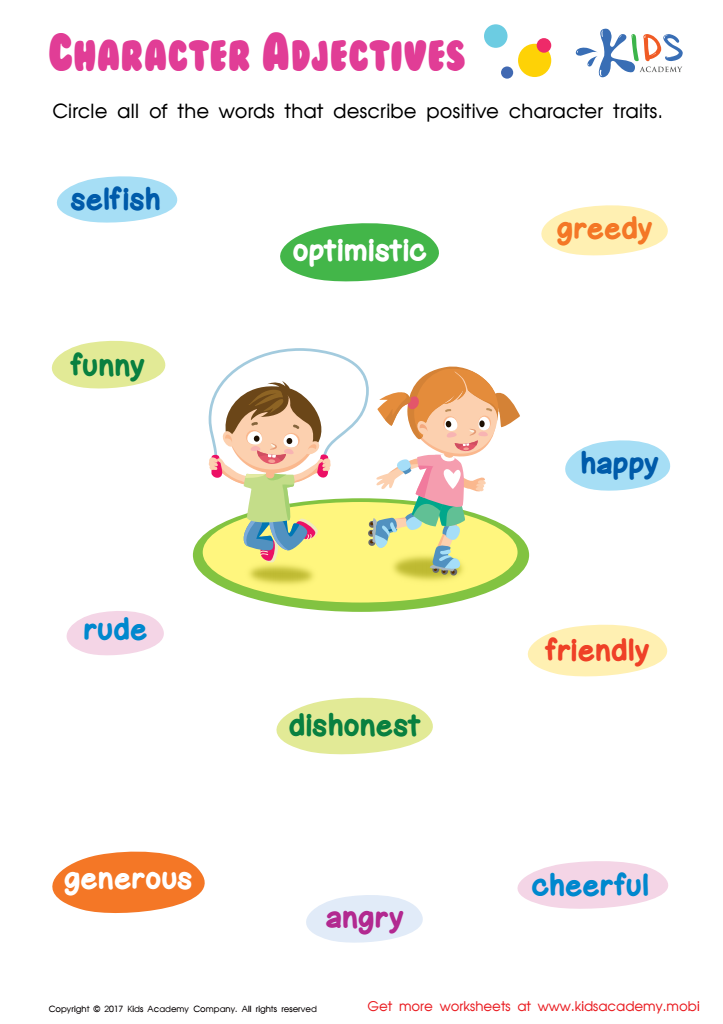
Character Adjectives Worksheet
Help your child express their feelings easily with this PDF worksheet! It focuses on character adjectives and increases their vocabulary, so they can confidently articulate positive emotions.
Character Adjectives Worksheet
Worksheet
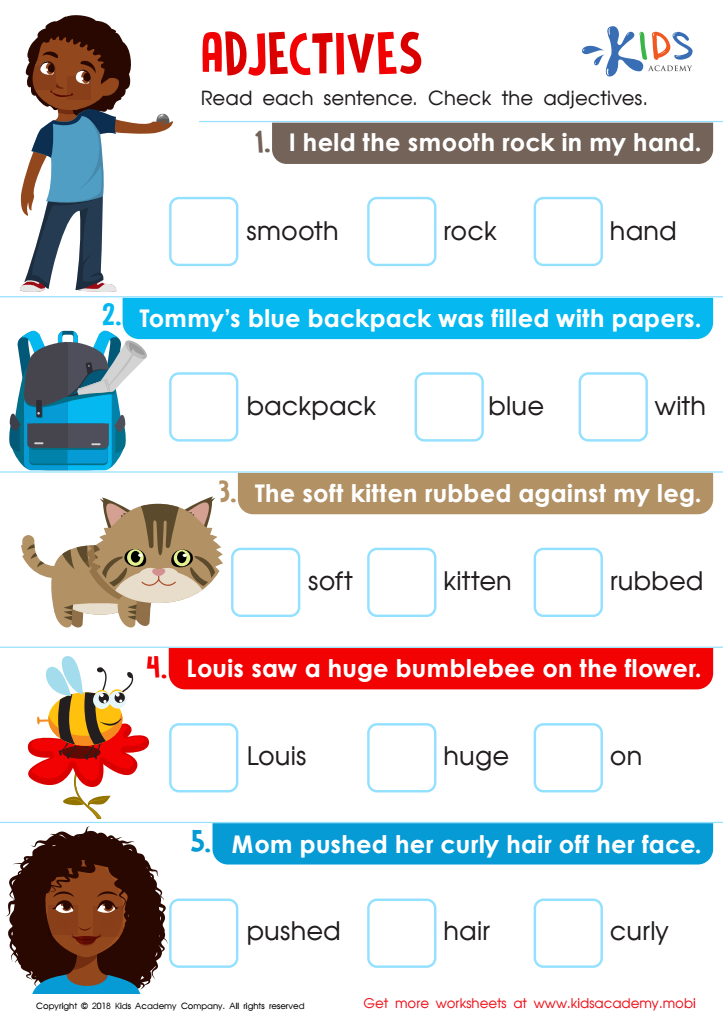
Adjectives Worksheet
Adjectives are words that describe a noun. Examples include "beautiful" and "good". Ask your students to use these adjectives in a sentence and have them identify the adjectives in five sentences on a worksheet. Point out that adjectives are essential to understand, and have them check their answers.
Adjectives Worksheet
Worksheet
Join Kids Academy for Free
Who is primarily going to use this learning content?





Understanding adjectives is crucial for young learners in Grade 3 as these descriptive words play a vital role in enriching their language skills and overall communication. Adjectives help students develop a more vivid and detailed way of expressing themselves, transforming simple sentences into more engaging and precise forms. For instance, instead of saying "The dog ran," a child could say "The big, brown dog ran quickly," providing a clearer and more interesting image for the listener or reader.
Incorporating adjectives into their vocabulary aids children in enhancing their writing and storytelling abilities. This expanded descriptive power allows them to convey their thoughts more effectively and creatively, which is essential for academic success and personal self-expression. Additionally, understanding and using adjectives contribute to the improvement of reading comprehension. When children encounter adjectives in texts, they can better visualize scenes, grasp deeper meanings, and fully appreciate the nuances of language.
From an educational standpoint, fostering an early proficiency in adjectives helps meet language arts standards and prepares students for more complex grammatical concepts they will encounter as they progress in their education. For parents and teachers, supporting this learning phase plays a significant role in developing well-rounded, articulate, and imaginative communicators who can thrive both academically and socially.