Understanding patterns Normal Grade 3 Worksheets
5 filtered results
-
From - To
Enhance your Grade 3 students' math skills with our "Understanding Patterns" worksheets! These engaging and comprehensive printables focus on helping young learners grasp the concept of patterns through fun and interactive activities. Designed to align with curriculum standards, these worksheets cover various types of patterns, including shapes, numbers, and colors. By identifying and creating patterns, students will strengthen their problem-solving skills and boost their mathematical thinking. Perfect for classroom use or at-home learning, our "Understanding Patterns" worksheets are a great resource for reinforcing essential skills while keeping kids motivated and excited about math. Explore these free, downloadable worksheets today!
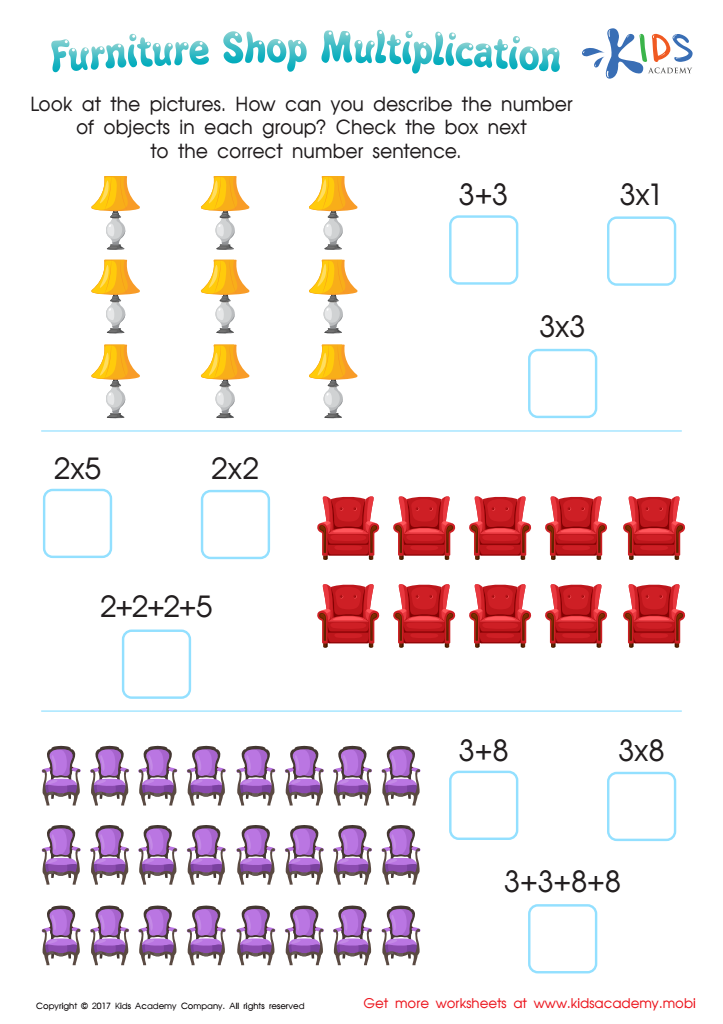
Furniture Shop Worksheet
 Assign to My Students
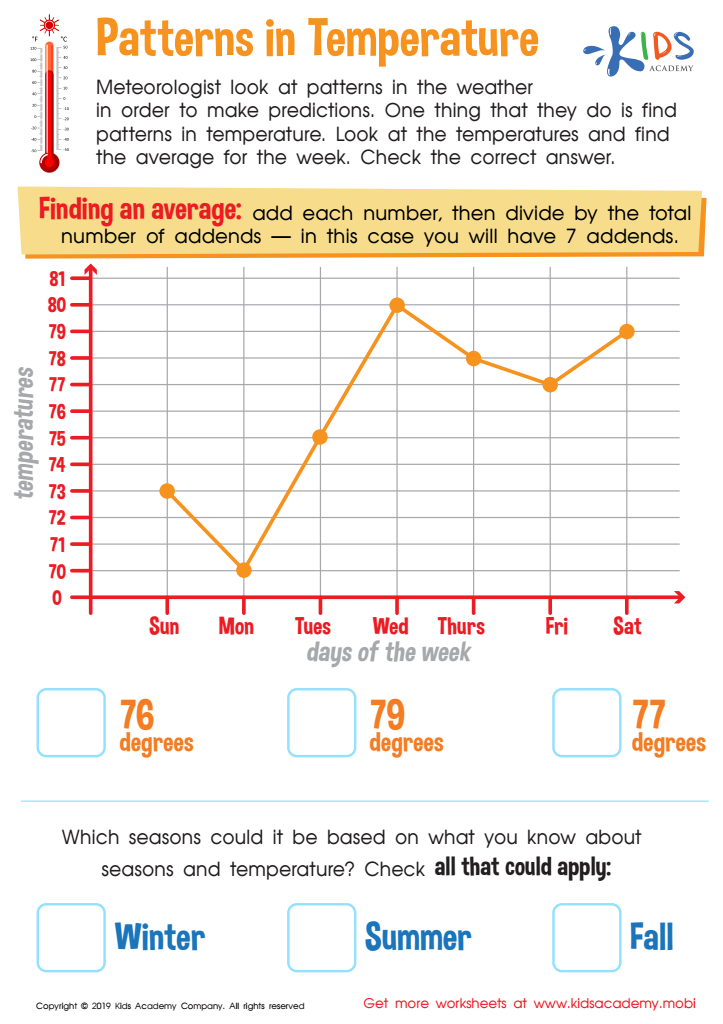
Patterns in Temperature Worksheet
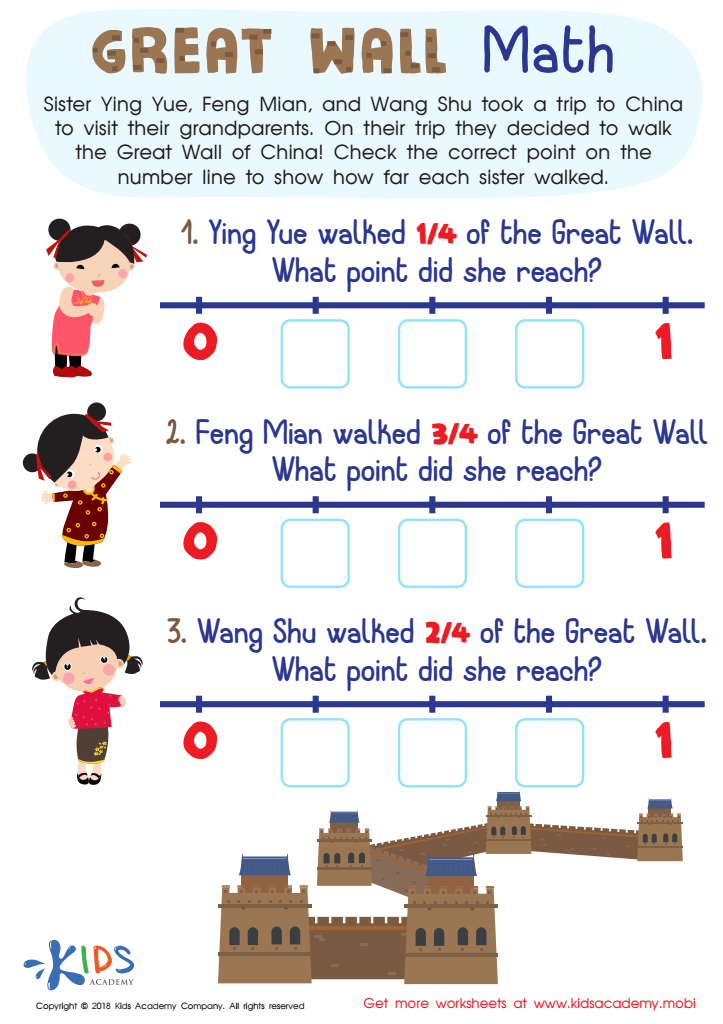
Great Wall Math Worksheet
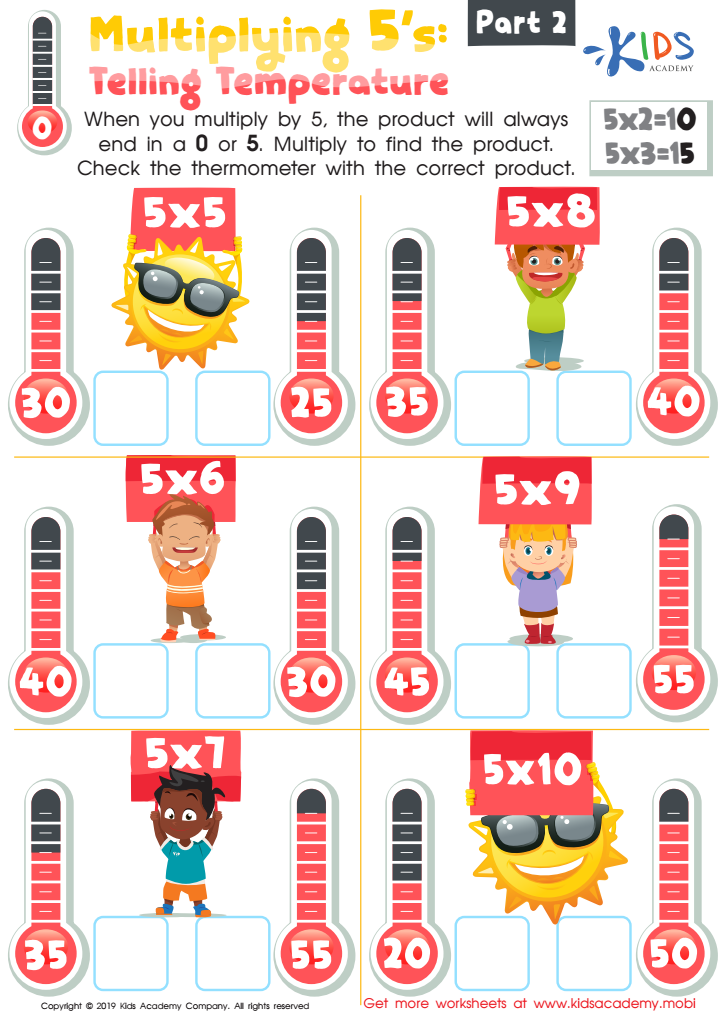
Multiplying 5’s: Telling Temperature Part 2 Worksheet
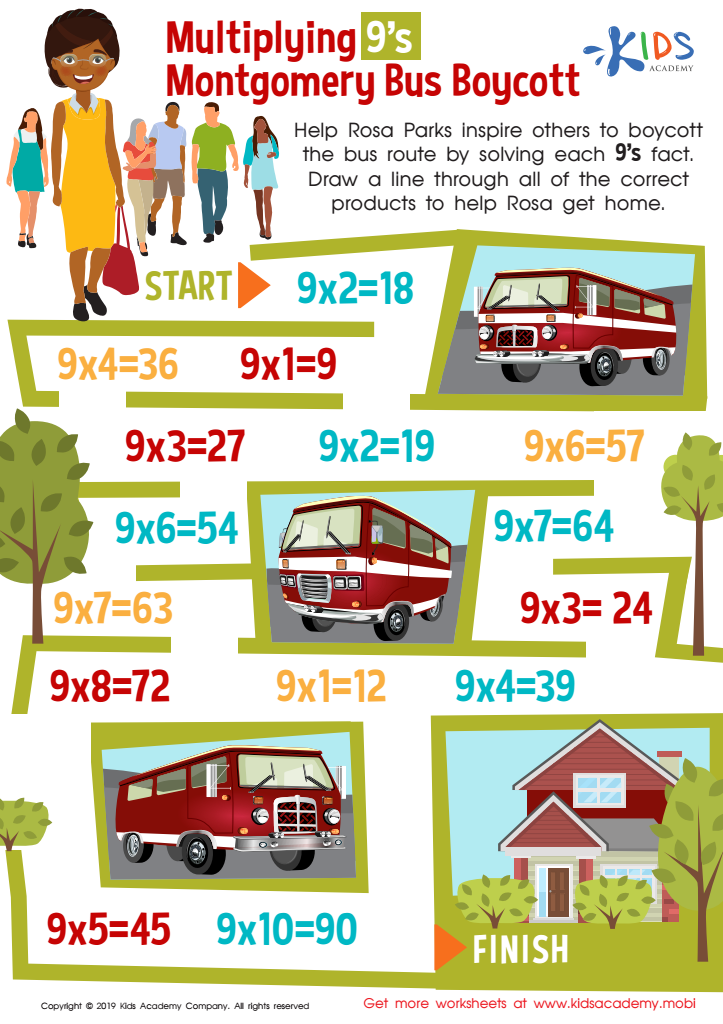
Multiplying 9’s Montgomery Bus Boycott Worksheet








Understanding patterns is a foundational concept in mathematics and critical thinking that every child should grasp by grade 3. For parents and teachers, fostering this understanding is essential for several reasons.
Firstly, identifying and analyzing patterns enhances a child's problem-solving skills. When students recognize repetitive elements, they learn to predict outcomes and draw conclusions, crucial skills not just in math, but in everyday life.
Secondly, patterns are a universal concept found across various subjects. In science, students observe patterns in nature, while in language arts, they might encounter patterns in sentence structure or story elements. Grasping these foundational patterns helps solidify a child’s understanding in all areas of study.
Moreover, understanding patterns develops logical reasoning. This skill is vital for making connections between ideas, which enhances a child’s ability to build upon existing knowledge.
Finally, recognizing and creating patterns encourages creativity and innovation. As students engage in activities that involve patterns, they express themselves better and imagine new possibilities.
In summary, when parents and teachers emphasize the importance of understanding patterns, they provide children with essential tools for academic success, real-world applications, and lifelong learning.