Understanding timelines Normal Grade 3 Worksheets
3 filtered results
Difficulty Level
Grade
Age
-
From - To
Subject
Activity
Standards
Enhance your third grader’s comprehension of timelines with our engaging worksheets designed specifically for their learning level. Our "Understanding Timelines" worksheets help students grasp the concept of time by organizing events chronologically, promoting essential skills in sequencing and narrative comprehension. By engaging with captivating visuals and practical exercises, children will learn to create their own timelines and understand the relationships between past, present, and future events. Perfect for reinforcing classroom lessons or as fun homework assignments, these worksheets provide an enjoyable learning experience. Help your child become confident in their understanding of timelines today with our expertly crafted resources!
Favorites
With answer key
Interactive
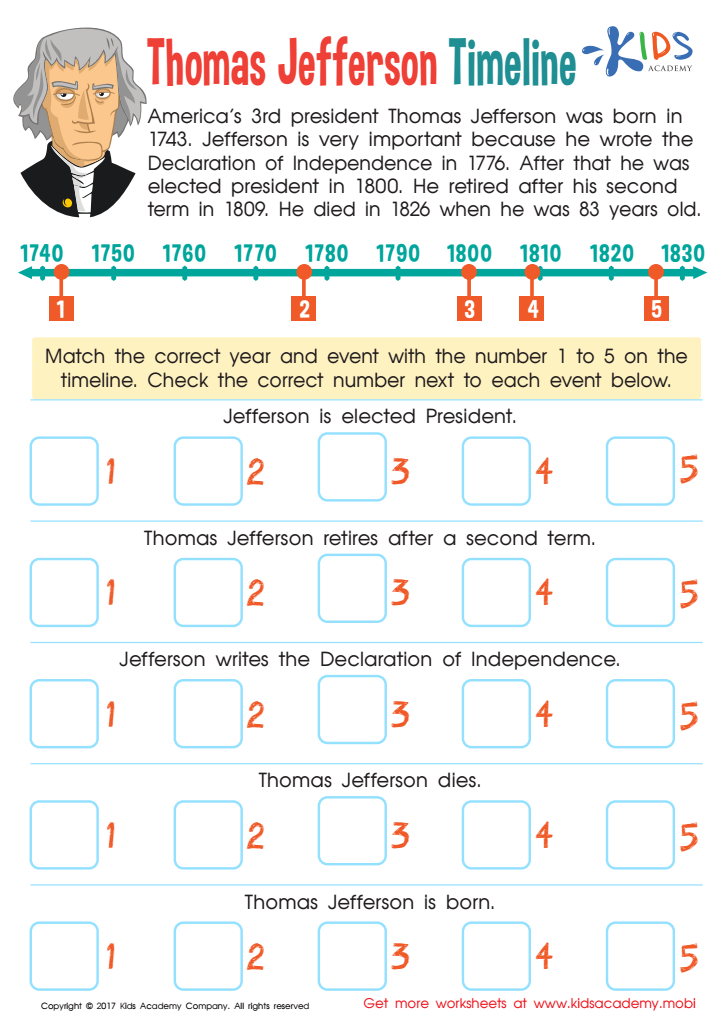
Thomas Jefferson Timeline Worksheet
Check your child's reading comprehension and knowledge of US history with this Thomas Jefferson timeline worksheet! Have them read the paragraph to learn about him, then use what they've read to fill in the timeline.
 Assign to My Students
Thomas Jefferson Timeline Worksheet
Worksheet
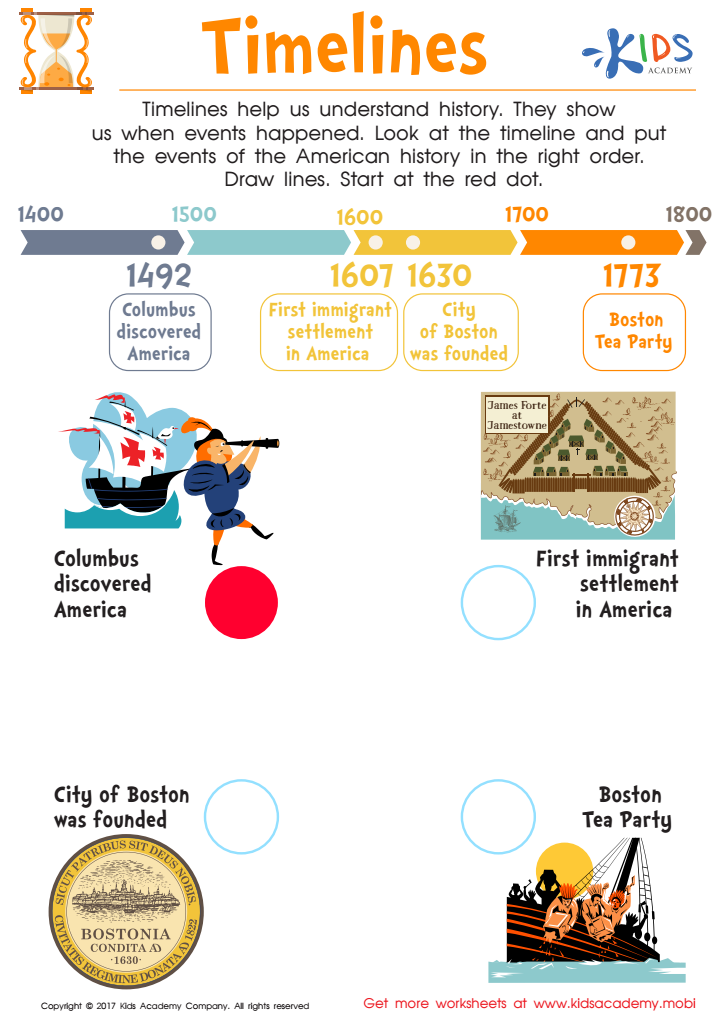
American History Timeline Worksheet
Encourage your child to explore American history with a fun timeline worksheet! It tracks major events in history and helps make sense of the past. It's an easy way to boost their knowledge and further their understanding of a key subject.
American History Timeline Worksheet
Worksheet
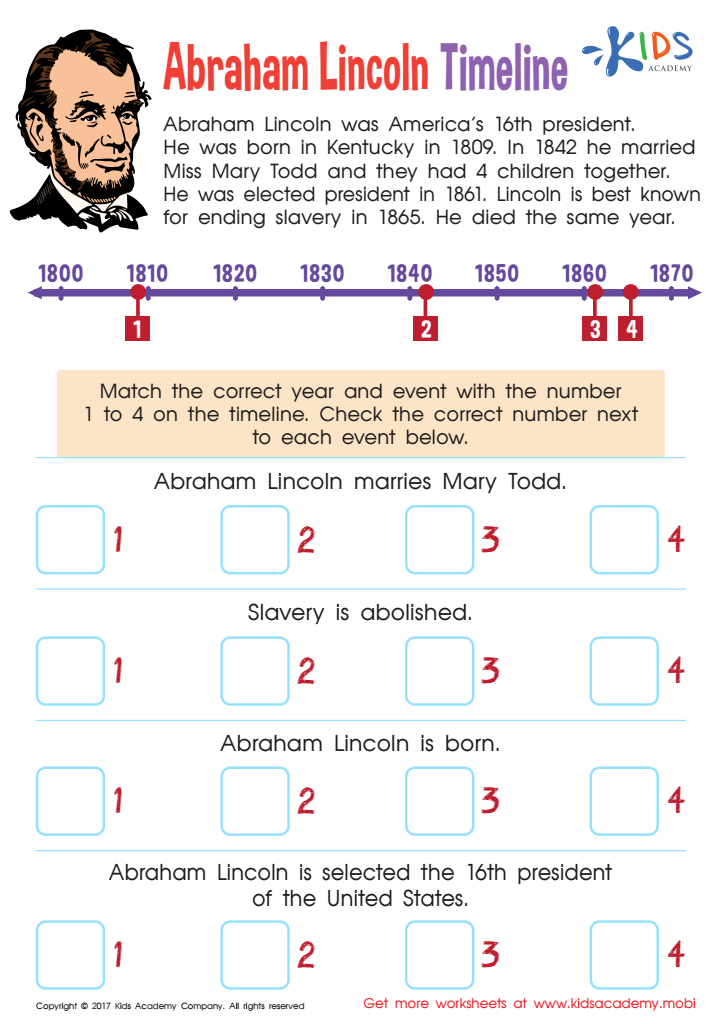
Abraham Lincoln Timeline Worksheet
Revised (76 words): Let's review America's most important president with this Abraham Lincoln timeline worksheet! Kids will read the paragraph and answer the questions using the timeline to increase their reading comprehension skills.
Abraham Lincoln Timeline Worksheet
Worksheet
Join Kids Academy for Free
Who is primarily going to use this learning content?




Understanding timelines is a fundamental skill for Grade 3 students, as it enhances their comprehension of chronological events, historical sequences, and personal milestones. For parents and teachers, this concept is crucial because it aids in fostering critical thinking and contextual awareness.
Timelines help children visualize the order of events, making it easier for them to grasp complex subjects like history and geography. They learn to differentiate between past, present, and future, which is essential for understanding historical narratives and personal experiences. This skill is not only useful in academics but also in everyday life as students begin to appreciate how their own stories fit into broader contexts.
Moreover, developing timeline skills enhances goal-setting abilities. Children can use timelines to plan projects or outline personal events, encouraging responsibility and time management. As parents and teachers support these skills, they promote awareness of cause-and-effect relationships, helping to deepen students' understanding of how actions lead to consequences over time.
Ultimately, being adept at creating and interpreting timelines fosters a child's ability to organize their thoughts, facilitating clearer communication and stronger academic performance. Therefore, nurturing this skill should be a priority for any parent or teacher invested in a child's educational journey.