Shape Recognition Normal Grade 3 Geometry Worksheets
4 filtered results
-
From - To
Introducing our Shape Recognition Normal Grade 3 Geometry Worksheets, designed to enhance your child’s understanding of shapes and their properties. These worksheets offer a diverse array of activities that help third graders identify and classify basic geometric shapes, from triangles to hexagons. By engaging with shape recognition exercises, students practice essential math skills including pattern identification, symmetry, and spatial reasoning. Our well-structured, kid-friendly worksheets also include fun puzzles that make learning geometry exciting and interactive. Perfect for classroom use or homeschooling, our Shape Recognition Geometry Worksheets ensure your child masters essential math concepts with ease.
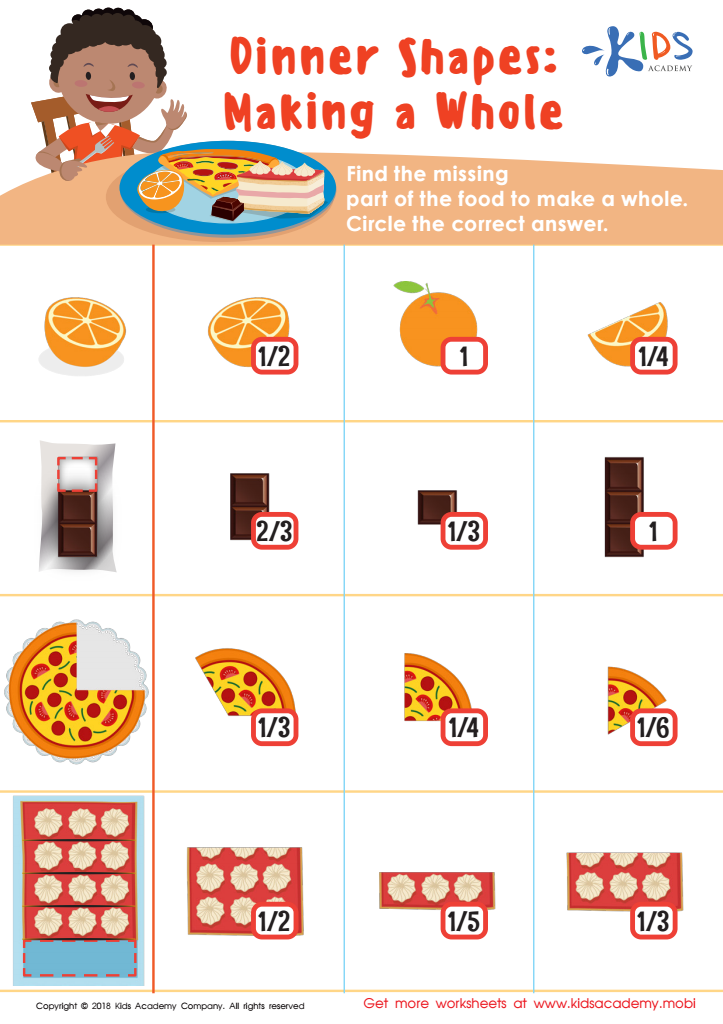
Dinner Shapes: Making a Whole Worksheet
 Assign to My Students
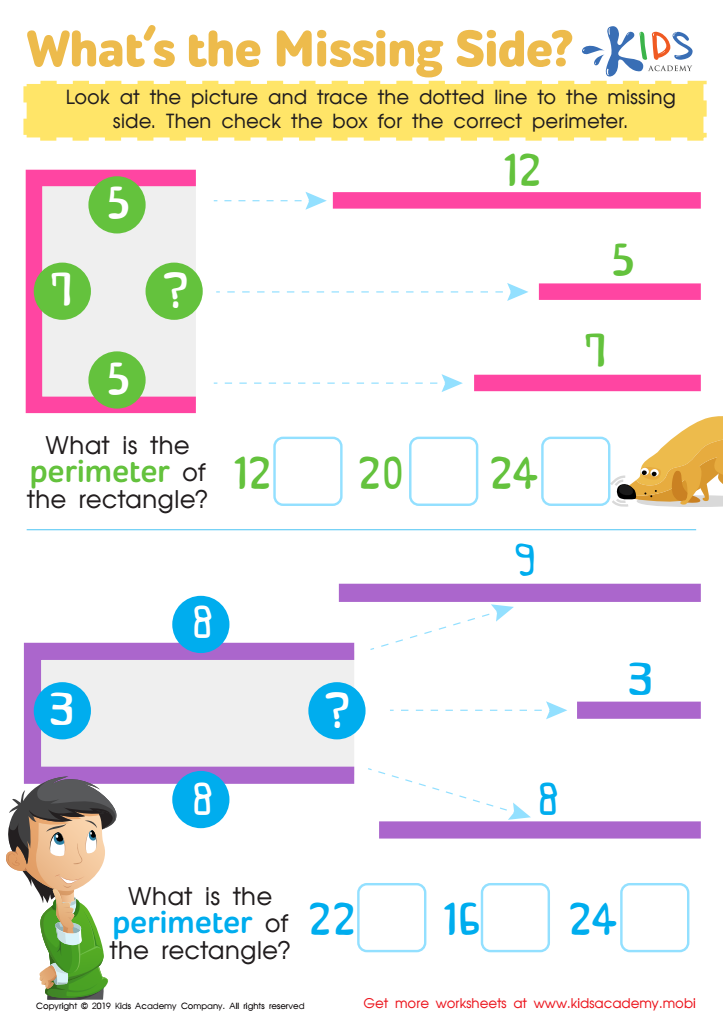
What's the Missing Side Worksheet
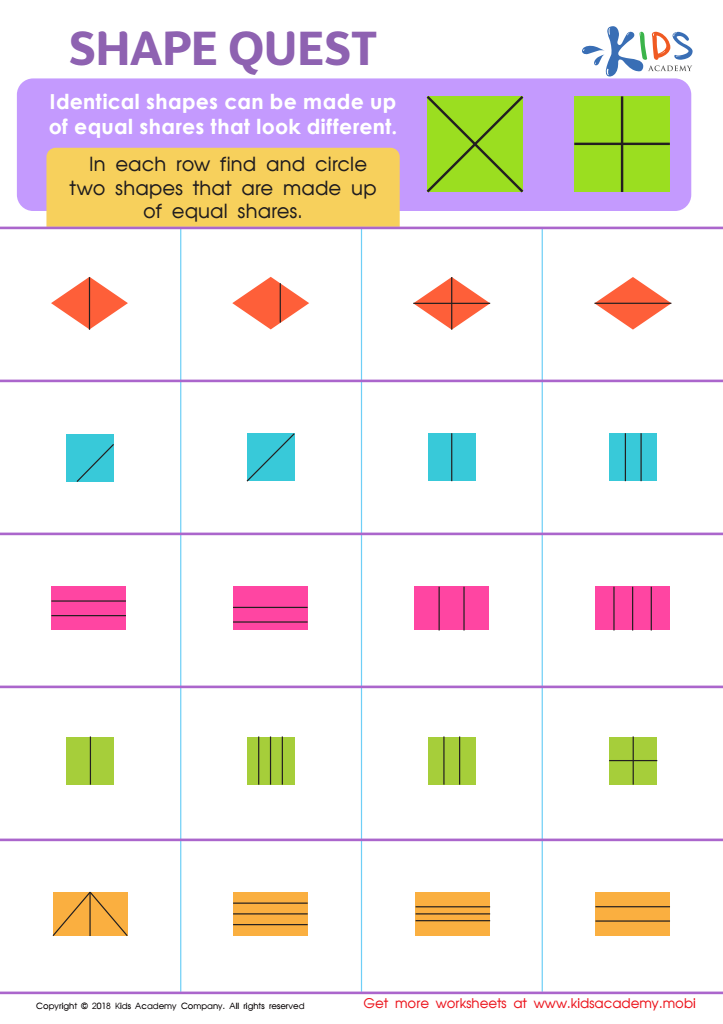
Shape Quest Worksheet
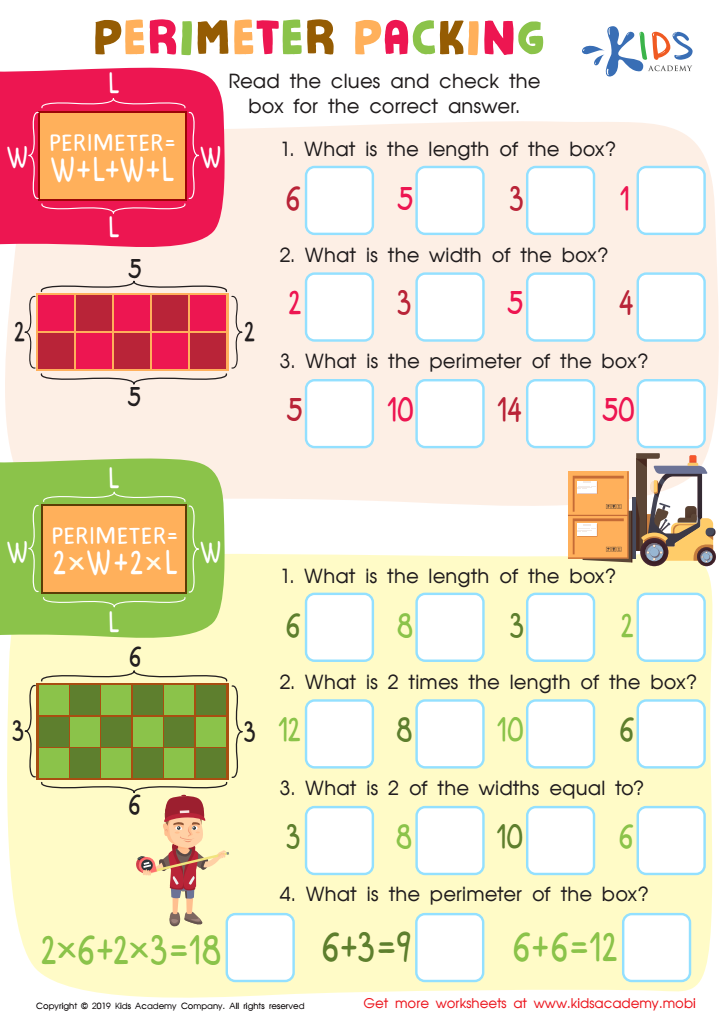
Perimeter Parking Worksheet








Shape recognition is a fundamental aspect of early learning, which parents and teachers should prioritize in the normal Grade 3 geometry curriculum. Firstly, understanding shapes forms the basis of spatial awareness and reasoning. Children who can identify and differentiate between shapes, such as squares, triangles, and circles, are better equipped to comprehend more advanced geometric concepts later on.
Secondly, shape recognition is integral to developing problem-solving and critical-thinking skills. As students recognize patterns, categorize shapes, and understand their properties, they learn to approach problems methodically. This analytical approach is beneficial not just in mathematics, but across all subjects and real-life situations.
Moreover, shape recognition enhances mathematical vocabulary and communication. When children learn to describe shapes using terms like edges, vertices, and angles, they build a robust mathematical language that aids in effective communication of geometric ideas.
In addition,supports other academic subjects, for instance, in art or when interpreting graphs and charts in science and social studies. Therefore, investing time and resources in developing robust shape recognition skills in Grade 3 provides a comprehensive educational foundation, supporting a child's overall cognitive development and preparing them for future academic success.