Historical Knowledge Normal Grade 3 Multiplication Worksheets
4 filtered results
-
From - To
Discover our engaging Historical Knowledge Normal Grade 3 Multiplication Worksheets, designed to combine essential math skills with fascinating historical facts. These printable worksheets make learning multiplication fun and meaningful by integrating historical context, enriching students' knowledge in both subjects. Ideal for third graders, this interactive approach not only helps reinforce multiplication proficiency but also sparks curiosity about history. Suitable for teachers or parents, these worksheets promote critical thinking and offer an innovative way to support your child's educational journey. Download now and provide a holistic learning experience that blends math mastery with historical awareness!
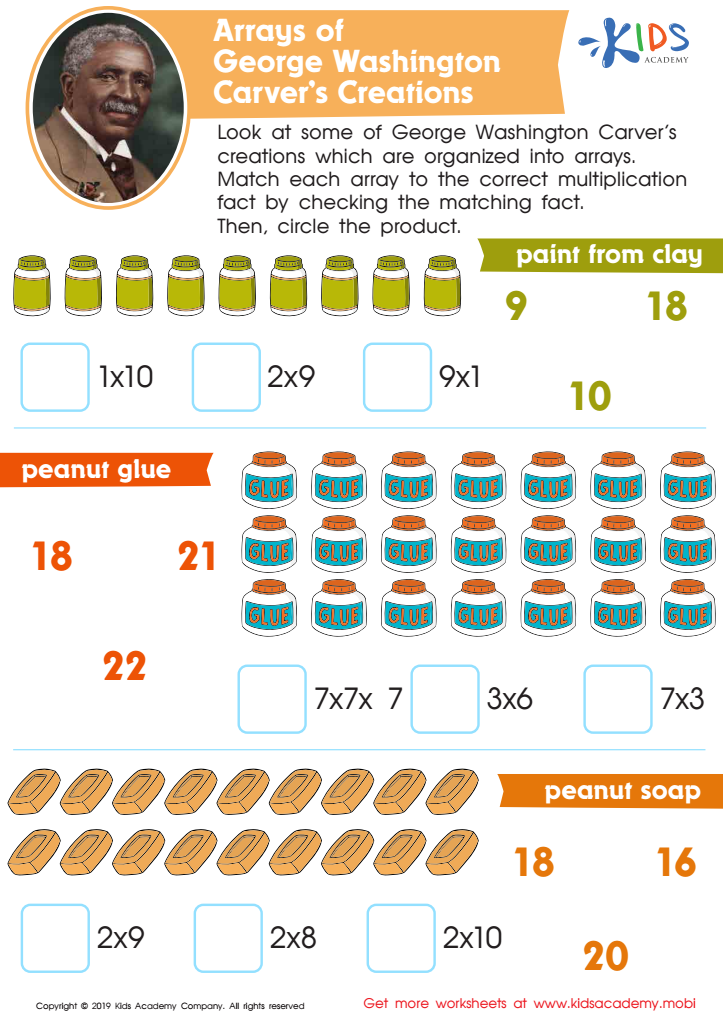
Arrays of George Washington Carver’s Creations Worksheet
 Assign to My Students
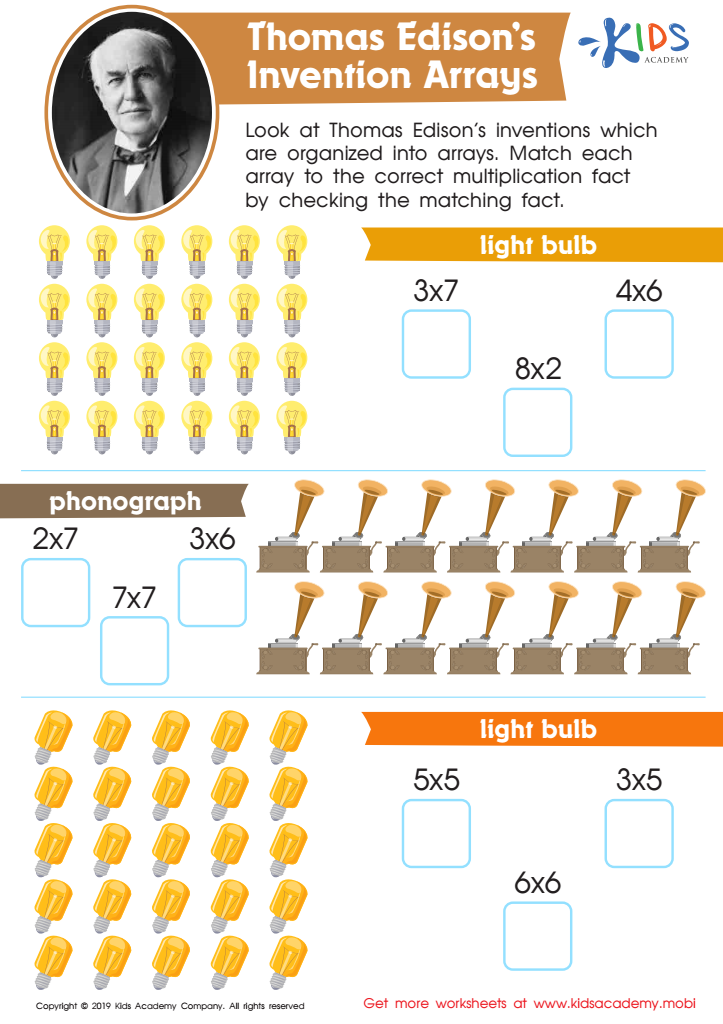
Thomas Edison’s Invention Arrays Worksheet
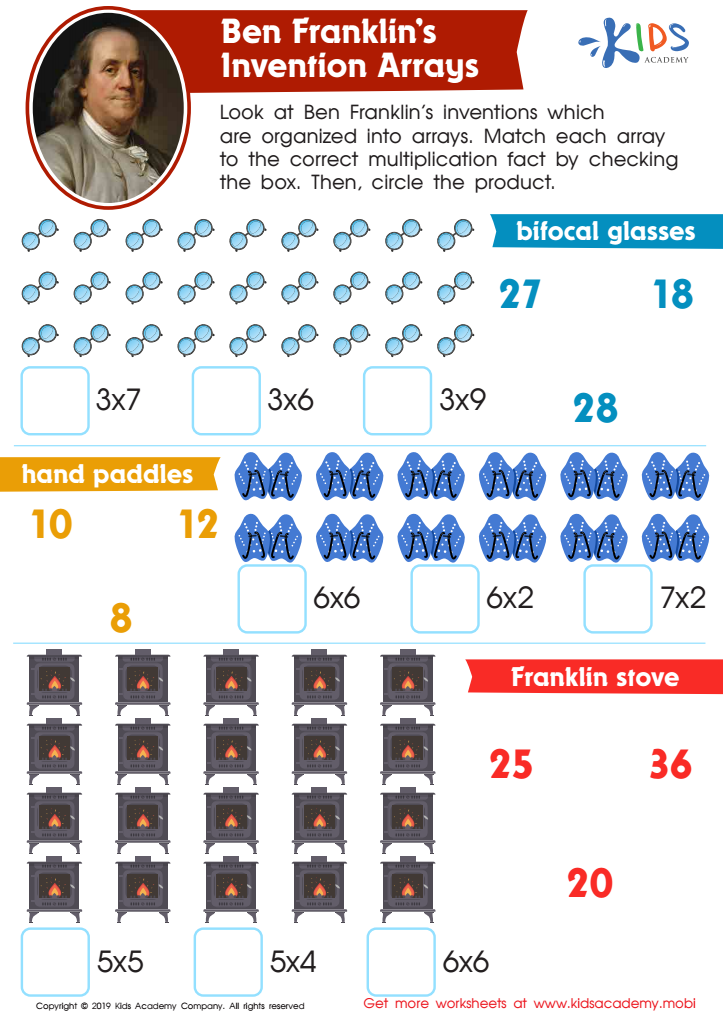
Ben Franklin’s Invention Arrays Worksheet
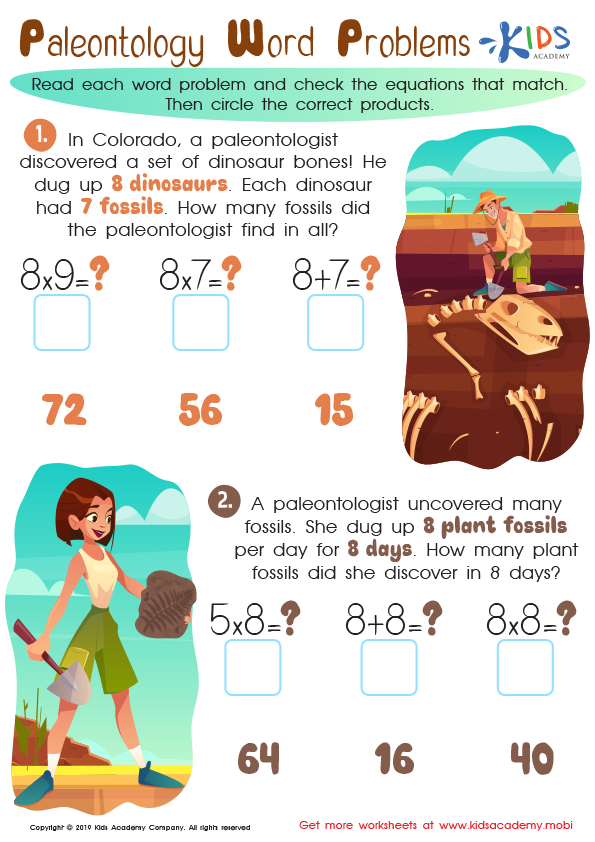
Archeology Word Problems Worksheet







Parents and teachers should deeply value historical knowledge behind Grade 3 multiplication education because it forms the foundation for future academic success and cognitive development. In early education, understanding multiplication is not just about memorizing times tables, but also about developing critical thinking and problem-solving skills. Historical context shows us that the methods and practices in use today are results of extensive pedagogical research aimed at optimizing learning.
Multiplication is a key building block in math, which accumulates into more complex concepts encountered in higher grades such as division, fractions, and algebra. By knowing historical milestones in math education, such as the transition from rote memorization to conceptual understanding, educators can adopt best practices that have proven effective over time.
Moreover, mathematics has been integral to human development since ancient civilizations like the Babylonians and Egyptians, who laid out early multiplication techniques. Being aware of this enriches the learning experience, linking past algorithms to modern methods and showing students the practical and historical significance of what they learn.
In summary, valuing historical knowledge surrounding multiplication helps parents and teachers implement strategies that are both time-tested and innovative, ensuring that children grasp essential mathematical concepts and develop a lifelong appreciation for math.