Reading comprehension Normal Grade 3 Reading Worksheets - Page 3
50 filtered results
-
From - To
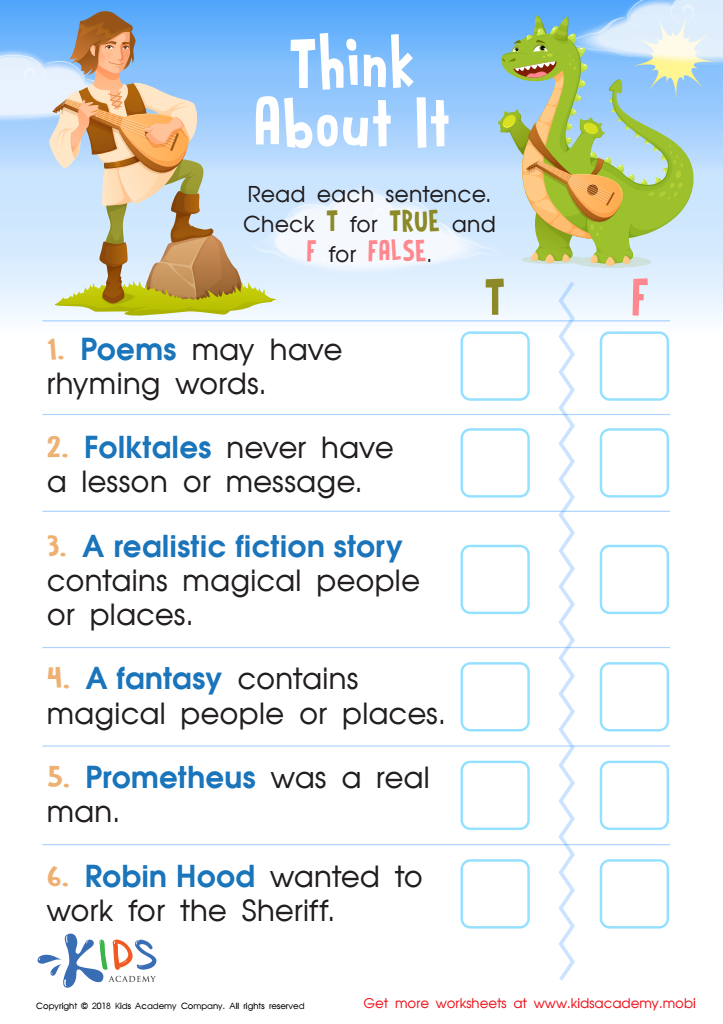
Think About It: Assessment Worksheet
 Assign to My Students
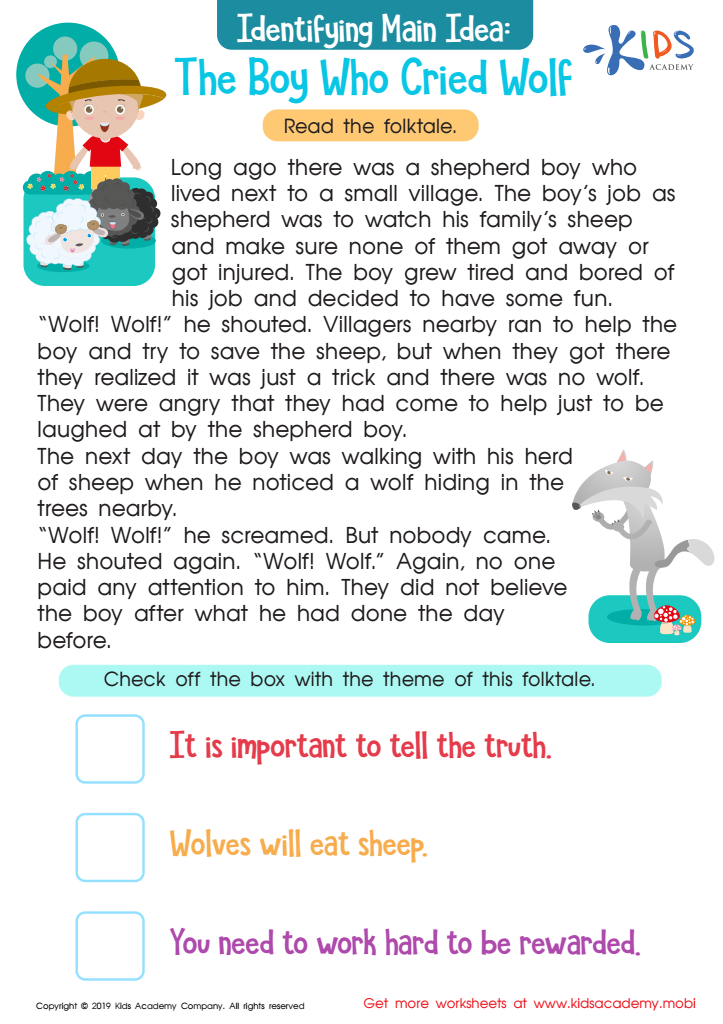
The Boy Who Cried Wolf Part 2 Worksheet







Reading comprehension in third grade is crucial for several reasons. At this developmental stage, students transition from learning to read to reading to learn. Proficiency in comprehension not only enhances their ability to understand academic texts but also fosters a love for reading. A solid foundation in reading skills enables children to grasp concepts across subjects, paving the way for academic success in later grades.
Parents and teachers must prioritize reading comprehension because it directly impacts critical thinking and analytical abilities. Engaging with texts helps learners ask questions, make predictions, and draw inferences, all of which are essential skills for problem-solving in everyday life.
Moreover, children who struggle with reading comprehension may experience feelings of frustration or disengagement, leading to a negative attitude towards learning. By supporting reading comprehension efforts, adults can help cultivate self-confidence and a positive approach to education. This groundwork is vital as students face increasingly complex texts in upper grades.
Finally, strong reading comprehension skills promote better communication and fluency in language arts, which are foundational for developing effective communication skills essential for future educational and career success. Investing in these skills at an early age yields long-term benefits that extend beyond academics.